Arizona continues to attract new residents, but the state’s growth is creating very different communities for children and families.
In some parts of Arizona, new neighborhoods are filling with young families, school districts are adding classrooms and communities are building parks and other services for children. In other areas, children make up a shrinking share of the population as the number of older residents grows.
The difference could help shape Arizona’s schools, housing market and public services for decades.
About 1.59 million Arizonans were under age 18 in 2024, representing roughly 21% of the state’s population, according to U.S. Census Bureau estimates. At the same time, nearly 1.5 million residents were 65 or older.
That means Arizona has nearly as many children as seniors, but they are not distributed evenly across the state.
Family growth is reshaping the Valley
In the Phoenix metropolitan area, some of the clearest examples of family growth can be found in communities such as Queen Creek, Buckeye, Goodyear and Surprise.
Queen Creek illustrates how quickly a community can change.
Once a small community on the southeastern edge of the Valley, Queen Creek has become a major residential growth area. New subdivisions continue to spread across the community, bringing families with children into neighborhoods that did not exist a generation ago.
The growth is reflected in the local school system. Queen Creek Unified School District reports approximately 15,000 students and 16 schools, according to the district. Its schools include elementary, junior high and high school campuses serving a rapidly expanding community.
The effect of that growth can be seen at the individual-school level. Queen Creek High School had 1,968 students in the 2024-25 school year, according to the National Center for Education Statistics.
Other fast-growing communities face similar pressures. Buckeye, Goodyear and Surprise have added large numbers of homes and residents, increasing demand for schools, child care, parks and other services aimed at families.
The number of children tells a different story
But population growth alone does not tell the entire story.
A community can add thousands of residents without adding many children if the newcomers are primarily adults or retirees. Conversely, a smaller community can have a much higher percentage of children even if its overall population is relatively modest.
That makes the percentage of residents under 18 an important measure when comparing Arizona communities.
The broader numbers suggest that the state’s family landscape is changing. The Annie E. Casey Foundation’s KIDS COUNT Data Center reports that the percentage of Arizona households with at least one person under age 18 fell from 31.8% in 2011-15 to 28.7% in 2020-24.
Births and school enrollment show the trends
Birth statistics provide another measure of the trend.
Arizona recorded 78,711 births in 2024, according to Arizona Department of Health Services vital statistics data. The state’s fertility rate was about 53 births per 1,000 women ages 15 to 44. The state health department also publishes birth data by county, allowing researchers to see where births are increasing or declining.
Those differences matter because the number of children in a community affects much more than school enrollment.
A growing child population can increase demand for classrooms, teachers, day-care centers, pediatric health care, playgrounds, libraries and youth recreation programs. It can also influence where communities build roads, parks and new housing.
School enrollment provides another way to measure the changing population.
The Arizona Department of Education’s School Report Cards provide enrollment information for individual schools and districts, making it possible to compare student populations with broader demographic changes. The state data also show how school districts differ in size and composition.
For districts in rapidly developing communities, growth can happen quickly. A new housing development may initially bring only a handful of students. As more homes are occupied, however, hundreds of children can eventually enter the local school system.
Two paths for Arizona’s future
The opposite can happen in communities where the population is aging.
Fewer children can mean declining enrollment and less demand for new schools, while an increasing senior population can create greater demand for health care, transportation and other services.
That creates a demographic divide between some of Arizona’s youngest communities and some of its oldest.
It also changes the meaning of the word growth.
Two communities can both add residents, but one may be adding young families while the other is attracting retirees. One may need new elementary schools and playgrounds. The other may need more senior housing and health services.
For Arizona, the important question is no longer simply how many people are moving into the state.
It is who is moving in — and where are they going?
The answer will help determine where Arizona needs to build its next schools, parks and child-care facilities and where communities will instead have to prepare for an increasingly older population.
Arizona is still growing. But the state’s future may depend just as much on where its children live as how many people live here.
Matt Loeschman has had two separate stints at Independent Newsmedia. He began as a reporter covering Peoria and later Surprise from 2000-2009. In 2017, he returned to Arizona and INI as the news editor of the Daily News-Sun (now the Phoenix Independent). He previously covered the Arizona Rattlers of the Indoor Football League for more than a decade.
Community: During high school football season since 2017, he contributes live postgame radio reports to the AzPreps 365 Friday Night Football Wrapup Show. He supports organizations such as Phoenix Children’s, Boys and Girls Clubs of the Valley and the American Cancer Society.
Education: The University of Texas at Austin majoring in Journalism-News and Public Affairs.
Random Fact: He can sing and he has been fortunate to meet many famous people during his journalism career including First Lady Hillary Clinton, King of Country Music George Strait and Oscar-winning actor Matthew McConaughey. Attended all 4 home games of the 2001 World Series.
Hobbies: Watching and playing a wide variety of sports, including golf, tennis, pickleball and softball. Playing PlayStation 5, working out, shopping and reading.


 By
By 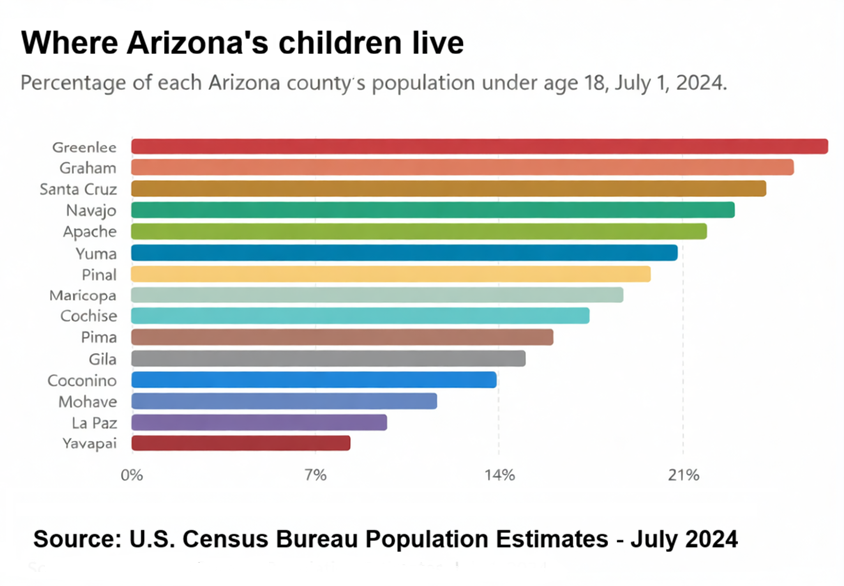


Comments
No comments on this item Please log in to comment by clicking here