In Queen Creek, subdivisions stretch across what was once open desert. In Buckeye, neighborhoods are pushing farther west along Interstate 10. In Maricopa, families continue to move into communities south of the Phoenix metropolitan area.
And with every new neighborhood comes another question for local school districts: Where will all the children go?
Arizona’s population growth is creating some of the fastest-changing school districts in the state, particularly in the West and Southeast valleys. Enrollment increases are forcing districts to add classrooms, open new campuses and plan years ahead for communities that are still being built.
Few districts illustrate the trend better than Queen Creek Unified School District.
State education records show Queen Creek Unified had 6,093 students in fall 2015 and nine schools. By the 2024-25 school year, the district reported more than 14,100 students attending its schools and 16 campuses, according to the Arizona Department of Education and the Arizona Auditor General.
That’s an increase of roughly 8,000 students in less than a decade.
The district’s growth has occurred as Queen Creek and surrounding portions of the Southeast Valley have undergone extensive residential development. The Arizona Auditor General’s 2026 school-district analysis reported 14,210 students attending Queen Creek Unified in fiscal year 2025, compared with 13,714 the previous year. The district’s weighted student count also increased 24.18% over four years.
The growth is visible in the number of schools. Arizona Department of Education records list 16 schools in the district for 2024-25.
Growth is spreading west
The same pattern is playing out in the West Valley, where communities such as Goodyear and Buckeye continue to add homes.
The Agua Fria Union High School District now operates seven schools, according to the Arizona Department of Education’s 2024-25 school report cards. Its schools serve students in communities including Avondale, Goodyear and Buckeye.
The district’s newest campus provides perhaps the clearest example of why school construction is following residential development.
Goodyear High School opened Aug. 4, 2025, with an inaugural class of approximately 450 freshmen. The school sits on a 59-acre site and was designed to eventually accommodate about 2,000 students, according to the school.
For families moving into the rapidly developing western portion of the valley, a new high school is more than a building. It is a sign that the surrounding community has reached a size that requires its own educational infrastructure.
The pressure continues farther west in Buckeye.
The Liberty Elementary School District, which serves students from preschool through eighth grade, had 4,547 students across seven schools in the 2024-25 school year, according to the National Center for Education Statistics.
The district includes an area where new residential development has transformed the landscape in and around Buckeye.
Buckeye’s growth reaches the classroom
Buckeye has become one of the most visible symbols of Arizona’s suburban expansion. Master-planned communities such as Verrado and Tartesso have brought thousands of new residents to an area that only a generation ago was largely open desert and agricultural land.
That growth has consequences for schools.
Districts must plan for enrollment before many of the students actually arrive. A new subdivision can add hundreds or even thousands of potential students over several years, requiring districts to think about land purchases, construction, transportation and staffing well before the neighborhood is completely built.
The challenge can be particularly complicated in Arizona because families have choices beyond their neighborhood school. Open enrollment allows students to attend schools outside their home district when space is available, meaning enrollment numbers are influenced not only by population growth but also by where families choose to send their children.
Maricopa grows into a school district challenge
The growth story extends south into Pinal County.
The Maricopa Unified School District serves a city that has changed dramatically since the beginning of the century. Maricopa’s transformation from a small rural community into a city of tens of thousands has brought a corresponding increase in demand for schools.
Families have been attracted by newer single-family homes and, in many cases, the opportunity to live farther from the metropolitan core while commuting to jobs in the Southeast Valley.
That creates a familiar cycle: new houses attract new families, population growth increases school enrollment, and districts must find the money and land to accommodate them.
Even small districts are preparing for growth
Not every fast-growing district is large.
The Saddle Mountain Unified School District, which serves communities on the far western edge of the Phoenix metropolitan area, is preparing for the possibility of substantial future growth as development continues along the Interstate 10 corridor.
The district’s relatively small size means even modest increases in the number of students can produce significant percentage changes in enrollment.
Arizona Department of Education records show Saddle Mountain also serves as part of the educational infrastructure in an area where development is moving increasingly westward. State broadband program records, for example, list the district with more than 2,000 students in a previous enrollment-related application, illustrating the size of the community it serves.
Growth isn’t always about new houses
In the Southeast Valley, the Higley Unified School District demonstrates another side of Arizona’s enrollment story.
The district serves portions of Gilbert and Queen Creek, areas that have experienced years of residential construction as well as infill development.
Not all enrollment growth comes from brand-new subdivisions. Families can also choose schools because of academic programs, reputation and other offerings. That makes it possible for a district to grow even when the surrounding community is more established.
A statewide population trend reflected in classrooms
The changes occurring in these districts are part of a larger demographic shift.
Arizona’s fastest-growing communities are increasingly located along the edges of the Phoenix metropolitan area, where large amounts of developable land remain available. The West Valley and Southeast Valley have become magnets for residential construction, while major employers and industrial projects have added another reason for families to move into surrounding communities.
For school officials, that growth presents both an opportunity and a challenge.
Build too late, and classrooms become crowded. Build too early, and districts can be left paying for facilities they do not yet need.
The numbers show why school districts are planning aggressively.
Queen Creek Unified has gone from roughly 6,100 students and nine schools in 2015 to more than 14,000 students and 16 schools today. Agua Fria has opened another high school to accommodate growth in the Goodyear area. And districts in Buckeye and other parts of the far West Valley are planning for communities that are still expanding.
Arizona’s population boom is often measured in new residents, new homes and new jobs. But perhaps one of the clearest places to see that growth is inside a classroom. As the subdivisions spread across the desert, Arizona’s school districts are racing to make sure there is a desk waiting for every new student.
Matt Loeschman has had two separate stints at Independent Newsmedia. He began as a reporter covering Peoria and later Surprise from 2000-2009. In 2017, he returned to Arizona and INI as the news editor of the Daily News-Sun (now the Phoenix Independent). He previously covered the Arizona Rattlers of the Indoor Football League for more than a decade.
Community: During high school football season since 2017, he contributes live postgame radio reports to the AzPreps 365 Friday Night Football Wrapup Show. He supports organizations such as Phoenix Children’s, Boys and Girls Clubs of the Valley and the American Cancer Society.
Education: The University of Texas at Austin majoring in Journalism-News and Public Affairs.
Random Fact: He can sing and he has been fortunate to meet many famous people during his journalism career including First Lady Hillary Clinton, King of Country Music George Strait and Oscar-winning actor Matthew McConaughey. Attended all 4 home games of the 2001 World Series.
Hobbies: Watching and playing a wide variety of sports, including golf, tennis, pickleball and softball. Playing PlayStation 5, working out, shopping and reading.


 By
By 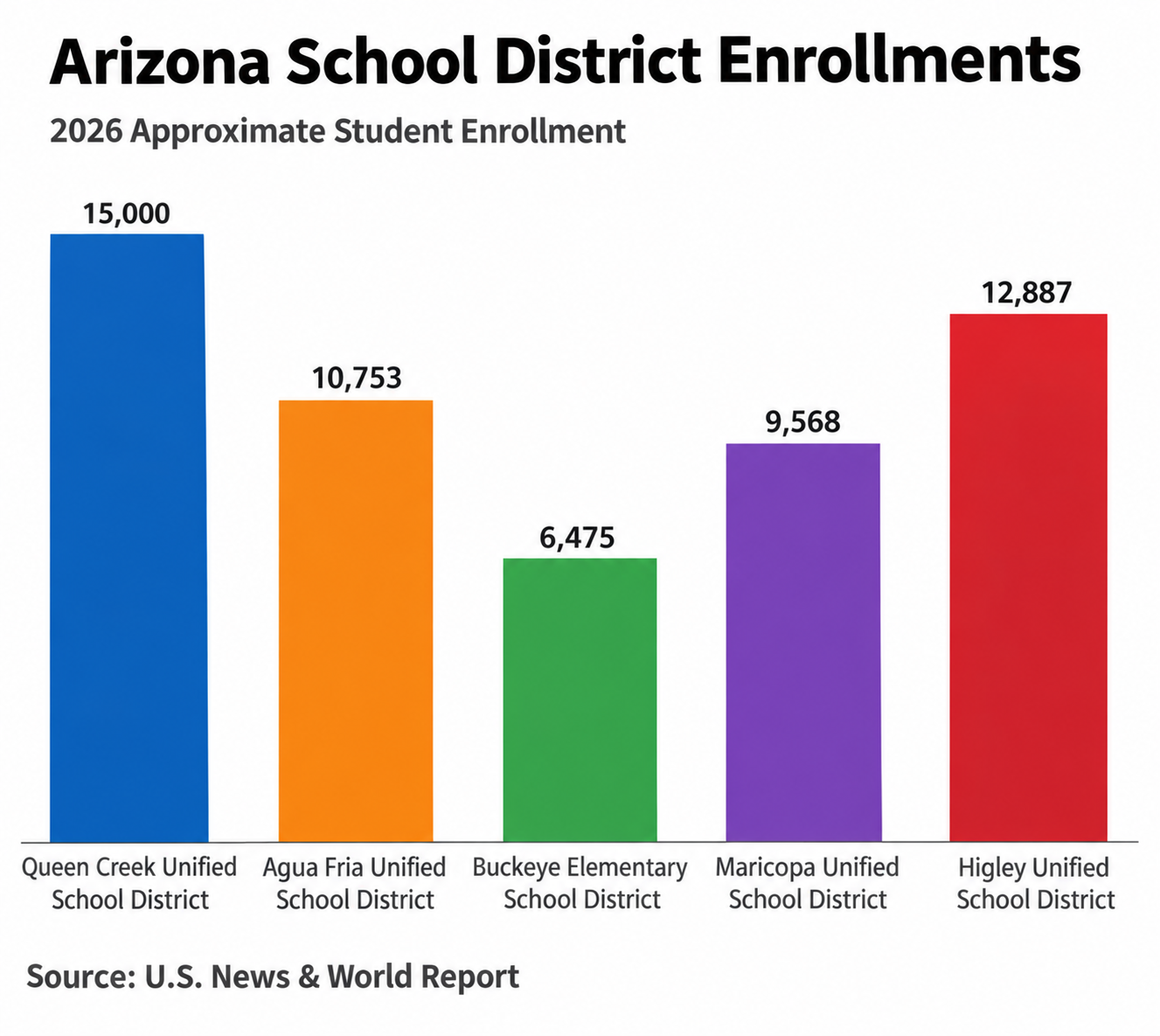


Comments
No comments on this item Please log in to comment by clicking here