Peoria resident brings rare military vehicle back to life
Mighty Mite is now in California museum for future generations to enjoy
Courtesy Ken Howell
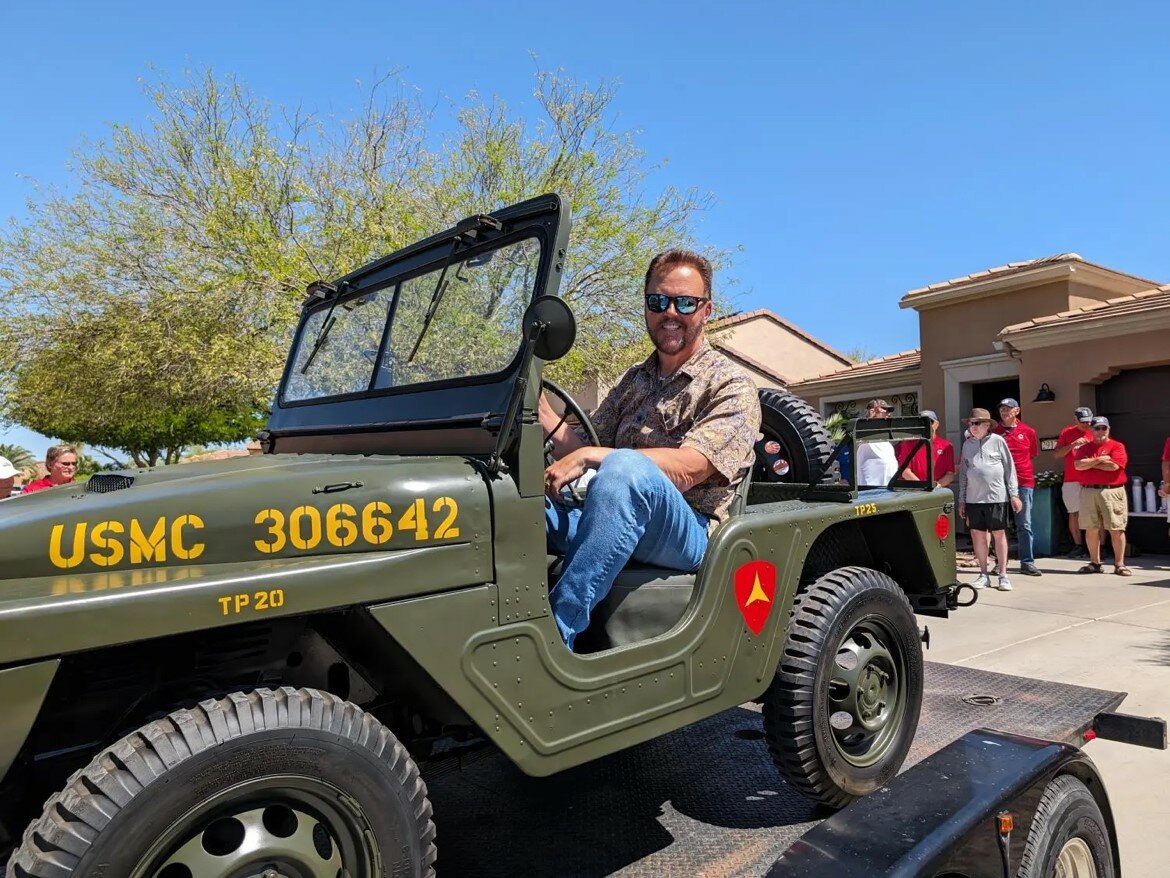
Retired Vistancia resident Ken Howell recently restored a nearly obsolete military vehicle known as the M422A1 Mighty Mite. Now it is an exhibit in the Marine Corp Mechanized Museum at Camp Pendleton.
Courtesy Ken Howell
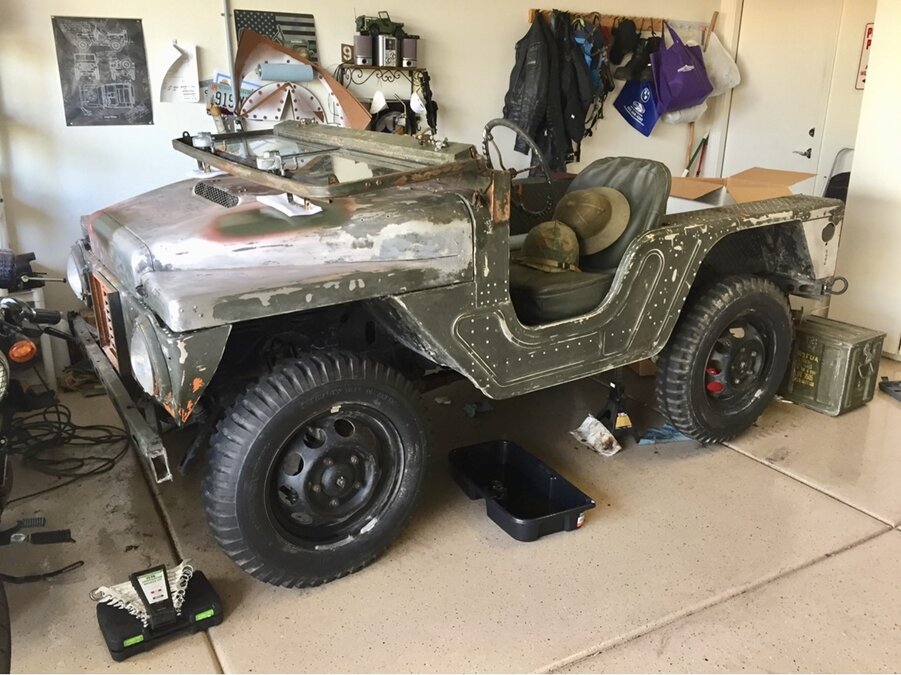
This is the Mighty Mite before Ken Howell restored it to its previous glory.
Posted
MIGHTY MITE DESIGN FEATURES
• All Aluminum Body (Total vehicle weight 1,700lbs)
• Aluminum V4 108 CI air-cooled 55 HP engine
• Combined Process 4300 Transmission/transfer case
• Inboard drum brakes front and rear
• Limited slip front and rear differentials (Lockers front and rear)
• Independent suspension with a unique quarter elliptical springs, and leading and trailing arms
• 1/4 Ton capacity
• 24 Volt electrical system
Have an opinion on this issue?
Want to get in on the conversation? Send your letters to phaldiman@iniusa.org.
A rare piece of automotive military history has been retrieved and revitalized in north Peoria, and now it will be preserved in a California museum for future generations to enjoy.
More than a year ago, retired Vistancia resident Ken Howell went searching for a nearly obsolete military vehicle known as the M422A1 Mighty Mite.
The jeep was born in the 1940s out of the development of new tactical nuclear weapons as well as newly emerging helicopter technology, and it was used heavily during the early part of the Vietnam War.
Howell’s love of history and restoring automobiles — he is a wholly YouTube-trained mechanic — led him on a journey for the vehicle.
And he eventually found a 1962 model rotting away on a farm on the other side of the country. He was able to get it back to his home, where he completely restored it in his home garage over the last year.
Howell said he had no idea how it got on the farm, but it never left the U.S.
This is the Mighty Mite before Ken Howell restored it to its previous glory.
Ken Howell
“It was on a farm in upstate New York and it was in very rough condition. I was able to track down parts, which was very difficult, considering they were 60 years old,” he said. “I really enjoyed it, but it needs to be in a museum because of how rare and historically significant it is."
The Mighty Mites’s send off to the Marine Corp Mechanized Museum at Camp Pendleton was celebrated April 20 in Howell’s neighborhood, where dozens showed up to send it on its way.
Master Gunnery Sgt. James King, retired, who oversees the museum’s collection, was at the event. He spoke before the vehicle was sent from the retirement community of Trilogy in Vistancia to become an exhibit in southern California.
“It was quite a send off,” Howell said.
Ironically , the jeep’s trek back to Camp Pendleton completes a full circle because that military base is where the jeep began its journey when the 3rd Marine Corps Division was reactivated in 1952.
Howell said the division was commissioned with developing new strategic assault concepts including vertical envelopment, and airborne operations and attack.
Troops and equipment needed to be quickly delivered to combat zones from the air, and helicopters were the tool to do it. But lifting capacities of helicopters were still low, so the Mighty Mites were developed with V4 engines to be light weight — around 1,700 pounds — so they could be carried and dropped into battle zones by the Sikorsky Helicopters of that era, which had a lift capacity of 2,600 pounds.
The original prototypes weighed 1,500 pounds and had an air-cooled Porsche boxer engine.
Howell said only about 3,200 were made and now there are only 200-300 Mighty Mites left.
The Mighty Mites became almost obsolete due to the greater lifting capacity of the UH1 Bell "Huey," introduced in 1959, and used more heavily in Vietnam in the 1960s.
“They were developed after WWII when aerial warfare became instrumental,” he said. “The Mighty Mites were made of aluminum and very light, and were able be lifted by a helicopter and dropped into the jungles of Vietnam. They were almost disposable,” he said.
Philip Haldiman can be reached at phaldiman@iniusa.org, or on Twitter @philiphaldiman. We’d like to invite our readers to submit their civil comments, pro or con, on this issue. Email AZOpinions@iniusa.org.
Meet Philip Haldiman is an award-winning journalist who most recently took first place for investigative reporting in 2023 from Arizona Newspapers Association. He joined Independent Newsmedia, Inc., USA, in 2015, covering Sun City West his first year. Since 2016, he has covered the city of Peoria. Prior to coming to INI, he was a reporter with The Arizona Republic for seven years, covering numerous cities throughout the Valley. Before that, he was a freelance writer.
Community: Haldiman spearheads the Peoria Independent Hometown Heroes Awards program, honoring local individuals and businesses that give back to the community. He has hosted local candidate forums over the years and is a member of the Society of Professional Journalists. Haldiman also served as a member of the Journalism Program Community Advisory Board at Glendale Community College. Outside journalism, Haldiman served as a member of the city of Peoria Complete Count Committee for the Census, 2019-2020. Lastly, he has served as a member of his HOA governing board since 2021.
Education: Arizona State University with a BA in Journalism and Mass Communications and a BA in Theater.
Random Fact: Haldiman is a fourth-generation Arizonan as well as wrote and produced an autobiographical comic book about his time spent in Hollywood and his life as a cult film star.
Hobbies: He enjoys hiking Arizona’s mountainous landscapes and is currently working on a play for the stage.



 By


Comments
No comments on this item Please log in to comment by clicking here