$3M grant sought for Apache Junction storage well denied by water authority
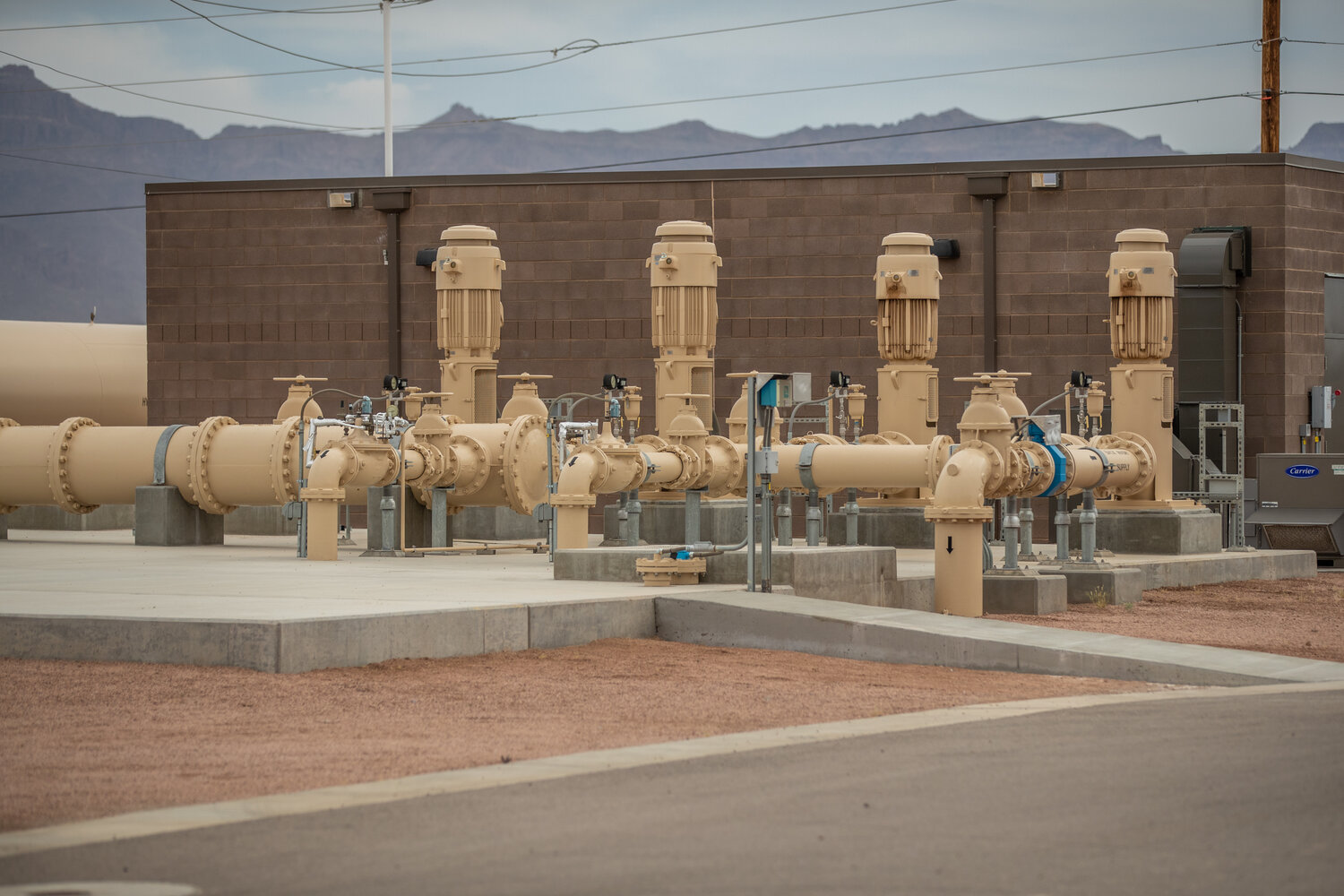
The water district supplies groundwater pumped from the Eastern Salt River Sub-Basin Aquifer, which flows southwesterly under Apache Junction and its surrounding areas. The groundwater is treated for arsenic removal where necessary, disinfected with chlorine, pumped into storage tanks and blended with surface water from the Colorado River.
Although the Water Infrastructure Finance Authority’s water conservation grant committee voted against awarding $3 million to Apache Junction Water District for a new storage and recovery well and associated equipment, the project is progressing with funds already earmarked in the budget and additional grants will be sought.
“In terms of project funding without those grant funds, AJWD did budget for a portion of this project for FY25 and will continue with implementing those funded components as planned. During that time, AJWD will also be exploring other potential grant sources that support water conservation,” Water District Director Mike Loggins said in an email. “AJWD has already designated a couple of sites for future wells that would allow future progress with this project.”
AJWD would store 1 million gallons of water per day underground for future recovery in the project, which is roughly 1,129 acre-feet of water in one year, according to the district’s WIFA application for the funds.
One acre-foot is the amount of water required to fill an acre of land to a depth of 1 foot and equals 325,851 gallons, according to the Water Resources Research Center in the College of Agriculture and Life Sciences at the University of Arizona.
“Apache Junction Water District is always looking for the most efficient means of utilizing its water resources, and this proposed project is an important step in establishing resiliency within the water system and future water storage during drought conditions,” Loggins said in the email.
The total cost of the AJWD aquifer storage and recovery well project is $4.5 million, with $1.5 million paid by the water district. It is to cost $1.6 million to drill the well, $200,000 for pumping equipment, $400,000 for electrical equipment, $100,000 for chemical equipment and $1.848 million for waterlines, according to WIFA documents.
The project would allow the water district to store more than 22,500 acre-feet of water over the next 20 years for recovery in the future, according to AJWD’s application for the WIFA grant.
“When water supply shortages happen the water that is being stored underground can then be pumped rather than using groundwater. This stored water would reduce the groundwater depletion because we would be using water that was stored up years before actually pumping groundwater. The clean water that would be stored in the aquifer will only better the water quality, making it easier to recover in the future without treatment,” it states.
WIFA committee vote
The WIFA Water Conservation Grant Committee voted 7-0 May 9 to not approve four items including the AJWD request. Board member Sam Draper was absent, according to the meeting’s minutes.
The AJWD grant application was on the agenda for the committee’s April 24 meeting with eight other recharge and reuse projects, but the committee voted to table discussion to May 9, according to a video of the meeting. Video from the May 9 meeting is not available; it states “(recording failed)” at the website, https://azwifa.gov/news/public-meetings.
The eight-member Water Conservation Grant Committee is a geographically diverse group representing various backgrounds and perspectives across the state. WIFA is an independent state authority authorized to finance the construction, rehabilitation, acquisition and improvement of water infrastructure throughout Arizona. The authority is governed by its board consisting of nine voting members appointed by the governor and legislative leadership and nine nonvoting ex-officio members representing legislative leadership and relevant agency heads, according to its website.
The authority administers several federal and state-capitalized programs, the drinking water state revolving fund, the clean water state revolving fund, the water supply development fund, the water conservation grant fund and the long-term water augmentation fund, it states.
Water district
Apache Junction City Council members serve as the water utilities community facilities district board.
The water district supplies groundwater pumped from the Eastern Salt River Sub-Basin Aquifer, which flows southwesterly under Apache Junction and its surrounding areas. The groundwater is treated for arsenic removal where necessary, disinfected with chlorine, pumped into storage tanks and blended with surface water from the Colorado River.
The surface water is transported through the Central Arizona Project canal system and filtered and purified at the Superstition Area Water Plant before being introduced into the distribution system.
The water district can also receive treated CAP water from the city of Mesa through an interconnect for a backup supply of water, if needed.
The water district, formed by the city of Apache Junction on Aug. 2, 1994, is responsible for providing water service for a portion of the city of Apache Junction, according to www.ajwaterdistrict.org. The remaining area is served by Arizona Water Co., www.azwater.com.
Richard H. Dyer can be reached at rdyer@iniusa.org, or on X @rhdyer. To voice your opinion on this story, connect with us at AzOpinions@iniusa.org.
Meet Richard Richard Dyer has worked at Independent Newsmedia Inc. USA since 1987, starting his career in Apache Junction as a copy editor and being promoted over the years to work as the editor of the Mesa Independent, news services editor for the East Valley office in Apache Junction, managing editor for the East Valley office, news services editor for the East Valley office and eventually also for the newspapers at INI’s then-Chandler office, managing editor again and as a news editor covering Apache Junction/Gold Canyon and Queen Creek. He helped start the Florence Independent while the news editor covering Apache Junction and Mesa news. In January 2023, he became associate managing editor for the East Valley newspapers and in August 2023 became managing editor for the East Valley newspapers of Chandler/Tempe, Gilbert, Queen Creek, Florence, Mesa and Apache Junction/Gold Canyon, while also reporting on Mesa and Apache Junction/Gold Canyon.
Community: Since 2009, he has worked as a volunteer to design The Blue Guitar Magazine, Blue Guitar Jr. magazine and Unstrung magazine, which are projects of The Arizona Consortium for the Arts; and since 2014, has been overseeing the art submissions.
Education: University of Arizona with a master of arts in journalism and a bachelor of science in agricultural communication. Also continuing education at Mesa Community College in welding in a metal art sculpture class.
Random fact: Saw his first tornado on May 31, 2010, which was classified as an EF-2, as part of a stormchasing tour group.
Hobbies: He is an artist of welded-steel sculptures, selling his artwork at juried and non-juried art shows.


 By
By 


Comments
No comments on this item Please log in to comment by clicking here