Arizona schools bracing for good, bad with AI technology
Districts like Deer Valley Unified implementing ‘a topic of significance’
(Independent Newsmedia/Steve Stockmar)
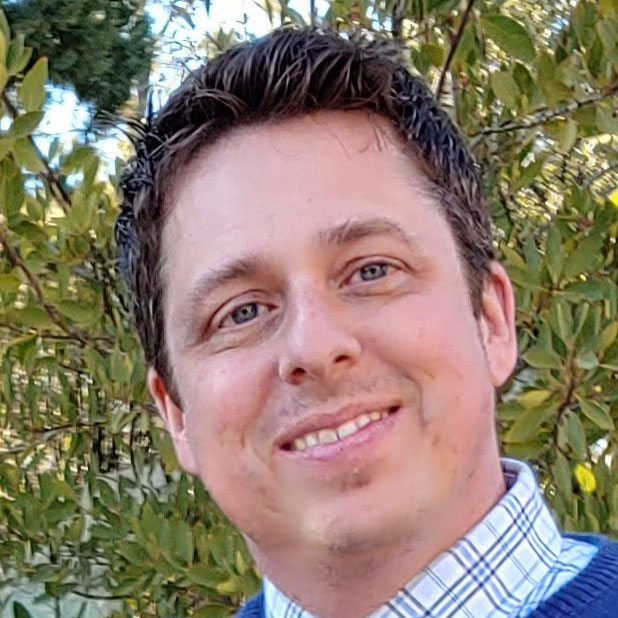
At just 17 years old, Apramey Akkiraju, a 2024 Mountain Ridge High School graduate, has already developed his own AI company, AccessAI, and served as past president of Arizona DECA.
Posted
If teachers and the education system don’t embrace [AI] we’re going to be left way, way behind.”
AI is coming to a classroom near you. In fact it’s already here.
Developing responsible uses for Generative AI is the next phase as Arizona in May became the 12th state to draft comprehensive guidance for the application of AI in education.
It’s all part of what Deer Valley Unified School District Deputy Superintendent Dr. Gayle Galligan, at the district’s May 28 governing board meeting, calls “a topic of significance in education.”
Artificial intelligence has been part of our everyday lives for years whether or not users are aware. Things like Google searches, digital voice assistants such as Siri and Alexa, personalized social media feeds and algorithms that track a user’s values are the direct results of AI at work.
AI got a huge boost into the mainstream through the virtual assistant chatbot ChatGPT, which launched in November 2022. ChatGPT lets users steer conversation toward an individual’s desired chat length, format, language and particular details.
Companies have been quick to incorporate AI into their technology, and with the rising demand for new opportunities – and the fact that teenage students have already acclimated to AI – the education world is now adapting AI models in a way not unlike when education first embraced the advent of the Internet itself.
“Basically our whole curriculum might need to be structured for us to integrate AI,” says Apramey Akkiraju, who just graduated from Mountain Ridge High School in Glendale last month.
At 17 years old, Akkiraju has already developed his own AI company, AccessAI, and served as past president of Arizona DECA, an organization that for more than 60 years has prepared high school students to be business leaders and entrepreneurs.
“Now we have to focus more on things such as actual learning and critical thinking skills rather than just crude memorization or something of that sort,” he added.
Changes in education are already happening.
The standardized SAT test, widely used for college admissions in the U.S., has been adapted through AI as a fully digital test no longer on paper as of this spring. The test will still measure the same variables, will still be scored on a 1600 scale, and will still be taken at testing centers or in schools.
The flow of questions, however, can vary for each student.
“Essentially put, students will each get an SAT that is customized to their performance,” The Princeton Review wrote. “The better they do on the first section, the harder the questions they’ll get for the second — but also the more points each one will be worth.”
For teachers, AI can be used to help design lesson plans and instructional materials.
“From a teacher’s point of view, AI can help take care of so many of those little things that take up so much time so they can focus more on actually teaching and figuring out ways to be creative on working with students individually one-on-one and giving them that personalized learning,” Akkiraju said.
Students, meanwhile, can use the new technology as a tutor more tailored for their comprehension level and learning pace than even random Google searches or scrolling through pages trying to digest information.
There are concerns, though, which is what prompted the Arizona Institute for Education and the Economy, through Northern Arizona University, to assemble a team of specialists to draft formal guidelines. Michelle Coots, Deer Valley Unified’s K-12 instructional technology manager, serves on the team, and Superintendent Dr. Curtis Finch was among the professionals to review the material which will pursue effective and responsible GenAI implementation.
Hallmark University, in San Antonio, Texas, notes that ChatGPT could potentially produce biased outcomes based on its training data sources. Also, academic honesty could be compromised if students use ChatGPT to generate essays or other assignments without proper citation.
“It is important to emphasize that while ChatGPT can be a helpful tool for users, it should not be relied upon as a substitute for human instruction or interaction,” the university noted in a study. “It may be able to provide information and generate responses, but it cannot provide the same level of feedback and guidance that a human instructor can.”
Thus the need for the education community to formally develop protocols and responsible applications of GenAI, particularly with technology advancing so rapidly.
Akkiraju, too, calls the idea of preventing academic cheating “the big challenge of today.” AI detectors are in place to recognize plagiarism, but there are also users developing AI to mask those detections as models on both sides continue to improve.
Not adapting AI into education just because of the potential for misuse isn’t an option, he says.
“We don’t know a lot of things that are even going on right now but we have to embrace it right now,” Akkiraju said. “We can’t be slow on the technology because students are embracing it. If teachers and the education system don’t embrace it we’re going to be left way, way behind.”
Akkiraju will spend his summer working on his company, including developing a research study on how to apply AI to CTE education. He’ll attend Georgia Tech in the fall and continue his research there.
“AI is expanding this last year and a half at an unheard of rate,” he said. “And that’s just today.”
Steve Stockmar News Editor | Sun Life Magazine & Arts & Entertainment
YourValley.net
Meet Steve Steve Stockmar joined Independent Newsmedia, Inc., USA, in 2017, and has been an Arizona journalist for almost 30 years. He serves as editor of Sun Life Magazine and contributes to West Valley communities where he focuses mostly on arts & culture, education, and profiles of neighbors making a difference.
Community: Every season Steve serves as a “buddy” with the Miracle League of Arizona in Scottsdale, has volunteered his time with Family Promise in Glendale, and previously served on the Ghostlight Theatre board in Sun City West.
Education: Graduated from Northern Arizona University in Flagstaff with a Journalism major and English minor.
Random Fact: Steve once won a 50-player live Texas Hold ’Em poker tournament.
Hobbies: Anguishing over his beloved Chicago Cubs and Bears; listening to Beatles and Grateful Dead music.


 By


Comments
No comments on this item Please log in to comment by clicking here