Lawmakers consider new refundable education tax credit
A closer look at House Bill 4037
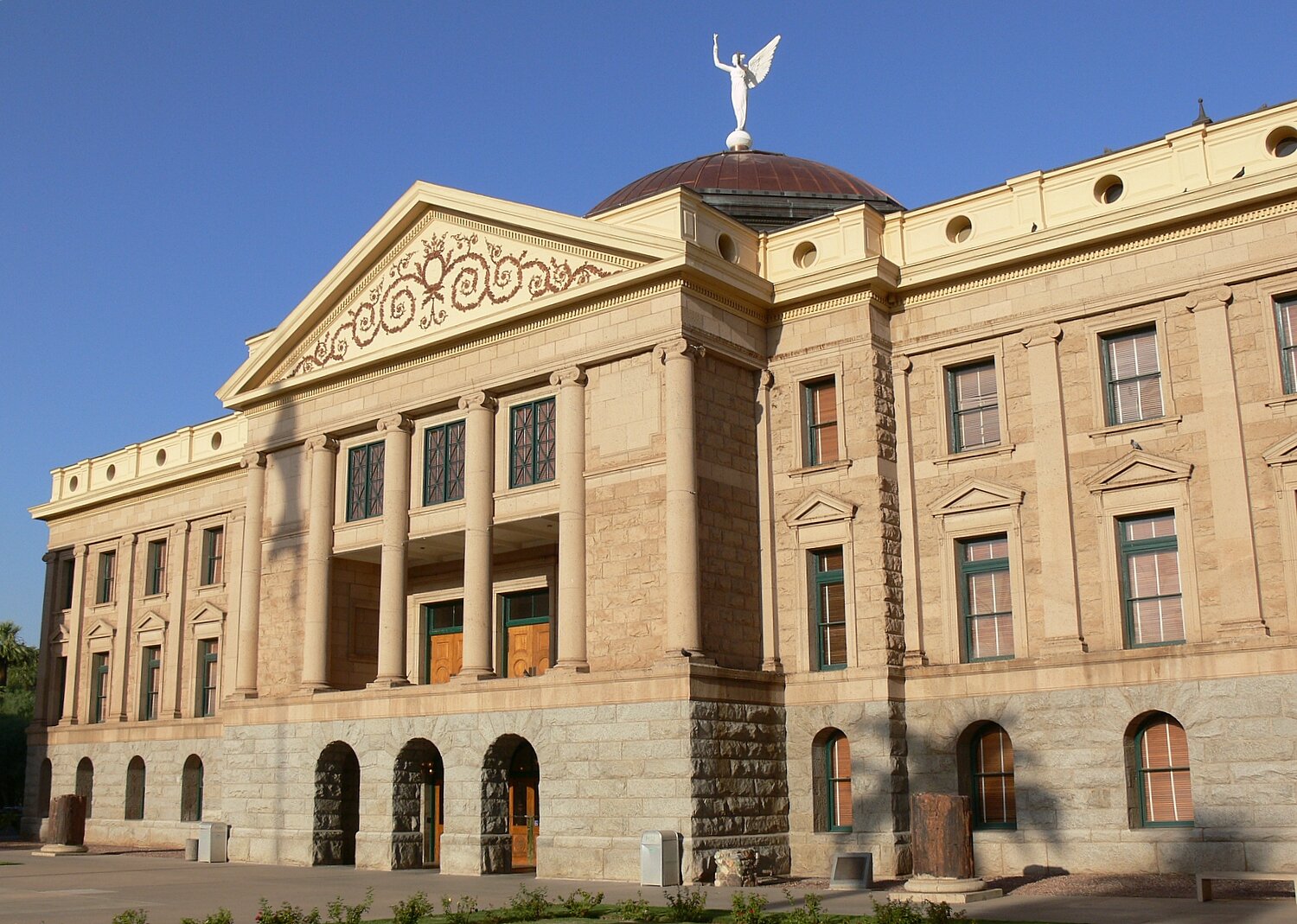
Wikimedia Commons
Lawmakers consider a new refundable education tax credit through HB 4037.
Posted
The Issue:
Arizona lawmakers are considering a new refundable education tax credit that could send thousands of dollars per child directly to families, adding another major funding stream to the state’s already expansive school choice system.
The Stats:
Arizona already spends over $1B annually on universal ESA vouchers and offers multiple private-school tax credits, with more being considered in the upcoming election. HB4037 could add uncapped refundable payments tied to per-pupil funding levels, potentially costing the state billions more over time depending on participation.
The Solution:
Supporters say the proposal expands education choice and financial fairness for families outside public schools. Critics warn it could duplicate existing programs, deepen budget pressures and further shift public funding away from traditional school systems.
Arizona lawmakers are advancing a proposal that would create a new refundable income tax credit for families educating children through homeschooling or private schools — a move that could significantly expand the state’s already extensive school-choice funding system.
House Bill 4037, introduced during the 2026 legislative session by Representative Michele Peña, R-Yuma, would establish what supporters call an “Education Opportunity Tax Credit,” allowing taxpayers to claim a per-child credit beginning in tax year 2026.
The measure would create a new refundable education tax credit that critics say could be layered on top of Arizona’s existing school tuition organization scholarship tax credits. Because the credit is refundable, some families could receive a payment from the state rather than just a reduction in taxes owed.
Opponents argue the proposal would allow families already using private or homeschool options to receive additional state funding with limited oversight while drawing more dollars from the state general fund.
“Anything that takes away from public schools is siphoning money away from our children's future,” said Dr. Teresa Ruiz, 2026 candidate for Superintendent of Public Instruction.
How the proposed credit works
Under the bill, families educating children outside the public-school system and not receiving ESA voucher funds could qualify for a credit equal to 80% of base-level per-pupil funding. A reduced credit — 40% of base funding — would apply in cases where a student is educated outside public school for only part of the year.
The proposed credit is tied to Arizona’s base-level per-pupil funding formula, not total per-student spending, which is higher when local and federal funds are included.
Arizona already offers several education-related tax credits that allow individuals or corporations to donate to scholarship organizations and receive dollar-for-dollar tax reductions. The state also operates one of the nation’s largest universal school-voucher programs through Empowerment Scholarship Accounts, or ESAs.
HB 4037 would go further.
“HB 4037 is built on the flawed idea that people should only pay for public services they personally use,” Joseph Palomino, director of The Arizona Center for Economic Progress, said in a recent press release. “We don’t let people opt out of paying for roads they don’t drive on, fire protection they never need, or infrastructure projects that benefit other communities. If we applied this logic across the board, Arizona wouldn’t be able to fund the basic services our economy depends on.”
During the House Ways and Means Committee hearing on HB 4037, Palomino reiterated that the bill creates a large tax credit, similar to a school voucher, for wealthy households regardless of whether a child is receiving a quality education, diverting public resources away from the public services that support workforce readiness and economic growth.
Under the proposal, eligible families could receive a state tax credit for each qualifying child educated outside the public school system. The credit amount would be tied to Arizona’s per-pupil education funding formula, potentially totaling several thousand dollars annually per student.
Because the credit would be refundable and uncapped, families could receive payments even without a tax liability, and the overall cost to the state would not be limited by a program cap.
“HB 4037 offers a significant tax benefit to families who already have the resources to send their children to private school, while doing nothing to ensure children are receiving a high-quality education or that public dollars are being used responsibly,” Palomino said.
Supporters frame proposal as expanded choice
Backers of the measure say Arizona has long positioned itself as a leader in educational choice and that HB 4037 would build on that framework.
They further argue the proposal would give private school and homeschool families more equal access to funding to help families cover rising tuition and instructional costs while giving parents greater flexibility in how they educate their children.
Lawmakers backing the proposal say it would expand education options for families outside the public-school system. The bill’s stated purpose is to create an “education opportunity tax credit” for taxpayers with qualifying children educated outside public schools.
Fiscal and policy concerns emerge
Education and budget analysts say the proposal raises significant fiscal questions, particularly because the credit would be refundable and uncapped.
Arizona already faces ongoing debates over the long-term cost of its universal ESA program, which has grown rapidly since eligibility expanded to all students. Adding another per-child funding stream could increase state education spending substantially, depending on participation rates.
"Nine out of 10 Arizona students attend public schools. We are disappointed to see lawmakers pushing a new scheme to divert public dollars into private hands instead of making the long-overdue investments that public schools need," said AEA President Marisol Garcia.
Critics, including fiscal analysts at the Grand Canyon Institute, have found most new voucher participants were already in private or homeschool settings, meaning expanded tax credits may generate new state spending rather than shift students out of public schools.
Critics and policy observers say that dynamic could place additional pressure on the state budget and reduce funding available for public schools, warning that layering multiple choice-based programs — including ESAs, scholarship tax credits and a new refundable credit — may further complicate oversight and long-term financial planning.
"In Arizona, 'homeschool' is a separate, distinct educational classification defined in A.R.S. 15-802(G)(2)," said Michelle Jibben. director of government affairs for Arizona Families for Home Education. "The definition precludes the receipt of taxpayer dollars, and this intentional distinction has been built over decades of advocacy at the capitol. Homeschool families want to retain the freedom to fully direct their children’s education, and to maintain their independence by funding education privately. AFHE does not support the introduction of taxpayer dollars into the privately funded, independent homeschool educational classification."
What happens next
HB 4037 has been introduced and assigned to legislative committees for consideration as part of the 2026 session. Lawmakers will weigh potential costs, eligibility rules and oversight provisions as the bill moves through hearings and possible amendments.
If approved, the measure would mark another major expansion of Arizona’s school-choice funding structure and could reshape how education dollars flow to families across the state.
“Strong public schools are not just an education issue — they are an economic imperative,” Palomino added. “Businesses rely on an educated workforce, communities rely on stable schools and Arizona’s future growth depends on shared investments that benefit everyone, not carve-outs for a few.”
Rep. Michele Peña did not respond to multiple requests for comment prior to publication. Representatives Michael Carbone, Neal Carter, Lupe Chavira Contreras, Oscar De Los Santos, Laurin Hendrix, Christopher Mathis, Steve Montenegro and Julie Willoughby were contacted for comment but did not respond before publication deadline.
Editor’s note: A grant from the Arizona Local News Foundation made this story possible. The foundation awarded 15 newsrooms to pay for solutions-focused education reporters for two years. Please submit comments at yourvalley.net/letters or email them to AzOpinions@iniusa.org. We are committed to publishing a wide variety of reader opinions, as long as they meet our Civility Guidelines.
Meet Stacy Stacy Mantle is joining the team at Independent Newsmedia, Inc. as an Education Solutions journalist, thanks to a grant from the Arizona Community Collaborative. She has a long history in education that ranges from teaching junior high and middle school to developing curriculum and standards-based assessments.
Community: A longtime advocate for animal welfare, Stacy is deeply involved in rescue efforts and volunteers with several nonprofit organizations.
Random Fact: Once upon a time, she shared her home with a pet coyote and two wolf hybrids. The experiences were wild enough to become the subject of her first book!
Education: She holds a BA in English with a minor in Political Science, a Post-baccalaureate in Secondary Education, and an MBA with a emphasis on Marketing.
Hobbies: In her spare time, Stacy writes fast-paced urban fantasy novels, crafts small-batch artisan soap, and is always up for hiking or off-roading through the Arizona wilderness with her husband of 23 years.

 By
By 


Comments
No comments on this item Please log in to comment by clicking here