Facts, evidence, probabilities: A realist’s view of money in politics
Posted
TR Harry
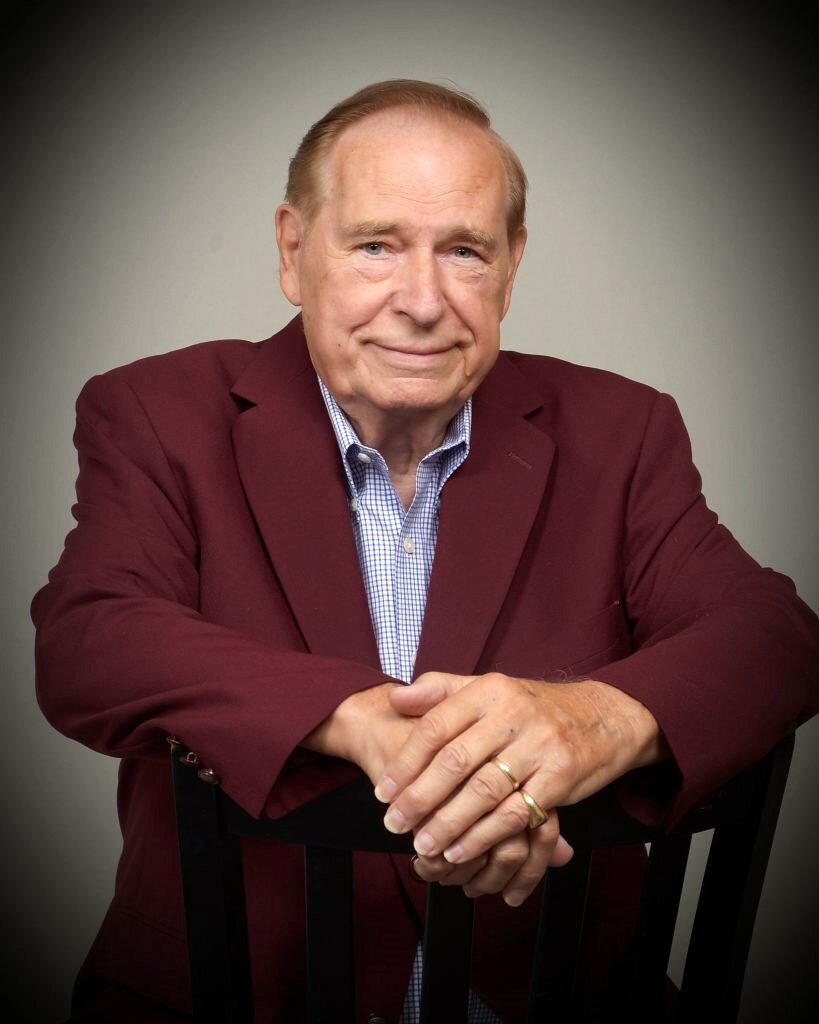
Submitted photo
There is clearly an argument for, as well as a place for, money in our democratic political system. But it could unquestionably use a reset. If on the other hand our historical democratic political system proves unsustainable, this issue of money in politics is probably moot.”
By TR Harry | Scottsdale
Remember the old story about how to tell an optimist from a pessimist?
Two youngsters are in separate rooms, one full of toys and the other with a huge pile of manure. When checked, the boy in the room full of toys was sitting in a corner crying. Why? He was afraid someone was going to take them away.
As they walked to the other room, they heard hoots of joy and laughter. They opened the door to find the second child digging around in the manure. “What are you doing?” one asked. “Oh boy,” the child shouted, “with all this horse s--- there’s bound to be a pony in here someplace!” Point made.
What about a “realist?” Best I can come up with is that a realist sees the world as it is, without excessive optimism or pessimism. He/she bases judgement on facts, evidence and probabilities, accepts both positive and negative possibilities and prepares accordingly, maintaining a pragmatic and balanced mindset, often saying, “it could go either way.” Balance yeah, but just how helpful is that in so many life situations? I mean, maybe yes, maybe no? Big help!
Let’s apply this to the debate over the value or harm of an increasing amount of money being injected into politics, especially electoral politics. The debate over money in U.S. politics has deep historical roots, but it became a major public issue starting in the late 19th century. Here’s how it evolved:
Early history
18th century: Even before modern campaigns, money played a role — George Washington famously spent funds on rum punch to win votes.
1820s to 1860s: Andrew Jackson and Abraham Lincoln used patronage systems to fund campaigns, exchanging jobs and contracts for political support.
Gilded Age (1870s to1890s)
Campaign finance became more controversial as corporations began funding candidates. Reformers criticized the influence of big business, especially after the 1896 election when Standard Oil backed William McKinley.
Early regulation
1907: The Tillman Act banned corporate contributions to federal campaigns — the first major campaign finance law.
1971: The Federal Election Campaign Act introduced spending limits and disclosure rules.
1976: Buckley v. Valeo ruled that spending money on campaigns is a form of free speech, igniting modern debates about money’s role in democracy.
Citizens United era
2010: Citizens United v. FEC allowed unlimited independent political spending by corporations and unions, leading to the rise of Super PACs and “dark money.”
2025: A Pew poll found that money in politics is now viewed as the No. 1 problem by Americans — more than any other issue.
While money has always been part of politics, the debate over its influence really intensified with the rise of corporate donations, legal challenges and the explosion of campaign spending in the 21st century.
This historical timeline appears to go in one clear direction with infrequent legislative speed bumps placed to slow down and/or control it, while the monied interests have looked to the courts to counter such efforts. But what about the “debate over its influence?” Why a debate about it at all? A debate implies two sides to an issue. If the Supreme Court declares it legal, isn’t that the end of it?
Not really. It may go on (legally) but as the above Pew poll found, money in politics is viewed as the No. 1 problem by Americans. The real issue is not whether its legal, but whether its right or wrong to allow such an influence in the democratic structure of “one man, one vote.”
One side says money represents free speech, protected under our Constitution. The other side disagrees. Unchecked money results in what’s known as “dependence corruption,” which results in politicians becoming dependent on large donors and special interests to fund their campaigns, distorting their priorities such that elected officials serve funders more than constituents.
And then there is the purported recent case where one individual openly bragged about spending “millions” in one state, where he doesn’t even reside, to help get a certain candidate running for office elected. It was presumably legal, but was it right? Did it help or hinder the American democratic expectations?
Where do you stand in this debate? If you don’t believe the money-in-politics problem (plutocracy) exists, consider it no further. If you agree this problem exists, you may be optimistic or pessimistic — your choice — no matter which side of the debate you find yourself.
As pointed out above, these positions are largely based on opinion and experience. You might describe them as “wishful thinking.” But, how about our realist? Is he/she of any help in looking at the problem? Maybe. Recall, as a bystander who sees the world as it is, our realist bases his/her judgement on facts, evidence and probabilities, accepts both negative and positive possibilities, and judges accordingly. Let’s hear this side of the story:
Facts
At least per Pew, Americans believe money in politics is the No. 1 problem in 2025.
While legislating to control it, monied (plutocratic) interests have successfully used the legal system to repeatedly thwart such efforts since the start of the 20th century.
Since 2000, the share of wealth of the top 1% of American households has increased 36% from 22.8% to 30%, while the bottom 50% of households’ share of the pot is static at approximately 2.4%. I thought a rising tide lifted all boats. Apparently not.
The five largest individual donors identified each gave $100 million, or more, to the aligned political causes of candidates in 2024, with one coughing up almost $300 million.
Evidence
He who spends the most money in an election most often wins. A study from 2000 through 2016 for U.S. House seats showed more than 90% of candidates who spent the most money won. There was one exception: in 2010 the percentage “plummeted” to 86%!
The cost to elect a president of these United States in 2000 approximated $583 million. In 2024, between both parties, overall election campaign spending reached a record high of $15.9 billion, with the presidential campaign alone costing $5.5 billion!
Probabilities
Absent a change in broad legal interpretation of (a) Corporations as “people” and (b) the precedent that money is a form of free speech, protected by the Constitution, the opportunity for money to significantly influence (if not outright trump) the one man one vote historical political understanding in America’s election campaigns and government’s rules and regulations will continue under the plutocracy’s domination.
The well-off will become even better off, the middle class further squeezed and the lowest 50% of Americans struggle to make it on their single digit share of the pie. To wit, income inequalities will “probably” become even more pronounced.
There is clearly an argument for, as well as a place for, money in our democratic political system. But it could unquestionably use a reset. If on the other hand our historical democratic political system proves unsustainable, this issue of money in politics is probably moot.
Of course, this is only one realist’s conclusion based upon a brief, and incomplete, review of history, a few current facts and a bit of recent experience.
Editor’s note: TR Harry is the pen name of a Scottsdale-based author who writes primarily about politics and religion on his blog. Please send your comments to AzOpinions@iniusa.org. We are committed to publishing a wide variety of reader opinions, as long as they meet our Civility Guidelines.



Comments
No comments on this item Please log in to comment by clicking here