Apache Junction Public Art Commission scouring city for installed works
Where art is installed and identifying professional artists who may be tapped to provide new pieces were some of the top items during a recent Apache Junction Public Art Commission work study discussion.
The City Council, in 2019, established the all-volunteer group. Fees required for development to fund public art --- including up to $100,000 for each new commercial or multi-family project --- became effective this year.
Seven zones are planned within the City of Apache Junction for geographic information system maps, with each of the commission’s six members assigned an area to find inventory to add over the next one to two months. Art in county islands will not be included in the mapping efforts, Senior Planner Sidney Urias said at the commission’s Aug. 10 meeting.
You must be a member to read this story.
Join our family of readers starting at $5 for your first month and support local, unbiased journalism.
Where art is installed and identifying professional artists who may be tapped to provide new pieces were some of the top items during a recent Apache Junction Public Art Commission work study discussion.
The City Council, in 2019, established the all-volunteer group. Fees required for development to fund public art --- including up to $100,000 for each new commercial or multi-family project --- became effective this year.
Seven zones are planned within the City of Apache Junction for geographic information system maps, with each of the commission’s six members assigned an area to find inventory to add over the next one to two months. Art in county islands will not be included in the mapping efforts, Senior Planner Sidney Urias said at the commission’s Aug. 10 meeting.
Commissioner Anne Coe said she is interested in the area around the roundabout, which is at Superstition Boulevard and North Apache Trail (State Route 88).
“I’m not in the Valley now... I’m interested in the roundabout that is on 88 in front of the county building. That’s a major view area,” she said.
Vice Chair Katrina Steinberger and Commissioner Liz Nicklus were on the dais at the meeting. On the phone were Chairperson Ryan Buys and Commissioners Jarred Hamm, Gretchen Klett and Ms. Coe. Commissioner James Jackson died recently, it was announced.
The commission is also to finalize a developer brochure, a tool for city staff and the commission that will be handed out to developers, Mr. Urias said.
“It will go over the fees; it tells you what the art shall be; what it may be --- culture mural, drawing, painting, photos, mosaics -- example; and what it’s not.... So it’s really a cheat sheet without really referring to the ordinance specifically,” he said.
Work plan discussed
A work plan has been modified to focus on four objectives --- prepare for public art, assess and engage stakeholders, design long-term goals and objectives, and manage and maintain the public art program.
“I’ve simplified it quite a bit. Really, four big objectives and then 16 steps. The last thing I wanted to do was create, really, a work plan that was too lengthy and we were just spending too much time really just administering the work plan rather than really getting things done,” Mr. Urias said.
One includes conducting an inventory of public artworks with a photograph, name of artist, name of art, date of installation, location and medium, and having the information on an interactive map on the city’s website.
“What it does is, it will take you to the city and then you’ll be able to scroll through the art --- through this web page --- and it’ll give you a kind of information regarding the art and its location. So that’s the idea on how we’re going to conduct our inventory and how it’s going to be displayed. So this is Chandler’s; and ours will look very similar. They have a very-efficient viewer,” he said.
They are also to design an art restoration and maintenance program.
“It’s exactly what it sounds like. We’re probably going to do an inventory yearly on the condition of these art and structures or murals or whatever they have, and then if needed, we’ll allocate funds if they need any maintenance,” Mr. Urias said.
Vice Chair Steinberger asked if the city had started that.
“So, does the city already, with the artwork that’s already up --- the few pieces --- who’s authorized and who maintains them? What organization currently does that?” she asked.
The city, Mr. Urias said.
“Same thing with the murals at the Flat Iron Park. Yep,” he said.
But the city doesn’t have a formal maintenance program set up, Development Services Director Larry Kirch said.
“So the kachina is maybe a year old, something like that, maybe a little bit longer (since) it’s has been installed, but if there’s minor maintenance, then parks and rec has been doing it. But this is more of kind of putting some structure around that for future pieces of art,” he said of a metal sculpture kachina --- donated by artist Merrill Orr --- that was installed May 31, 2018, in the median of Old West Highway, east of Phelps Drive in Apache Junction.
In addition to a database of where public art is in the city, one will be created of artists to contact when the city has projects, including the name, address, email/phone and type of artist, according to the work plan.
“The idea is to have a master inventory or Excel file which will be organized by medium --- people who do murals, people who do sculptures, people who do other art mediums --- and have it organized that way,” Mr. Urias said.
Commissioner Hamm asked if board members should visit local colleges and ask their art departments to put out the word on the database.
“(S)hould we as commissioners go to like the local ... Central Arizona College and Mesa Community College’s Red Mountain Campus and reach out to their art departments and their art students to see if there are any residents in AJ that may want to be part of this database?” he asked.
Mr. Urias said that would be a great idea.
Commissioner Coe said the city is not limiting artists to those in Apache Junction.
Commissioner Nicklus said the city should write a release that commission members would forward to art leagues in Arizona.
“Because they would forward that onto their members and I think we have a better chance of getting a good result if we sent it out to all of those organizations,” she said.
“I agree. I have artist friends all over and I will just send it to them as well and we should get a very good list and what they do, the kind of art that they make,” Commissioner Coe said.
Vice Chair Steinberger said the database would be of professional artists only.
“We have something in our wording ... that talked about only using professionals who already display public art and have been paid for it, so I need to go find that wording so we cannot have conflict with this,” she said.
The next regular meeting of the commission is slated to be 5:30 p.m. Monday, Sept. 14, in the Council Chambers, 300 E. Superstition Blvd. Go to ajcity.net/984/Public-Art-Commission.
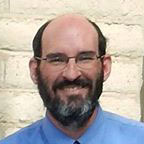
Richard Dyer Managing Editor | East Valley @RHDyer
Meet Richard Richard Dyer has worked at Independent Newsmedia Inc. USA since 1987, starting his career in Apache Junction as a copy editor and being promoted over the years to work as the editor of the Mesa Independent, news services editor for the East Valley office in Apache Junction, managing editor for the East Valley office, news services editor for the East Valley office and eventually also for the newspapers at INI’s then-Chandler office, managing editor again and as a news editor covering Apache Junction/Gold Canyon and Queen Creek. He helped start the Florence Independent while the news editor covering Apache Junction and Mesa news. In January 2023, he became associate managing editor for the East Valley newspapers and in August 2023 became managing editor for the East Valley newspapers of Chandler/Tempe, Gilbert, Queen Creek, Florence, Mesa and Apache Junction/Gold Canyon, while also reporting on Mesa and Apache Junction/Gold Canyon.
Community: Since 2009, he has worked as a volunteer to design The Blue Guitar Magazine, Blue Guitar Jr. magazine and Unstrung magazine, which are projects of The Arizona Consortium for the Arts; and since 2014, has been overseeing the art submissions.
Education: University of Arizona with a master of arts in journalism and a bachelor of science in agricultural communication. Also continuing education at Mesa Community College in welding in a metal art sculpture class.
Random fact: Saw his first tornado on May 31, 2010, which was classified as an EF-2, as part of a stormchasing tour group.
Hobbies: He is an artist of welded-steel sculptures, selling his artwork at juried and non-juried art shows.

 By
By 


Comments
No comments on this item Please log in to comment by clicking here