Home for good: Opening of new East Valley animal shelter turns thoughts to pet adoption
Courtesy Jeff Brown
The Maricopa County Board of Supervisors allocated $43 million for the Maricopa County East Valley Animal Care Center in Mesa that opened May 1.
Courtesy Jeff Brown
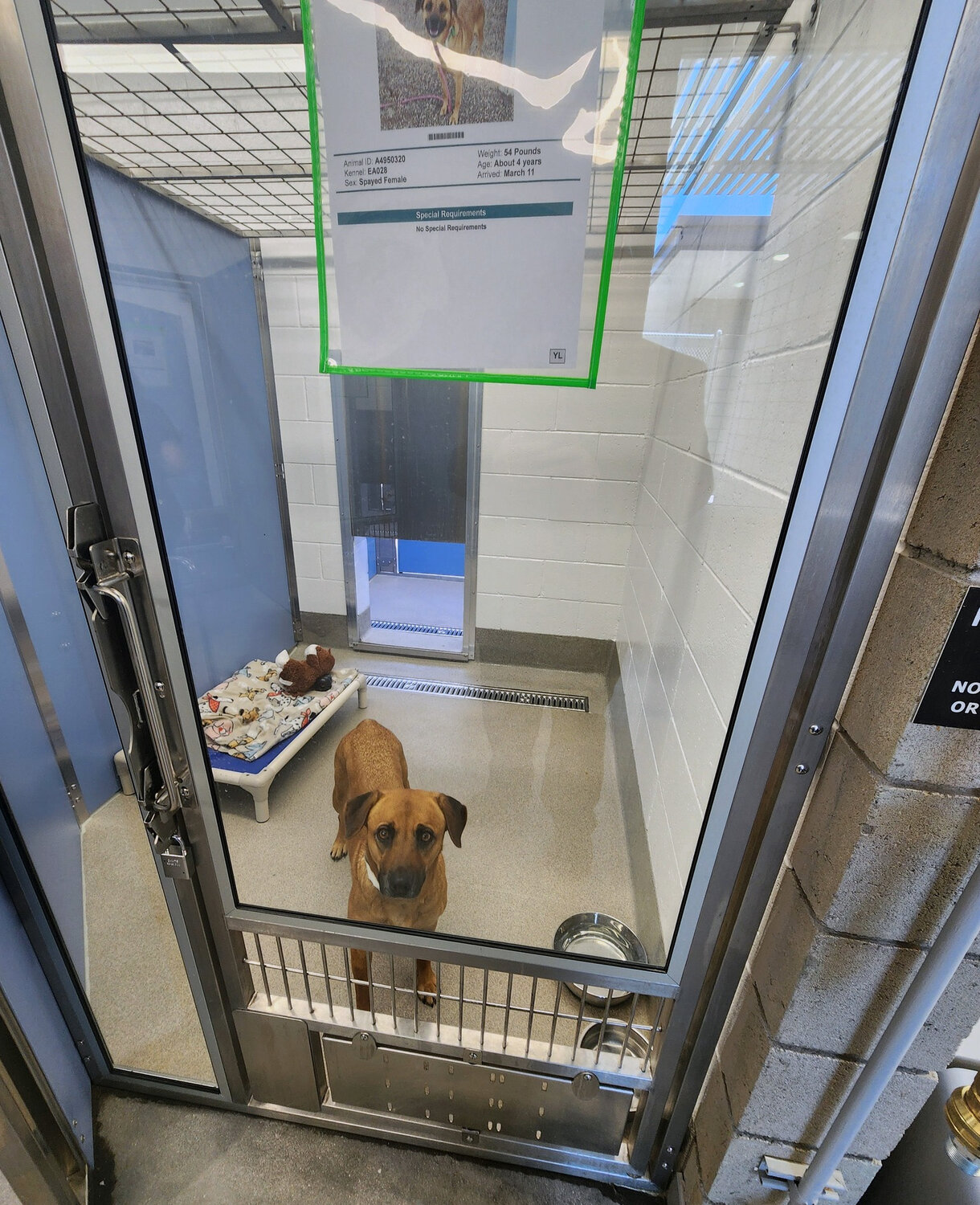
The shelter has 346 kennels that are larger than the former East Valley Shelter.
Courtesy Jeff Brown
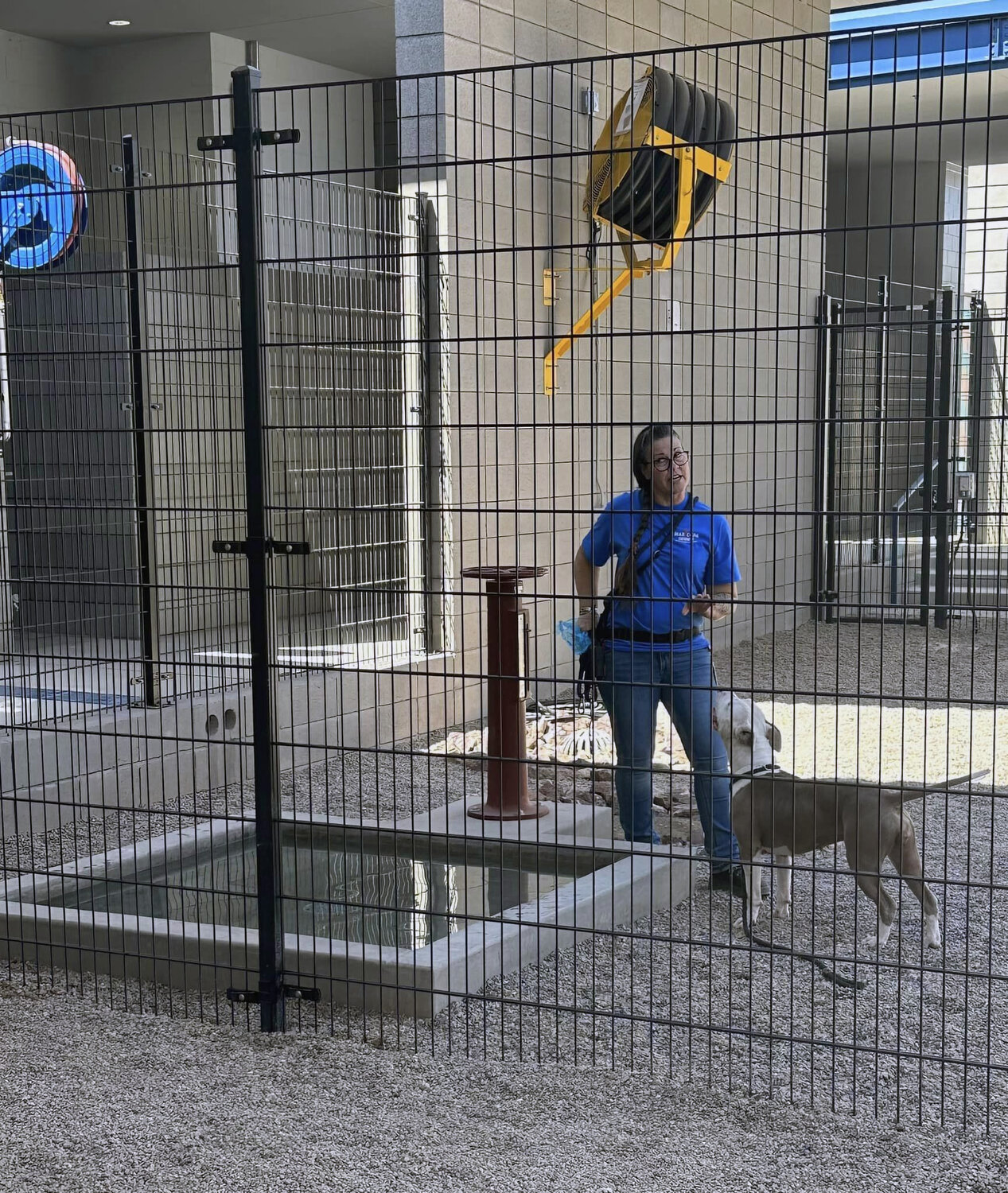
The new shelter has 21 yards of play runs for dogs.
Courtesy Jeff Brown
To celebrate the opening of the new shelter, the county is taking part in the Bissell Pet Foundation’s national “Empty the Shelters” drive that reduces adoption fees through May 15.
The opening of the new Maricopa County animal shelter in the East Valley was cause for celebration among animal lovers, but also a reminder that thousands of dogs and cats in the Valley have no place to call their forever home.
“It doesn’t create more kennel space in our community, it just creates better housing for them, which is a huge win,” said Heather Allen, president and CEO HALO Animal Rescue in Phoenix.
The Maricopa County Board of Supervisors allocated $43 million for the Maricopa County East Valley Animal Care Center at 1920 S. Lewis Drive in Mesa. The 84,000-square-foot facility has 346 kennels, 21 yards of play runs and a state-of-the art veterinarian clinic. It replaces the old facility that had dogs in chain-link pens with concrete floors.
“The old shelter was starting to show its age, but more importantly, it did not meet the quality of care that we want to provide for our animals. This new shelter is designed to meet Association of Shelter Veterinarians standards of care guidelines,” said Kim Powell, communications officer with Maricopa County Animal Care & Control.
The new shelter includes smaller groupings of kennels that have indoor and outdoor access. The kennels have a larger, angled layout that prevents over stimulation, keeps dogs relaxed and lowers noise levels. At the old facility, the kennels were about 2.3-feet wide and about 9-feet long. The kennels at the new facility are about 4-feet wide and 9.5-feet long.
“This new shelter was built to be adoptions-focused and to really showcase dogs,” Powell added. “It wasn’t built to be a large holding facility, but rather to be a place that invites the community in to join with us in getting dogs into homes as fast as possible.”
This is the county’s first new shelter since the West Valley Animal Care Center at 2500 S. 27th Ave., Phoenix, was opened 17 years ago. Powell said the county is in talks with a design firm to build a new West Valley shelter.
“A few months ago, the Board of Supervisors allocated $5.3 million to a space and feasibility study to determine what a new shelter could look like and where it could be. We are still in the early stages but are excited about the opportunity,” she said.
Need for shelter
In 2023, Maricopa County Animal Care & Control took in more than 16,300 pets, almost 2,000 were reunited with their owners, more than 10,800 were adopted and almost 1,700 were transferred to partner organizations such as HALO, according to the county.
However, cats likely make a very small portion of the rescues as the county is not mandated to take in felines.
“For some time, we did house cats and try to find them homes. With the animal overpopulation crisis, it was determined to turn the cat kennel areas into dog areas,” Powell said. “We still partner with two local Petco stores to house cats for us for adoption if they ever do arrive at MCACC.”
That’s where groups like HALO and many others throughout the Valley come in. HALO rescues dogs and especially cats, as do other rescue groups.
This time every year is considered kitten season, which further strains resources as rescue groups are inundated with requests to take in babies and mothers. A look at Valley animal rescue groups’ websites already show postings that they cannot take any more cats.
Along with cats that are surrendered to rescue groups, efforts are made to control the feral cat population. For example, the Animal Defense League of Arizona has a trap-neuter-return program where cats are sterilized and the tips of their ears are cut off so that you can tell from a distance they’re sterilized after they have been released.
“The shelters have limited capacity, and even if they could take cats, they would be full with cats too,” Allen said. “I think the biggest traction that could make a huge difference in the cats is the public sterilizing the cats that they have and the cats that they feed outside.”
Rationing of personal protective equipment during the pandemic exacerbated efforts to control the cat population as people could not take in animals to a vet for sterilization, Allen said.
“That has had a ripple effect on the unsterilized population even a few years later,” Allen said. “I think they estimated across the country that there were a few million spays or neuters that didn’t get done that otherwise would have.”
Adoption
The best-case scenario for homeless animals is adoption. To that end, the Bissell Pet Foundation, a national animal welfare organization dedicated to ending pet homelessness, is holding an “Empty the Shelters” reduced-fee adoption event through May 15. The foundation is sponsoring reduced adoption fees of $50 or less per cat or dog. MCACC is participating in the event. In addition, county adoption fees will be waived for dogs six months and older.
People in the market for a new pet may have noticed adoption fees have grown during the past few years. The average fee to adopt a puppy or kitten is $150 and up. The older the animal, the lower the price.
The reason for rising adoption prices, Allen said, is because of the rising costs of food, medicine and veterinary services, which by state law must at least include spay and neutering.
Allen said HALO pays up to $1,000 to sterilize, microchip, vaccinate and deworm an animal. Obviously, a $150 adoption fee does not offset costs, which can be even higher if the pet has other health problems.
To encourage more pet adoptions, HALO has embraced “open adoptions” where it works to make it easier for people to take home an animal. Allen acknowledges in an effort to protect the animals from bad homes, some rescue organizations make people jump through many hoops, including home visits, to get a pet. Despite years of working for animal welfare, Allen said even she had to go through a lengthy process to adopt her dog.
“We don’t create barriers to adoption. We come at this from a standpoint that people are good, and people want to help, and people are going to get a pet from somewhere and we want it to be from us. We want them to come to the shelters as a resource and not feel like. ‘I tried to get one from a rescue or a shelter, but they were so invasive with their questions, and they wouldn’t adopt to us and so I just bought a dog from the pet store or something, ” Allen said.
At HALO, if they determine after talking to prospective pet parents that perhaps the animal they want does not fit with their current living situations, they will work toward steering them to another dog or cat that would thrive with them.
“At the end of the day, that’s our job is to save as many lives as possible and trust in humans as a whole,” Allen said.
We’d like to invite our readers to submit their civil comments, pro or con, on this issue. Email AZOpinions@iniusa.org. Janet Perez can be reached at jperez@iniusa.org.
Janet Perez News Editor | Queen Creek &
San Tan Valley
Meet Janet Janet Perez joined Independent Newsmedia as editor of the Queen Creek Independent and Florence Independent in 2020. She started her career in 1989 with the Gannett-owned El Paso Times. In 1992, she moved to Tempe and has worked in newspapers, magazines, radio and television. She left Arizona for three years to work at New Mexico State University and Baylor University before returning to work at Arizona State University. Missing the business, she went back to journalism in 2017.
Community: A long-time pet owner, she supports animal welfare causes.
Education: University of Texas at El Paso with a BA in journalism and a minor in political science.
Random Fact: She had a head full of random facts.
Hobbies: Reading, watching documentaries, cooking and playing with her dogs.




 By
By 


Comments
No comments on this item Please log in to comment by clicking here