Chandler schools: SPED preschoolers now in more regular classes
Courtesy of Chandler USD
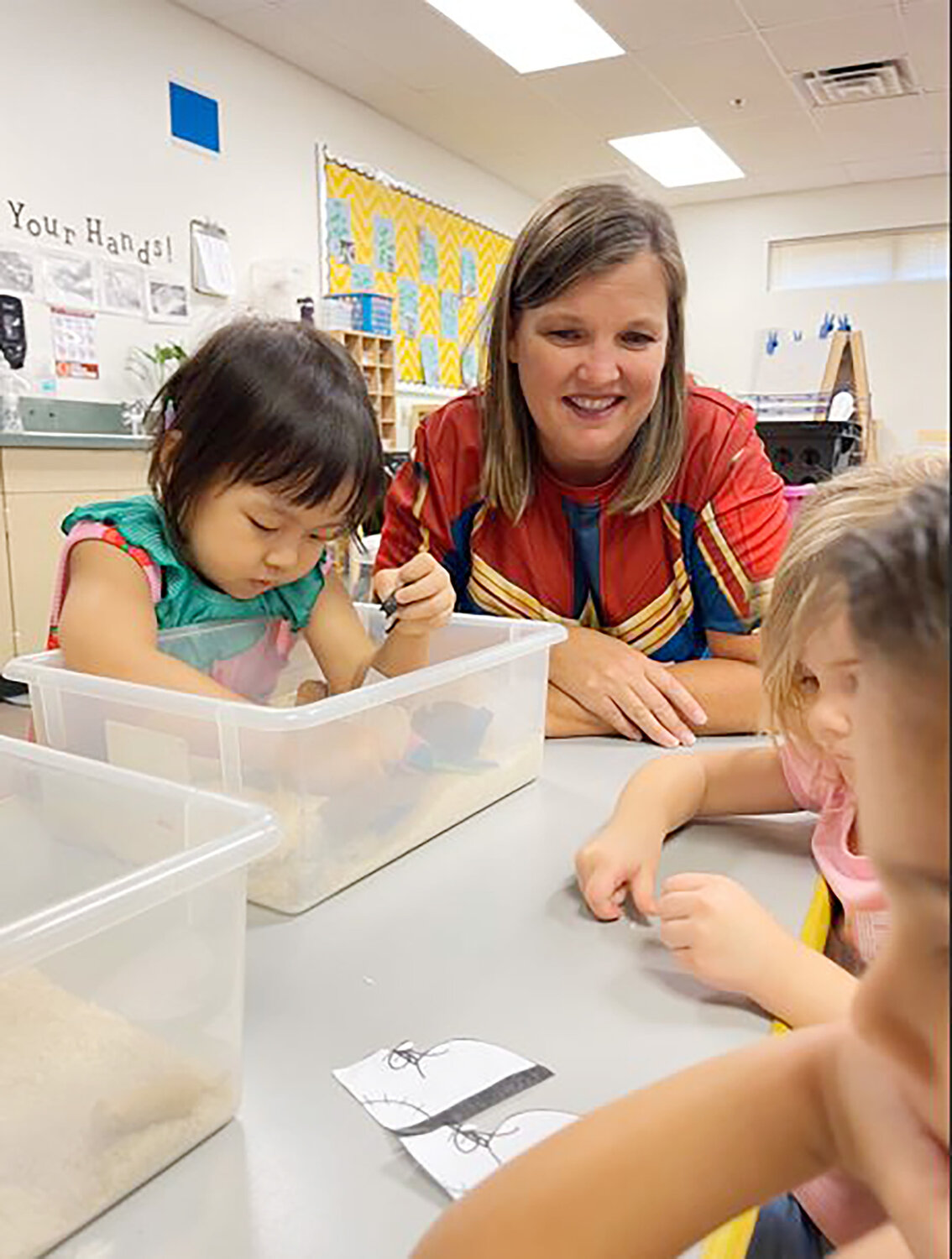
Chandler Unified School District students work on an activity at Santan Preschool. CUSD staff say they’ve received positive feedback from everyone involved in an effort to have more 3-year-old special education students in regular classes.
Courtesy of Chandler USD
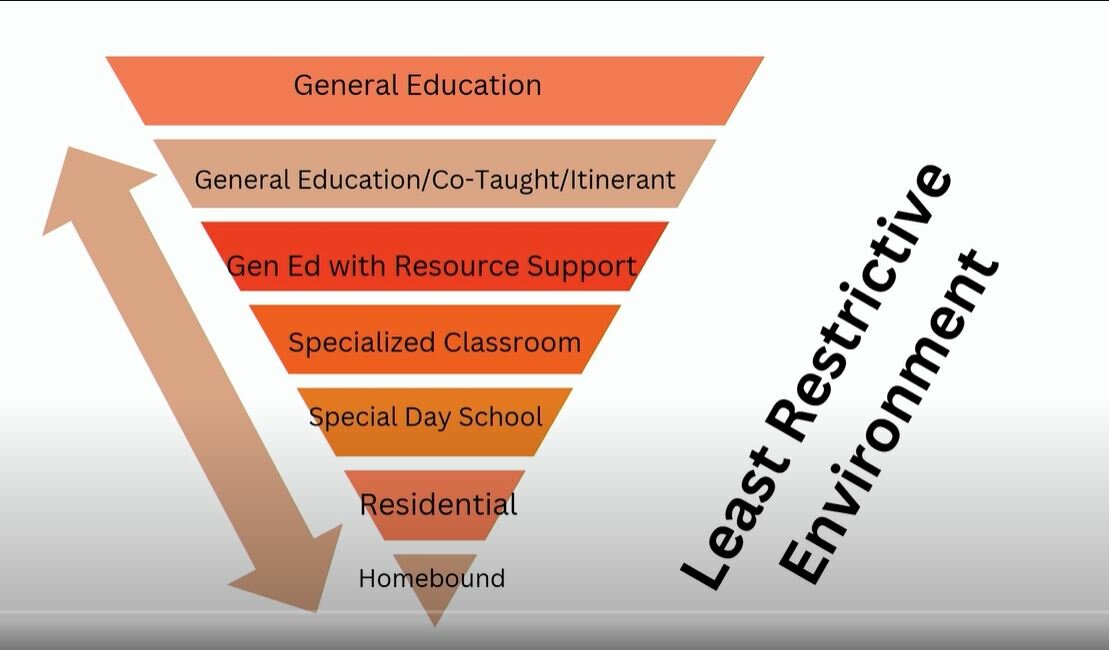
This chart shows Chandler Unified School District's types of special education environments. Dr. Kym Marshall said an initiative to get more 3-year-old special-ed preschoolers into regular classes has yielded positive results.
Chandler Unified School District administrators believe they’ve made some headway with a change in recent years in their approach to special education.
They want to hang onto that momentum.
Dr. Kym Marshall and teacher Alicia Wronski told the Chandler Independent they’re encouraged by the progress made by putting more and more 3-year-old special education preschoolers in with general classes of students.
Since the 2021-22 school year, Chandler Unified staff have tried to move more and more special-ed preschoolers into regular classes.
“It’s part of meeting students where they’re at,” Wronski said. “And it’s part of trying to make as many campuses as possible, all-inclusive.”
Marshall, the district’s executive director of student personalized learning, said the idea to get more 3-year-olds in general classes was Wronski’s idea.
“It was her project from the get-go,” Marshall said. “But it definitely fits without overall pre-K-12 effort to have as many kids as possible in an LRE — the least-restrictive environment possible.”
Marshall said CUSD has received state recognition for its preschool “flip of the continuum,” meaning a change from the vast majority of its preschoolers being in specialized settings, to the vast majority being in general classes with their peers.
“We’re down to 29% of preschoolers in specialized settings,” she said.
Marshall said there will still be exceptions, as there will likely always be at least a few students who need accommodations that can’t be provided in a typical classroom setting. She said there will also always be some students who need services like speech and language, which is still only provided at Hartford and Freedom elementaries.
“Those types of services aren’t all day, every day, though,” Marshall said. “We’re talking about 45 minutes to an hour, once per week.”
Marshall said since the effort really began with the 2021-22 school year, it’s too early to have trend numbers on whether 3-year-olds in the revamped program tend to remain in CUSD schools through kindergarten and beyond. But she said conversations she’s had with parents are encouraging.
Marshall said the growth of CUSD’s pre-K services is largely tied to federal programs and to the U.S. Dept. of Education. That’s why recent presidential executive orders and the proposed elimination of the Dept. of Education have drawn criticism and scrutiny, along with uncertainty.
She also pointed out that bond and override votes matter, in that nearly half of all transportation vehicle purchases and upkeep and labor costs benefit special-ed students.
Marshall said one key is to let parents know and get the word out on changes of this type. She said feedback from parents mirrors the ultimate positive reaction to CUSD no longer insisting special-ed students attend a particular district high school, even though parents were confused at first about services available on other campuses.
“It used to be that a few had the opportunity to be in regular classes,” she said. “And now, it’s most of them. So, typically, it seems they’re staying with CUSD.”
Jason W. Brooks News Editor | Chandler Independent
Jason W. Brooks joined Independent Newsmedia, Inc., USA, in July 2021 as an associate editor. After a year covering Buckeye, he has covered Chandler since the fall of 2022, in addition to assisting the Daily Independent throughout his time at INI.
Education: University of New Mexico, bachelor of arts in journalism and mass communication, print emphasis, English minor.
Random Fact: He and his siblings witnessed a Space Shuttle launch and landing in the same year in person, on opposite coasts.
Hobbies: Karaoke, bicycling and American Sign Language.



 By
By 


Comments
No comments on this item Please log in to comment by clicking here