Valley’s housing shortage could continue for ‘many’ years
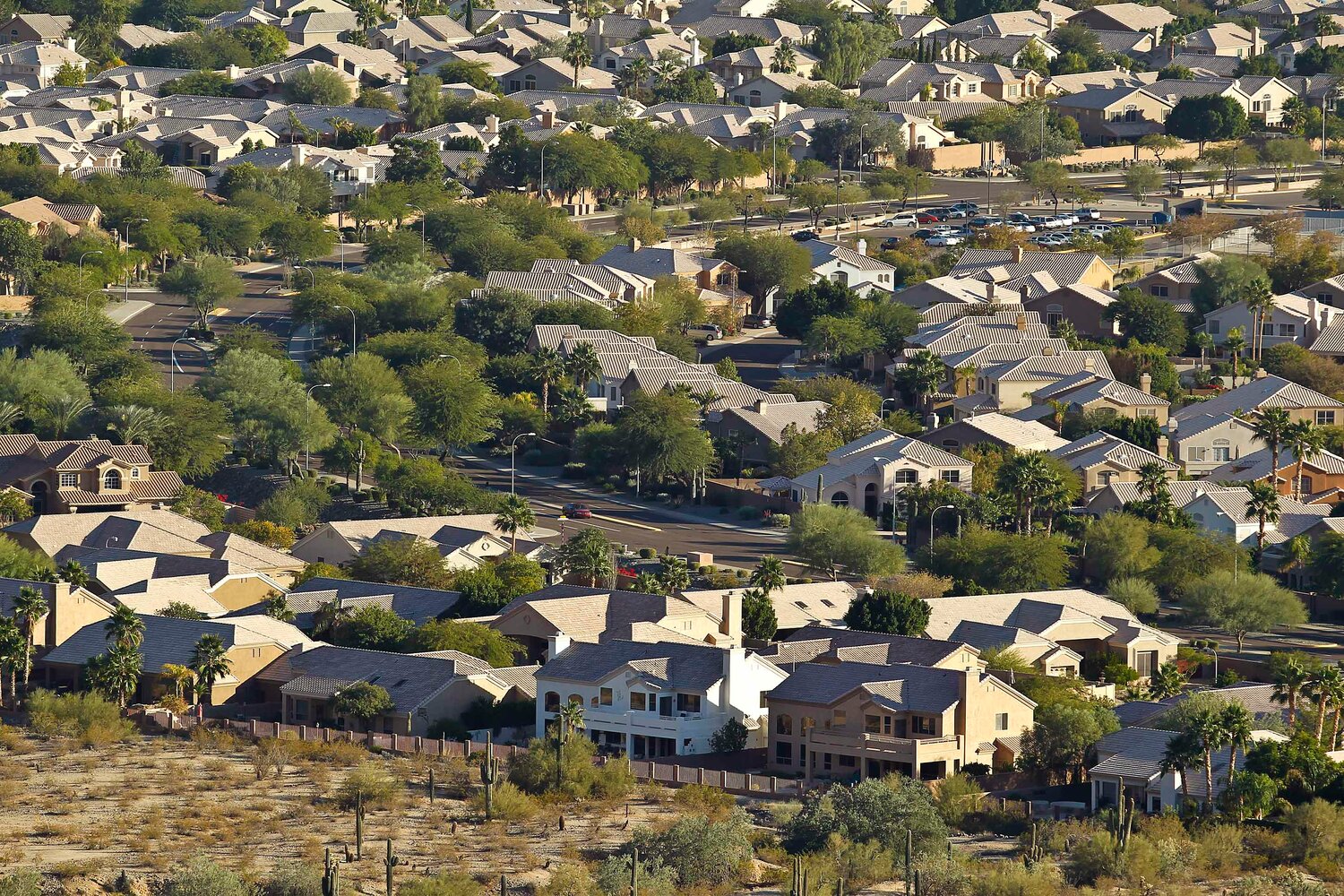
A housing development sits nestled into the South Mountain foothills in an Ahwatukee neighborhood. Constant population growth and higher mortgage interest rates could hinder the Valley’s effort to keep pace with its housing shortage in 2025, according to some experts.
The Associated Press/Ross D. Franklin
Constant population growth and higher mortgage interest rates could hinder the Valley’s effort to keep pace with its housing shortage in 2025, according to some experts.
Now, the Valley housing market is “fairly stable” with about five months inventory of single-family homes available for buyers in the current market. But the Valley won’t have a silver bullet to completely fix the housing shortage, said Kimberly Winson, a real estate professor at Arizona State University.
You must be a member to read this story.
Join our family of readers starting at $5 for your first month and support local, unbiased journalism.
Click here to see your options for becoming a subscriber.
Register to comment
Click here create a free account for posting comments.
Note that free accounts do not include access to premium content on this site.
I am anchor
Housing
Valley’s housing shortage could continue for ‘many’ years
The Associated Press/Ross D. Franklin
A housing development sits nestled into the South Mountain foothills in an Ahwatukee neighborhood. Constant population growth and higher mortgage interest rates could hinder the Valley’s effort to keep pace with its housing shortage in 2025, according to some experts.
Constant population growth and higher mortgage interest rates could hinder the Valley’s effort to keep pace with its housing shortage in 2025, according to some experts.
Now, the Valley housing market is “fairly stable” with about five months inventory of single-family homes available for buyers in the current market.
But the Valley won’t have a silver bullet to completely fix the housing shortage, said Kimberly Winson, a real estate professor at Arizona State University.
“(The Valley) is a desirable place to live,” Winson said. “Builders can’t build fast enough to keep pace.”
The Valley is home to “the fourth-fastest growing U.S. metro, housing demand has outpaced inventory for several years but (officials) are finally seeing momentum to meet” and balance demand, according to the Greater Phoenix Economic Council.
The number of single-and multi-family permits issued increased nearly 20% year-over-year, according to numbers from the Greater Phoenix Economic Council. From January 2024 to November 2024, 42,476 permits were issued in Maricopa and Pinal counties compared to 36,103 from January 2023 to December 2023, the GPEC statistics show.
Rental rates across the Valley are “averaging $1,800 per month — down from the August 2024 peak” of $1,825 per month, according to GPEC data.
“There is diverse demand for housing in Greater Phoenix,” according to the Greater Phoenix Economic Council. “Younger generations are delaying purchasing a home for the flexibility and mobility that renting allows and retirees are downsizing into luxury rentals. While the housing demand drove apartment rent up, increases are slowing as more homes become available.”
Builders are projected to deliver about 5,000 new apartment units per quarter over the next six quarters in the Phoenix market before a sharp decline, said Tom Brophy, housing analyst at dataphaz in Phoenix.
Builders are not expected to receive funding from banks after that time period, he said. Apartment occupancy in the Valley is at about 92% which makes it tough for tenants to move as that number rises, Brophy said.
Getting to a normal housing market has taken time with existing supply not changing at a rapid pace.
“It took us almost five years to get us to an assemblance of a normal market,” Brophy said.
But a black swan event —something happening rapidly to effect the housing market — could happen especially with people coming over from the California wildfires, Brophy said.
As of Jan. 13, fires in the Los Angeles area have killed “at least” 24 people, displaced “thousands” and destroyed more than 12,000 structures, according to a report from the Associated Press.
“How much will (the fires) impact us downstream — I don’t know,” Brophy said. “(An evening of the market) was getting there. Now, this throws a monkey wrench into everything.”
Officials are using resources to help get more units online.
For instance, the Maricopa County Board of Supervisors announced the grand opening of Salt River Flats, a newly an 192-unit, affordable housing development in south Phoenix in May. The funding came from $3 million in federal American Rescue Plan Act, according to GPEC.
But any increases to the Valley’s population is going to put pressure on the housing market, Winson said. With the same growth trajectory, the Valley is expected to continue to have issues with having enough housing in 2025 and beyond, she said.
A housing shortage in the Valley could continue for ‘many’ years, she said.
“Will we have enough housing?” Winson asked. “Probably not.”
Brent Ruffner joined Independent Newsmedia, Inc., USA, in 2021 where he writes about developments at TSMC and Maricopa County issues, including election topics.
He's written about stories that range from accusations that a Mesa monkey breeding facility is unsafe to what to do if you encounter a rattlesnake in the desert.
Community: He is a supporter of the American Cancer Society.
Education: Bachelor's degree in Journalism and Mass Communication, Arizona State University, May 2007.
Random Fact: He met former San Francisco Giants outfielder Willie Mays at a Phoenix Firebird game after winning a contest for an autographed baseball.
Hobbies: Hiking in the woods and collecting sports memorabilia.

 By
By 


Comments
No comments on this item Please log in to comment by clicking here