Top Republicans threaten lawsuit over proposed Arizona election rules
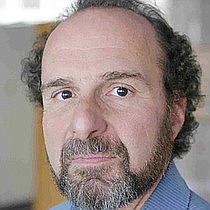
Secretary of State Adrian Fontes is under fire to change proposed rules for how elections are run or face a lawsuit. (Capitol Media Services/Howard Fischer)
PHOENIX — Two top Republican lawmakers have a message for Democratic Secretary of State Adrian Fontes: Change your proposed rules for how elections run or we’ll see you in court.
Senate President Warren Petersen and House Speaker Steve Montenegro contend some of what Fontes is planning to put in a new Elections Procedures Manual goes beyond what is in state law. That, they say, means he is trying to create law on his own, something he cannot do.
The questioned provisions range from changes to the voter registration process to whether party representatives can challenge early ballots over questions of whether the voter has provided proof of citizenship.
You must be a member to read this story.
Join our family of readers starting at $5 for your first month and support local, unbiased journalism.
Click here to see your options for becoming a subscriber.
Register to comment
Click here create a free account for posting comments.
Note that free accounts do not include access to premium content on this site.
I am anchor
Elections
Top Republicans threaten lawsuit over proposed Arizona election rules
Secretary of State Adrian Fontes is under fire to change proposed rules for how elections are run or face a lawsuit. (Capitol Media Services/Howard Fischer)
PHOENIX — Two top Republican lawmakers have a message for Democratic Secretary of State Adrian Fontes: Change your proposed rules for how elections run or we’ll see you in court.
Senate President Warren Petersen and House Speaker Steve Montenegro contend some of what Fontes is planning to put in a new Elections Procedures Manual goes beyond what is in state law. That, they say, means he is trying to create law on his own, something he cannot do.
The questioned provisions range from changes to the voter registration process to whether party representatives can challenge early ballots over questions of whether the voter has provided proof of citizenship.
“If the secretary of state wants rules changed, he should propose legislation like everyone else,” said Petersen in prepared comments.
“Arizona law is clear: The Legislature writes the rules for elections,” said Montenego.
“The secretary of state does not get to invent new ones,” he continued. “If Fontes refuses to correct these unlawful provisions, the courts will.”
Aaron Thacker, spokesman for Fontes, called the threats of litigation “premature,” saying the process fop adopting a new manual is still underway.
He declined to address any allegation raised by the GOP lawmakers.
“Let’s allow that process to unfold before jumping to conclusions or engaging in political theater,” Thacker told Capitol Media Services. “Once the ink is dry, we’ll be better positioned to have a substantive conversation.”
This isn’t the first time the secretary’s actions have been questioned. And judges previously have declared some of what he has done to be illegal.
State laws provide specifics of how everything from voter registration to elections are to be conducted.
But the law also requires the secretary of state on a biennial basis to craft a manual that gets into more specific details as guidance for election officials.
Some provisions spell out logistical issues, like posting the notice at polling places of write-in candidates and those who have withdrawn from the race. But it also spells out, in greater details than in statute, procedures and rules for polling places.
What makes those rules important is that what’s in the Elections Procedures Manual has the force of law, with violators subject to criminal prosecution. What’s also clear is that what’s in the manual cannot directly conflict with or overrule what’s in the Election Code.
Petersen and Montenegro contend that’s what’s happening.
For example, they cite a provision in the draft manual that says when a database check provides affirmative evidence someone is not a citizen, election officials should give that person up through 7 p.m. on Election Day to “cure” the defect.
They contend that applies only when mandated information is “incomplete or illegible.” But they say once an election official has actual indication the person is not a citizen, the application has to be rejected, a letter is sent to the applicant, and the case be referred to state and local prosecutors.
Also being questioned is a provision that if an applicant does not furnish “documentary proof of citizenship” — required under a 2004 voter-approved law — the county recorder must attempt to acquire that proof on the applicant’s behalf using other records, such as from the Motor Vehicle Division.
And they challenge another provision that says a “mistake or inconsistency” in the required registration of someone to circulate initiative petitions for pay can be excused. The GOP lawmakers say that runs contrary to state law and Supreme Court rulings that require all laws dealing with initiative petitions must be “strictly construed.”
Thacker said the comments by Petersen and Montenegro will be considered, along with any others submitted by this past Saturday’s deadline for feedback, with the possibility that there can be changes before the manual has to be submitted to Gov. Katie Hobbs and Attorney General Kris Mayes.
And they, in turn, can also ask for changes.
“This entire process is designed to be deliberative and transparent, and is scheduled to conclude by the statutory deadline of Dec. 31,” he said.
There actually was more time for comment this year after the state Court of Appeals ruled earlier this year Fontes had broken the law last time by allowing just 15 days for public comment. The judges said Arizona law requires at least 30 days for comments on any proposed regulations, elections or otherwise.
Time issues aside, this isn’t the first time a court has concluded Fontes tried to put items into the Elections Procedures Manual that are not allowed under state law.
A federal judge last year blocked Fontes from enforcing a provision in his 2023 version of the manual that would have allowed him to refuse to include a county’s vote in the statewide totals if the local supervisors fail to certify the results.
In an often strongly worded ruling, U.S. District Court Judge Michael Liburdi acknowledged the 2022 effort by the Cochise County Board of Supervisors to delay certification. That action threatened to delay the formal canvass of all votes throughout the state — and even change the outcome of some races.
But Liburdi said the solution Fontes incorporated in the Elections Procedures Manual — allowing him to skip over those uncertified votes simply to finalize the state results — would unfairly and illegally disenfranchise the voters who had cast their ballots.
“If the right to vote is the right of qualified voters within a state to cast their ballots and have them counted, then the canvass provision imposes the most severe burden: state-sanctioned disenfranchisement,” the judge wrote.
Consider, Liburdi said, what would happen if Maricopa County supervisors balked.
Under the rules Fontes enacted in the manual, he would have been permitted to certify the state results without including those votes. And that, the judge said would mean all 2.4 million votes from Maricopa residents would not count when the state finalized the results — meaning the results would be determined based on the votes only from the other 14 counties.
What’s worse, Liburdi said, is that none of this would be the fault of the disenfranchised voters.
“A registered voter in Arizona may perfectly comply with all voting requirements and obligations but nonetheless have her vote excluded based on the mal- or nonfeasance of public officials,” he wrote.
Liburdi also barred Fontes from enforcing another provision that would have prohibited “any activity by a person with the intent or effect of threatening, harassing, intimidating, or coercing voters ... inside or outside the 75-foot limit at a voting location.”
The judge said there’s no problem in general with barring intentional threats, intimidation or coercion. The issue, he said, was it also outlaws actions that have the effect of doing so, regardless of the intent of the person.
Then there’s the fact the manual, as written by Fontes, governed not just actions inside the 75-foot perimeter in which certain activities are forbidden by statute, like campaigning or taking pictures but also beyond that line.
“Thus, speech that a listener finds too loud, too offensive or too insolent — potentially anywhere in Arizona — is prohibited,” Liburdi wrote. “But it has long been established that speech may not be prohibited because it concerns subjects offending our sensibilities.”
Then there’s the fact that the prohibition is solely based on the reaction of the listener.
“Plaintiffs do not have fair notice of what speech is prohibited,” Liburdi wrote. And he said that, as worded, the provision could be enforced by a poll worker who would have the ability to have someone ejected from a polling place, even before they cast their own ballot.
“Moreover, the rule prohibits ‘offensive’ or ‘insulting’ speech without defining what categories of speech rise to the requisite level of offense or insult,” he continued. “Without any limitation, election officials and poll workers have nearly unfettered discretion in categorizing and regulating a voter’s speech.”
That, said Liburdi, increases the likelihood the provision would be arbitrarily enforced.
Fontes has asked the 9th Circuit Court of Appeals to review Liburdi’s decision. It has yet to rule on the issue.


 By
By 


Comments
No comments on this item Please log in to comment by clicking here