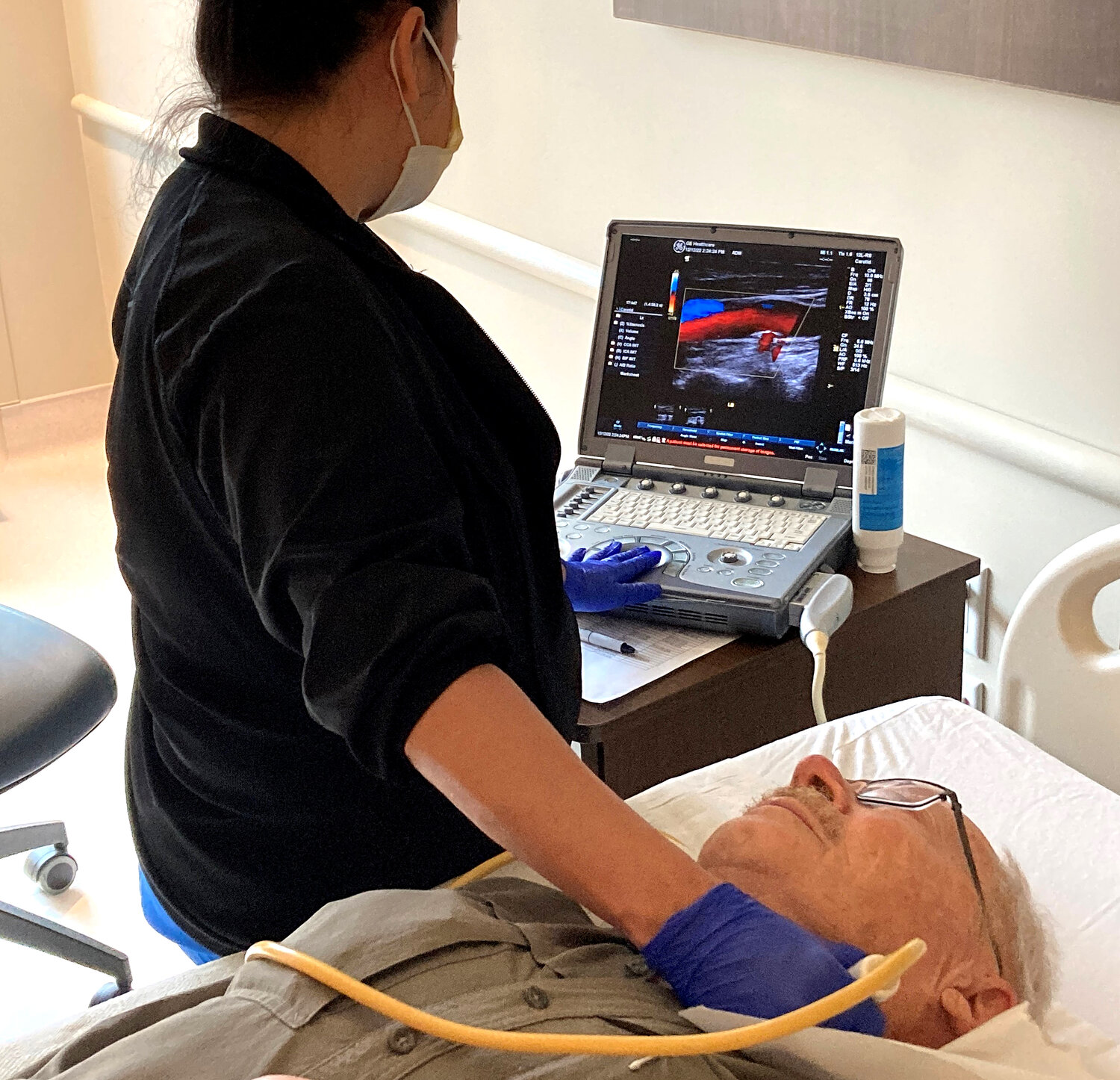
Carotid ultrasound exams are part of the Abrazo AngioScreen screenings. The next event will take place Sept. 22 at Abrazo Arizona Heart Hospital in Phoenix. RSVP by calling 1-844-721-4068.
(Photo provided by Abrazo Health)
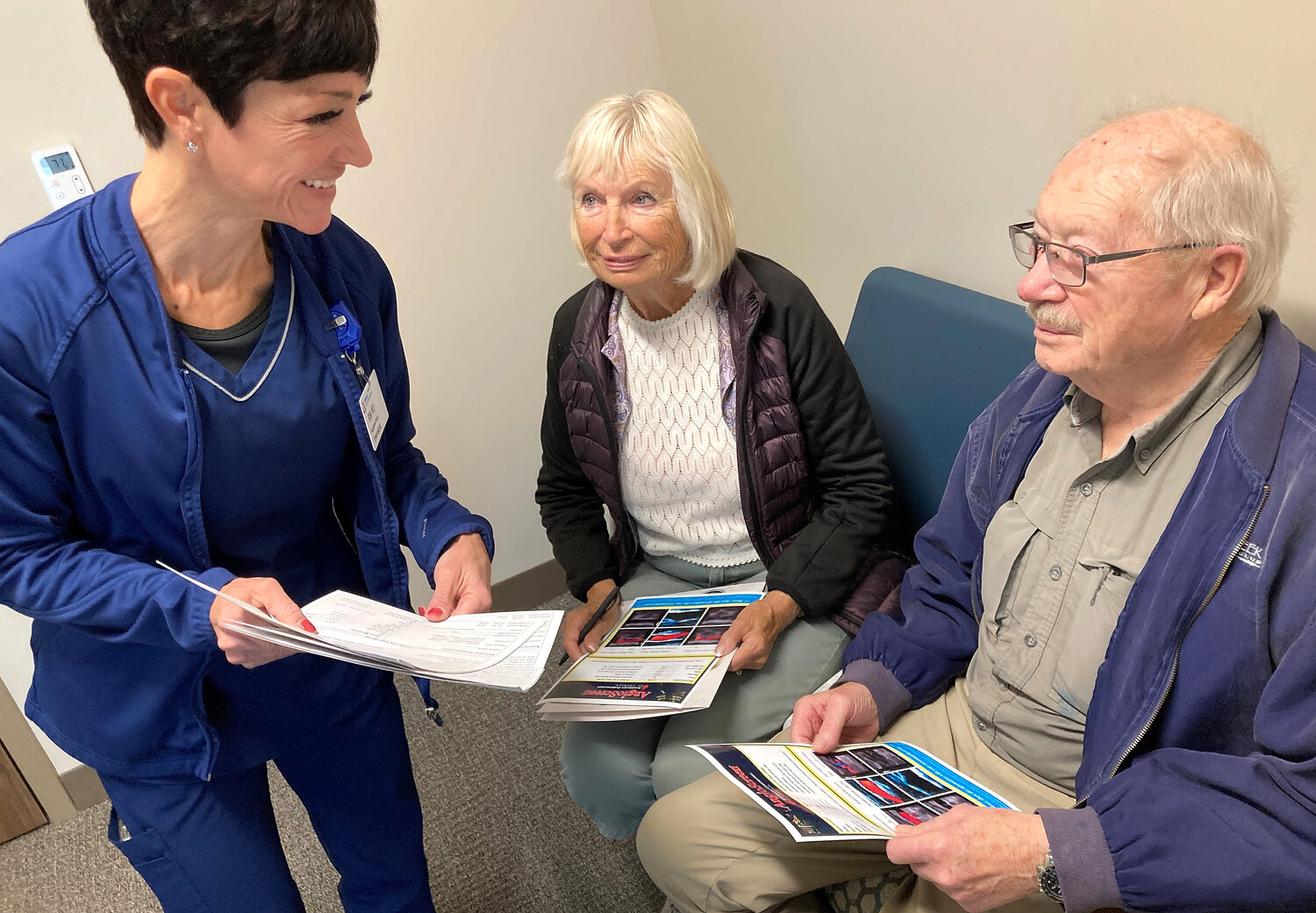
Abrazo exams take about 10 minutes and cost $59. A clinician provides a brief consultation, and participants are encouraged to follow up with their personal physician.
(Photo provided by Abrazo Health)
Abrazo Health’s AngioScreen health risk screenings for heart attack and stoke risks are finding health concerns like clogged arteries, irregular heartbeat and more, a press release states.
“We’ve had some great catches at recent AngioScreen events with finding arrhythmias, plaque build-up in the carotid artery and a couple of people were in hypertensive crisis,” Cindy Roberts, RN, Abrazo Health Outreach Manager, shared in a statement.
The next AngioScreen event goes from 9 a.m. to 4 p.m. Friday, Sept. 22 at Abrazo Arizona Heart Hospital, 1930 E. Thomas Road, in Phoenix. The exams take about 10 minutes to assess a person’s circulatory system and cost $59.
You must be a member to read this story.
Join our family of readers starting at $5 for your first month and support local, unbiased journalism.
Carotid ultrasound exams are part of the Abrazo AngioScreen screenings. The next event will take place Sept. 22 at Abrazo Arizona Heart Hospital in Phoenix. RSVP by calling 1-844-721-4068.
(Photo provided by Abrazo Health)
Abrazo exams take about 10 minutes and cost $59. A clinician provides a brief consultation, and participants are encouraged to follow up with their personal physician.
Posted
Every 30 seconds an American has a heart attack and every 40 seconds someone has a stroke. Angioscreen information can be used to share with your doctor to fully interpret the information in the context of your personal medical history.”
Cindy Roberts, RN, Abrazo Health Outreach Manager
IF YOU GO
What: AngioScreen Heart & Stroke Risk Screening
When: 9 a.m.-4 p.m. Friday, Sept. 22
Where: Abrazo Arizona Heart Hospital, 1930 E. Thomas Road, Phoenix
Register: Call 1-844-721-4068 or visit AbrazoHealth.com/events#4016
INSIDE THE NUMBERS
According to the U.S. Centers for Disease Control and Prevention:
-- Someone has a heart attack every 30 seconds
-- Someone has a stroke every 40 seconds
-- Every year, nearly 800,000 people in the U.S. have a stroke
-- Approximately 8.5 million people in the U.S. have peripheral artery disease
-- Heart disease is still the leading cause of death for both men and women
Source: Abrazo Health
Abrazo Arizona Heart Hospital 1930 E. Thomas Road Phoenix, AZ
View larger map
Special to Independent Newsmedia
Abrazo Health’s AngioScreen health risk screenings for heart attack and stoke risks are finding health concerns like clogged arteries, irregular heartbeat and more, a press release states.
“We’ve had some great catches at recent AngioScreen events with finding arrhythmias, plaque build-up in the carotid artery and a couple of people were in hypertensive crisis,” Cindy Roberts, RN, Abrazo Health Outreach Manager, shared in a statement.
The next AngioScreen event goes from 9 a.m. to 4 p.m. Friday, Sept. 22 at Abrazo Arizona Heart Hospital, 1930 E. Thomas Road, in Phoenix. The exams take about 10 minutes to assess a person’s circulatory system and cost $59.
A clinician provides a brief consultation, and participants are encouraged to follow up with their personal physician.
The AngioScreen health risk assessments include carotid ultrasound to check for artery blockage, simple EKG to check for atrial fibrillation (irregular heartbeat), ankle-branchial indexes to check for peripheral vascular disease, blood pressure check and BMI, and a private consultation with a clinician.
“Every 30 seconds an American has a heart attack and every 40 seconds someone has a stroke,” Roberts stated. “Angioscreen information can be used to share with your doctor to fully interpret the information in the context of your personal medical history.”
Abrazo exams take about 10 minutes and cost $59. A clinician provides a brief consultation, and participants are encouraged to follow up with their personal physician.



Comments
No comments on this item Please log in to comment by clicking here