Nevertheless, they persist: Why women continue working toward national history museum
Posted
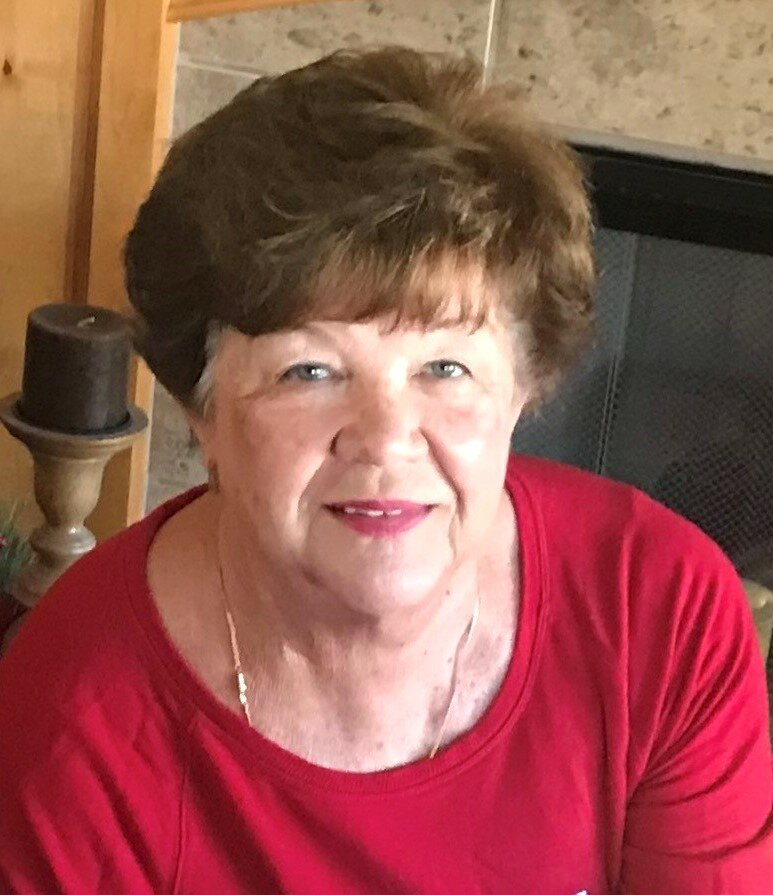
Diane Smith
Submitted photo
Learn More or Get Involved
The National Women’s History Museum is a nonpartisan nonprofit that preserves, educates and amplifies the diverse contributions and voices of women. To learn more to get involved, visit womenshistory.org/support-us, call 703 461 1920 or email info@womenshistory.org.
By Diane Smith | Women’s Watch
Despite the many Smithsonian museums in Washington, D.C., that celebrate various facets of American history, none have been solely dedicated to the contributions of American women — a glaring omission given women’s vital role in shaping the nation.
The National Women’s History Museum addressed this virtually, but advocates have long pushed for a permanent physical space. The NWHM board’s efforts to fund a commission, along with bipartisan support and champions like former Rep. Carolyn Maloney, D-New York, have advanced the cause despite legislative delays.
Meanwhile, the Smithsonian American Women’s History Initiative strategically embedded women’s stories throughout the institution to raise visibility and build public support. Through exhibitions, storytelling and collaboration, the initiative has laid the groundwork for the overdue and essential establishment of a full-fledged Smithsonian American Women’s History Museum.
From 2017 to 2020, the Smithsonian Women’s History Initiative actively sponsored impactful programs and exhibitions under the banner “Because of Her Story.” These efforts aimed to highlight and celebrate women's contributions to American history and culture, focusing on stories of women taking incredible risks.
Mildred Harnack’s story is an incredibly powerful example of courage, resistance, and quiet heroism in the face of overwhelming oppression. She wasn’t just a passive figure in history — she played an active role in a critical moment, fighting for justice in the most dangerous of circumstances. Her actions were not just about resistance to the Nazis; they were about fighting for the humanity of those oppressed by the regime.
Harnack, a history professor, had lived in Germany for years before World War II, and her connection to the country allowed her to navigate it in a way that most foreign-born people wouldn't have been able to. Her intellectual background and sharp mind gave her the perfect tools to analyze the situation and understand what was at stake. Her involvement helped form a network of spies and information that carried vital data to the Allies.
Her work involved risk at every level — her husband, Arvid Harnack, was part of the same resistance group. The dangers were immense, especially for a woman, an American woman, living in Nazi Germany.
It seems like Harnack’s story is the kind of forgotten history that is so often overlooked until a dedicated historian or researcher decides to shine a light on it. Would you agree? Her story certainly feels like the kind of heroic narrative that could be expanded on through more films or literature.
Parallel to these public-facing initiatives, Maloney, along with the late Sen. Dianne Feinstein, D-California, and Sen. Susan Collins, R-Maine, continued to champion legislation to establish a Smithsonian American Women’s History Museum.
A significant milestone occurred on a beautiful November day in 2016, when the commission’s final report recommending the creation of the museum was officially presented to a small bipartisan group of members of Congress. On the same day, a copy of the report was also delivered to President Barack Obama.
After the inauguration of President Donald Trump in January 2017, the momentum appeared to stall. Advocates feared that the women’s museum report — and a similar feasibility study supporting the creation of an American Latino Museum — had been shelved, left to gather dust in some congressional committee’s office.
NWHM commissioners independently raised the first $3 million to get the Smithsonian’s initiative off the ground. These lead gifts from Mary Boies, the DeVos Family Foundation and the Ford Foundation represented true political diversity. Additional fundraising has garnered over $55 million from private donors, including Coca-Cola, Gates Foundation and Hartford Insurance. The goal is to raise $200 million by 2026 to coincide with the nation’s 250th anniversary.
The NWHM is awaiting site locations, as identified in late 2022, and is awaiting the final approval decision from Congress. The construction timeline is expected to span a least a decade, with an anticipated opening after 2030
Women have played critical roles throughout history, yet their contributions have often been minimized or overlooked in official records, institutions and historical narratives. From political movements to scientific achievements, many women’s stories remain hidden or distorted. This gap in recognition contributes to an incomplete understanding of history and society.
Establishing a physical museum dedicated to women’s history would not only be an educational resource but also a powerful symbol of recognition. It would make a statement that women’s roles in shaping America are foundational, and their stories deserve to be preserved and celebrated. The museum would stand as a permanent reminder of the importance of inclusivity and equality in historical narratives.
Editor’s note: Women’s Watch is a cooperative writing effort of the local chapters of the American Association of University Women, the League of Women Voters and the National Organization for Women. This piece was authored by Diane Smith. Please send your comments to AzOpinions@iniusa.org. We are committed to publishing a wide variety of reader opinions, as long as they meet our Civility Guidelines.



Comments
No comments on this item Please log in to comment by clicking here