Fountain Hills legislator wants to change Arizona's election certification rules
Lawmaker seeks to protect county officials
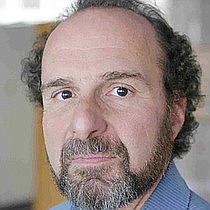
Sen. John Kavanagh's legislation seeks to allow county supervisors and other officials to only have to "acknowledge without prejudice'' the results of elections.
(Howard Fischer/Capitol Media Services/File photo)
PHOENIX - A veteran legislator is seeking to alter a law so that future supervisors never have to worry that they're being asked to certify election returns - even when they question the accuracy.
Existing law requires county supervisors after each election to "canvass'' the results. A similar requirement exists for cities and towns that conduct their own election.
The problem with that, according to some officials who are in that position, is they are being asked to certify the results as accurate, under penalty of jail if they refuse. And Sen. John Kavanagh said that's not right.
You must be a member to read this story.
Join our family of readers starting at $5 for your first month and support local, unbiased journalism.
Click here to see your options for becoming a subscriber.
Register to comment
Click here create a free account for posting comments.
Note that free accounts do not include access to premium content on this site.
I am anchor
VOTE
Fountain Hills legislator wants to change Arizona's election certification rules
Lawmaker seeks to protect county officials
(Howard Fischer/Capitol Media Services/File photo)
Sen. John Kavanagh's legislation seeks to allow county supervisors and other officials to only have to "acknowledge without prejudice'' the results of elections.
PHOENIX - A veteran legislator is seeking to alter a law so that future supervisors never have to worry that they're being asked to certify election returns - even when they question the accuracy.
Existing law requires county supervisors after each election to "canvass'' the results. A similar requirement exists for cities and towns that conduct their own election.
The problem with that, according to some officials who are in that position, is they are being asked to certify the results as accurate, under penalty of jail if they refuse. And Sen. John Kavanagh said that's not right.
"I was on a town council where I had to certify an election,'' the Fountain Hills Republican said.
"I had no idea how the election was run,'' he said. "I didn't run the election.''
That, said Kavanagh, is a problem.
"To force election officials, under threat of being arrested, to say 'this is a good election, I certify it,' is absurd,'' he said.
So, his legislation seeks to get around that by saying that supervisors and other officials only "acknowledge without prejudice'' the results of the election.
"We'll let them say what we know,'' Kavanagh said, which is that these are the results given to them by election officials - without saying they're accurate - "because they have no idea if they're correct or not.''
What it also seeks to do is avoid the problems that developed in recent elections when supervisors balked at certifying results.
Exhibit No. 1 is Cochise County.
After the 2022 election, Tom Crosby and Peggy Judd, the two Republican supervisors, refused to canvass the result after they said they had questions about whether the machines used to tabulate the ballots were properly certified. That refusal came despite repeated assurances from Kori Lorick, who was the state elections director, that the machines met all legal standards.
Judd finally complied - after being ordered to do so by Pima County Superior Court Judge Casey McGinley. He ruled state law is clear that the supervisors were required to certify the vote.
Crosby, despite the court order, didn't show up for the canvass, leaving it to Judd and Ann English, the lone Democrat on the board.
Nearly a year later Crosby and Judd were indicted on two felonies: failing to complete the canvass and interfering with an election officer. The latter was based on the delay in preventing Katie Hobbs, who was then secretary of state, from completing the statewide canvass.
Judd eventually pleaded guilty to a single misdemeanor charge of failing to perform her duties as an election official, was placed on probation and fined $500.
Crosby, who remains on the board, is set to go to trial early next year.
In a separate related 2022 incident, Mohave County supervisors were weighing whether to count votes by hand amid questions about the accuracy of tallying equipment. They did not do that - but only after a threat of possible prosecution from Attorney General Kris Mayes.
Kavanagh said his legislation would allow supervisors to go ahead and conduct the legally required canvass while not conceding that the results are accurate.
"It simply says that 'I am acknowledging that these are the results that were given to me,''' he said. "And 'without prejudice' being, 'I'm not saying they are correct or not because I have no idea, I wasn't involved.'''
But Adrian Fontes, the current secretary of state, thinks it's a bad idea.
"Our office views SB 1003 as nothing more than an attempt to give elected officials that want the ability to spread misinformation about elections - but not be held accountable - a free pass,'' Calli Jones, press aide to Fontes, said. She said tabulation machines are certified as required under both state and federal law.
What the legislation would do, Jones said, is provide a way for county officials, like what happened in Cochise County, to "stoke conspiracy theories about our elections'' but without fear of having to answer for that in court.
"If elected officials are going to spread misinformation and disinformation about election results, they should be willing to face the legal consequences,'' she said.
Kavanagh, however, said this has nothing to do with "election denial.''
"This is simply saying it's not right to make people basically swear that these are correct results when they have no idea if they're correct or not,'' he said. "They're probably correct, but they don't know.''


 By
By 


Comments
No comments on this item Please log in to comment by clicking here