Fontes defends reason for not giving out list of voters without proof of citizenship
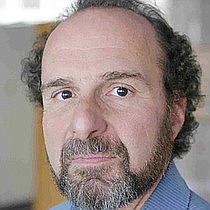
Secretary of State Adrian Fontes testifies Monday against the immediate release of the names of about 218,000 individuals for whom there is not proof of citizenship on file. (Photo from screen grab from livestream.)
PHOENIX — Secretary of State Adrian Fontes testified Monday that immediate release the names of about 218,000 or more voters who may not have provided proof of citizenship would lead to threats and intimidation of those on the list.
That’s assuming there is such a list, which he insisted there is not — at least not a full list.
Fontes told Maricopa County Superior Court Judge Scott Blaney of the threats he personally has faced from those who have accused him of not running the state election system in a fair manner. That has included people putting his home address on the internet and even “swatting,” where someone falsely tells police there is a dangerous incident at that address and they show up with multiple officers, some armed with rifles.
You must be a member to read this story.
Join our family of readers starting at $5 for your first month and support local, unbiased journalism.
Click here to see your options for becoming a subscriber.
Register to comment
Click here create a free account for posting comments.
Note that free accounts do not include access to premium content on this site.
I am anchor
Arizona Election 2024
Fontes defends reason for not giving out list of voters without proof of citizenship
Secretary of State Adrian Fontes testifies Monday against the immediate release of the names of about 218,000 individuals for whom there is not proof of citizenship on file. (Photo from screen grab from livestream.)
PHOENIX — Secretary of State Adrian Fontes testified Monday that immediate release the names of about 218,000 or more voters who may not have provided proof of citizenship would lead to threats and intimidation of those on the list.
That’s assuming there is such a list, which he insisted there is not — at least not a full list.
Fontes told Maricopa County Superior Court Judge Scott Blaney of the threats he personally has faced from those who have accused him of not running the state election system in a fair manner. That has included people putting his home address on the internet and even “swatting,” where someone falsely tells police there is a dangerous incident at that address and they show up with multiple officers, some armed with rifles.
He also said he normally wears a bulletproof vest, though he did not have it on Monday because of security screening in the courthouse.
His attorneys presented evidence from a University of Chicago professor, an expert in election threats, who said the people on the list could be at risk if others decide they may be the difference between Donald Trump and Kamala Harris winning the presidential race — particularly since Trump lost Arizona four years ago by just 10,475 votes.
Fontes said he fears for those voters.
“They can’t all walk around with a bodyguard and have 24/7 security officers outside of their house to protect them from harassment,” he said. 4
And Fontes said security experts “have given me sufficient information that I should be very concerned with the release of any more information on any of these folks who activists and agitators have labeled as noncitizen voters or illegal alien voters.”
Fontes did admit he has no evidence that Strong Communities Foundation, which does voter outreach and filed a public records lawsuit to get the information, has been involved in any voter harassment efforts.
“But I don’t know that it matters,” he said.
The secretary acknowledged the full voter registration database is a public record and can be used to contact registered voters and do voter outreach.
Merissa Hamilton, who chairs Strong Communities Foundation — also known as EZAZ — said there’s no intent to spread the information she seeks widely. Instead, she testified she wants to give it to county recorders so they can run their own checks to see if any of these people, who have been given permission by the Arizona Supreme Court to vote a full ballot this year, are really not citizens.
Hamilton also said she wants to share the list with at least four Republicans: Senate President Warren Petersen, House Speaker Ben Toma, Sen. Wendy Rogers who chairs the Senate Elections Committee, and Rep. Jackie Parker who is her House counterpart. That did not satisfy Fontes.
“I know that various members of the Legislature have lied, have continued to lie,” he said, though he did not name names.
Petersen was involved in the now-debunked “audit” of the 2020 presidential election.
Rogers has repeatedly claimed fraud in both the 2020 and 2022 elections lost by Republicans. And she and Parker have used their committees to host presentations from election conspiracy theorists.
“And I don’t see any of them stopping a lot of these lies and assisting a lot of the folks who are fomenting the divisiveness that we have in our society for their own personal or political gain,” Fontes said. “So, yeah, I’m going to fight like hell to keep a lot of those folks from having these lists.”
Blaney said if he orders the names released he probably can limit to whom Hamilton can give them. But the judge said he’s not sure if he can restrict who those who get them — notably lawmakers — can do with the list.
“I certainly am not going to put a prior restraint on the Legislature,” he said.
Fontes, however, told the judge he cannot stress how important it is to keep these names secret, at least while the election is pending and there are threats from some quarters to hang people for tyranny.
“I don’t want blood on my hands,” he said.
Fears of harm aside, there’s something else. Fontes said that, with the exception of an initial list of 98,000, there is nothing more to surrender.
Fontes did issue a statement last month that there are about 218,000 people for whom there is not the legally required proof of citizenship on file.
These are individuals who got a driver’s license prior to October 1996, before there was a mandate to prove legal presence to get a license.
All that became an issue when voters approved a measure in 2004 requiring “documented proof of citizenship’’ to register. But that law, from a practical standpoint, said it did not apply to anyone who had one of those pre-1996 licenses.
What went wrong is the Motor Vehicle Division said some people had post-1996 licenses when they really did not.
That occurred when MVD issued a duplicate license or change of address. And it was that later date that was reported to election officials as showing there is proof of citizenship on file when there is not.
With the election approaching, Fontes got the Arizona Supreme Court to rule that anyone on that list — meaning anyone who had an Arizona license since at least 1996 but may not have submitted proof of citizenship — can vote on all races in this election.
The alternative was to allow them to vote only for presidential and congressional candidates, as federal law does not require proof of citizenship. But the justices said that, given the short time remaining before the election, they wanted to err on the side of not disenfranchising people who, in many or most cases, probably are citizens.
Fixing the problem, the court said, can wait.
It is that list of those who were given the go-ahead to vote on all races that Stronger Communities wants to allow someone to check whether they are, in fact, legally entitled to vote. And it is that fear of having people going door-to-door and checking that Fontes said could result in intimidation — or worse if those doing the checking are operating on the premise that those on the list are not citizens.
Fontes insisted Monday there is no “list,” but simply an estimate. In fact, Fontes testified there’s actually another “list” which suggests that about 349,000 — close to 8% of all registered voters — may have the same citizenship proof problem, albeit for different reasons.
“We cannot depend on any of this information because of those shifting sands,” he said.
More to the point, Fontes said even if he wanted to comply with public records request — and he has made it clear he does not — he doesn’t actually have the names.
Instead, he told Blaney, who lacks that required proof actually is with MVD. And Fontes said that agency said it would take eight staffers working full time for 50 days to actually produce a clean list.
Anyway, Fontes said he is not the keeper of the records.
“They’re suing the wrong people,” he said.
Fontes later admitted he did get an initial list of about 98,000 from MVD. He said, though, he cannot surrender that information to Stronger Communities because of a federal law making driver license information confidential.
The bottom line for the judge may come down to the fact that, after all is said and done, this is a simple case of access to public records.
Arizona law has a presumption that records in the hands of public officials are available for inspection and to be copied. There are exceptions for privacy interests, not at issue here because the entire voter file is public.
But there is an exception for what has been defined as “the best interest of the state.” And it is that provision Fontes seeks to use to deny access, at least for the time being, based on what he said is the fear that those on the list could be targeted.
The secretary said he believes government “should be as transparent as possible.”
“But weighing the competing interests between having some radical hunting my voters versus running up against the general mood toward disclosure, I would prefer the public safety given all of the circumstances that we’ve talked about here, given everything we’ve discussed,” he said.
Then there’s the fact Arizona is the only state in the nation that requires proof of citizenship to vote.
Fontes said that sets the stage for those who would go out to challenge them would presume “these folks are illegal aliens who deserve to be strung up along with the elections officials who let them vote.”
Blaney said he will try to expedite a ruling but gave no date.


 By
By 


Comments
No comments on this item Please log in to comment by clicking here