Environmental group accuses U.S. Fish and Wildlife of altering rules for snakes to survive in AZ, NM
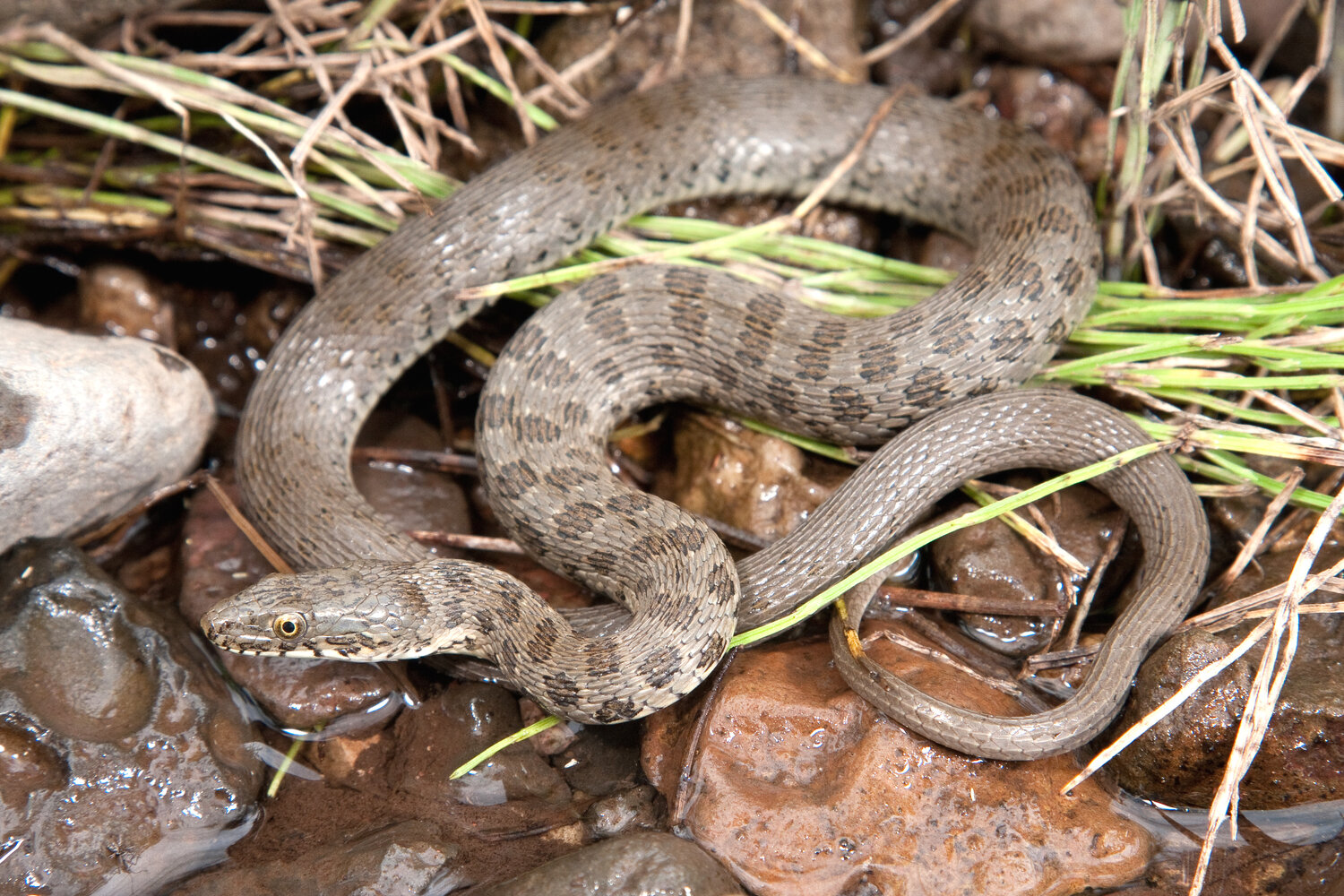
The Center for Biological Diversity contends it was illegal of the U.S. Fish and Wildlife Service to reduce the amount of critical habitat for the narrow-headed garter snake and the Northern Mexico garter snake. (Pierson Hill/Center for Biological Diversity)
PHOENIX — A Tucson-based environmental group is accusing the U.S. Fish and Wildlife Service of illegally altering its rules in ways that will harm the ability of two snakes to survive in Arizona and New Mexico.
The lawsuit filed Tuesday in federal court by the Center for Biological Diversity contends it was illegal of the agency to reduce the amount of critical habitat for the narrow-headed garter snake and the Northern Mexico garter snake. And now it wants a judge to order the service to go back and fix the issue.
There was no immediate response from Fish and Wildlife.
You must be a member to read this story.
Join our family of readers starting at $5 for your first month and support local, unbiased journalism.
Click here to see your options for becoming a subscriber.
Register to comment
Click here create a free account for posting comments.
Note that free accounts do not include access to premium content on this site.
I am anchor
ENVIRONMENT
Environmental group accuses U.S. Fish and Wildlife of altering rules for snakes to survive in AZ, NM
The Center for Biological Diversity contends it was illegal of the U.S. Fish and Wildlife Service to reduce the amount of critical habitat for the narrow-headed garter snake and the Northern Mexico garter snake. (Pierson Hill/Center for Biological Diversity)
PHOENIX — A Tucson-based environmental group is accusing the U.S. Fish and Wildlife Service of illegally altering its rules in ways that will harm the ability of two snakes to survive in Arizona and New Mexico.
The lawsuit filed Tuesday in federal court by the Center for Biological Diversity contends it was illegal of the agency to reduce the amount of critical habitat for the narrow-headed garter snake and the Northern Mexico garter snake. And now it wants a judge to order the service to go back and fix the issue.
There was no immediate response from Fish and Wildlife.
According to the legal papers, the two species were both listed as threatened throughout their range in 2014. At the same time, critical habitat was proposed: more than 421,000 acres for the northern Mexican garter snake and more than 210,000 acres for the narrow-headed garter snake.
But neither one was finalized.
In the interim, the lawsuit charges, the Trump administration revised rules under which areas considered “unoccupied” could be considered critical habitat. It also says other changes were made to the criteria used to provide such a designation.
And it says Fish and Wildlife excluded the designation of hundreds of thousands of acres of ephemeral streams despite noting in its own proposed rules that both snakes rely on them.
The result was Fish and Wildlife eventually approved protection for just 20,326 acres for the northern Mexico garter snake and less than 24,000 for the other species.
What makes all this important, according to Robin Silver, is that a critical habitat designation provides some protection against other activities that might harm the ability of a species to provide.
Consider ranching.
“Cow grazing destroys riparian areas,” said Silver, the co-founder of the organization. So a critical habitat designation would require proof that those who want to use the land for other purposes will not endanger the species for whom the habitat was set aside.
Conversely, reducing the habitat area eliminates those protections.
“Fish and Wildlife officials are once again choosing to protect interests of ranchers, developers and the Arizona Game and Fish Department at the expense of endangered species,” he said.
That state agency, said Silver, has been part of the problem because it has introduced non-native bullfrogs and fish, which he said post their own threats to the snake. There also are other factors beyond grazing, including mining, agriculture, suburban sprawl and drought due to climate change.
U.S. Fish and Wildlife Service,
snakes,
survival,
Arizona,
New Mexico,
Center for Biological Diversity,
narrow-headed garter snake,
Northern Mexico garter snake,
Trump administration,
Robin Silver,

 By
By 


Comments
No comments on this item Please log in to comment by clicking here