Arizona grapples with increasing school-age literacy gap
Trend persists as state pushes toward 2030 goals
Chris Pitts/Independent Newsmedia
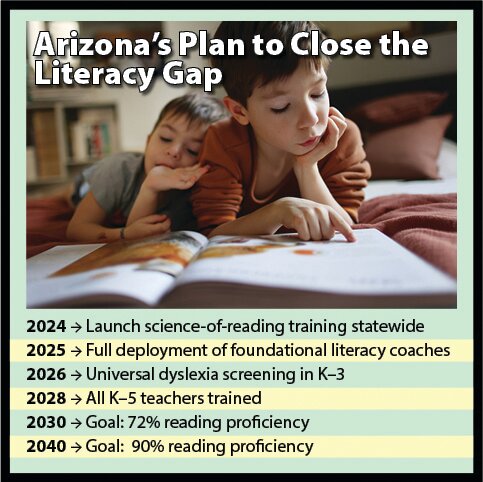
Arizona's plan to close the literacy gap.
Posted
The Issue:
Arizona’s reading proficiency rates continue to fall short of statewide goals, with sharp disparities across racial and socioeconomic lines — especially among the youngest and oldest students in public schools.
The Stats:
Recent 2024 data from NAEP and the state’s achievement dashboard show literacy gaps of 20 to 30 percentage points between white students and their Hispanic, Black and Native American peers. For example, while 54% of white third graders scored proficient in reading, only 30% of Hispanic and Black students did. Among eighth graders, 38% of white students reached proficiency, compared to just 17% of Hispanic, 10% of Black and 7% of Native American students.
The Solution:
To close the gap and reach its goal of 72% third-grade reading proficiency by 2030, Arizona is investing in early literacy programs, statewide teacher training in the science of reading and expanded coaching support for high-need schools. Advocates say these efforts must be paired with targeted intervention, culturally relevant instruction and increased support for underserved communities.
Literacy rates across the U.S. are reaching a critical juncture and Arizona reflects this national trend.
Statewide data shows that nearly half of Arizona’s third-grade students are not reading at grade level, where only 31% of fourth-graders meet proficiency and 40% fall below basic comprehension.
The numbers highlight an urgent need for early literacy intervention both locally and across the country.
According to the 2022–23 PIAAC assessment, only 17% of U.S. adults read at or below the lowest proficiency level, a figure that has remained unchanged since before 2016.
Nationally, the latest National Assessment of Educational Progress results from 2024 show that fourth- and eighth-grade reading scores have dropped to their lowest levels since tracking began in 1992. Just 60% of fourth-graders met the “basic” threshold, with only one-third reaching proficiency.
Globally, 2021 data from the Progress in International Reading Literacy Study confirms a similar trend, with U.S. students falling in international rankings amid widespread learning loss. Arizona mirrors these national patterns, with only 30% of fourth-graders reading at grade level.
This growing challenge is having a profound impact on schools and students, particularly in underserved and rural communities. As the foundation for all future learning, literacy is not just an academic issue — it’s a crisis shaping the long-term outcomes for children across the state.
The data highlights a widening achievement gap and underscores the need for early, sustained literacy interventions.
Why students are being left behind
In many schools, the issue isn’t lack of will — it’s a lack of tools. Experts say outdated textbooks, spotty broadband and high teacher turnover remain the norm in Arizona’s most underfunded districts. Instructional coaches are scarce. Data systems don’t always catch struggling readers in time. And in rural and reservation schools, access to high-quality literacy instruction can be limited by geography and infrastructure.
The pandemic pushed these issues past the breaking point. In 2022, more than a third of Arizona’s K–12 students were chronically absent — defined as missing 18 or more school days. Many never caught up.
The early years of reading instruction, especially between kindergarten and third grade, are critical — and missing them leaves a lasting impact.
New strategies take shape
To address the decline, the Arizona Department of Education is rolling out a statewide training initiative to ensure every K-5 teacher is versed in the science of reading by 2028. The plan includes hiring more literacy coaches in high-need schools, funding universal dyslexia screening and increasing support for English learners.
"Stakeholders across the state are taking meaningful steps to improve early literacy by collaborating on Arizona Literacy Plan 2030 which will outline the key drivers, proven strategies and actions required to improve literacy outcomes for Arizona students," said Terri Clark, Arizona Literacy director for Read On Arizona. "
According to Clark, the plan will roll out this summer and is focused on four key drivers:
Building educator capacity in the science of reading;
Scaling evidence-based solutions;
Strengthening families and communities to support early literacy development;
Increasing access to quality early learning opportunities;
Tools for families
Libraries and community centers also are stepping up to reach families beyond school walls.
“Our literacy outreach extends year-round,” said Sarah Kaufman, senior manager at the Scottsdale Public Library. “We work with schools and nonprofits to reach kids through programs like the Summer Reading Challenge, early literacy campaigns and our Lit Links visits.”
Kaufman also emphasized the power of collaboration. “To expand literacy outreach, the Scottsdale Public Library collaborates with local community partners such as the Maricopa County Library District, Scottsdale Unified School District, Boys and Girls Club, YMCA and others to promote the Summer Reading Challenge to the community."
Parent participation is just as important when encouraging students to read.
"Our literacy outreach extends year-round through efforts such as the 2nd Grade Library Card Campaign, Lit Links school visits, library card sign-up campaigns at local schools, Rio Montana Park Storywalk Celebrations, Scottsdale Family Resource Center early literacy programs and Family Read Aloud Night events in partnership with the Scottsdale Unified School District,” Kaufman said.
Looking beyond the classroom
That kind of wraparound support is gaining traction across the country. In Mississippi and North Carolina, structured literacy training and embedded coaching have helped improve early reading outcomes. In Illinois, culturally responsive reading materials paired with literacy coaches are helping students engage with content that reflects their lived experiences.
Arizona literacy advocates like Clark agree Arizona must follow suit — not just with training, but with transformation. That includes:
Expanding high-dosage tutoring for struggling readers;
Embedding culturally relevant materials into curricula;
Partnering with families to build home-based reading routines;
Using real-time data to direct interventions where they’re most needed.
The road ahead
With new state benchmarks due this fall, pressure is mounting. The path to 2030 won’t be paved by policy alone. It will depend on whether Arizona can finally bridge the opportunity gap that has defined literacy outcomes for decades — and do it in time for the next generation.
“Literacy is the key to a child’s future success in school and life," said Clark. "Parents play an important role in supporting their child’s reading development at home by reinforcing foundational skills they are working on in the classroom.”
Editor’s note: A grant from the Arizona Local News Foundation made this story possible. The foundation awarded 15 newsrooms to pay for solutions-focused education reporters for two years. Please submit comments at yourvalley.net/letters or email them to AzOpinions@iniusa.org. We are committed to publishing a wide variety of reader opinions, as long as they meet our Civility Guidelines.

 By
By 


Comments
No comments on this item Please log in to comment by clicking here