Arizona House budget looks to bar in-state tuition for those not in U.S. legally
Measure could set up legal ballot after voters approval in 2022
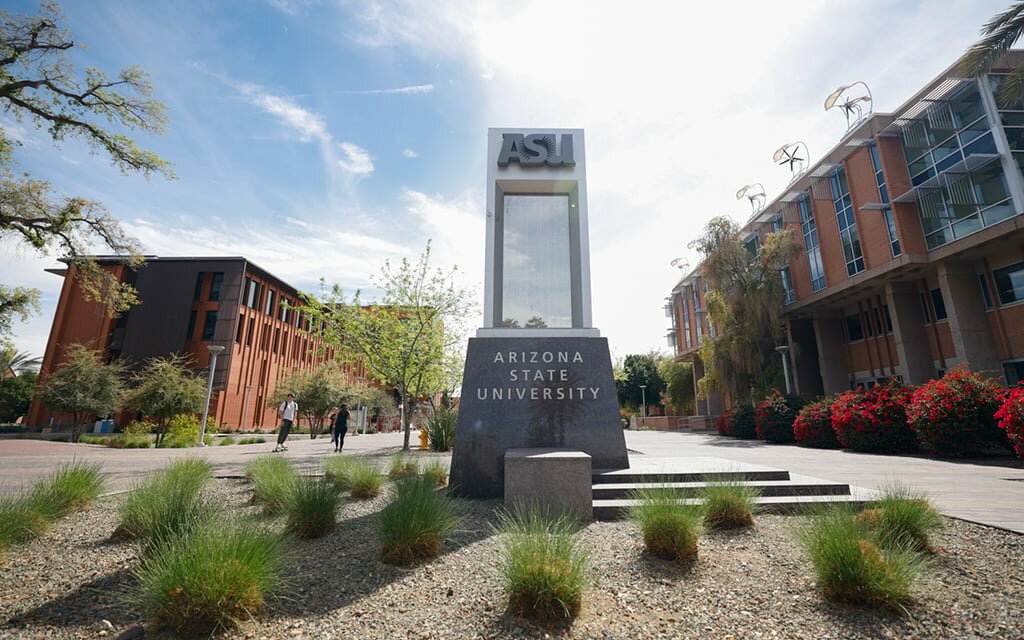
Arizona State University and the state's two other universities would be barred from offering in-state tuition to illegal residents, despite voters having approved that in 2022. Such a move could present a legal fight. (Photo by Sydney Lovan/Cronkite News)
PHOENIX — Republican lawmakers are moving to deny in-state tuition at state universities to anyone not here legally, a move that could undermine what voters approved just three years ago.
A provision in the House budget approved Thursday on a party-line vote by the House Appropriations Committee would prohibit the schools from using public money to “subsidize, offset, reduce or mitigate the tuition or fees to any student who is not lawfully present in the United States.” The legislation even would bar universities from using private dollars to underwrite tuition for those in the same group.
Rep. Matt Gress, who is one of the lead lawmakers crafting the package, acknowledged voters in 2022 agreed to allow “dreamers” — those in the Deferred Action for Childhood Arrivals program — to pay in-state tuition if they meet certain other conditions.
You must be a member to read this story.
Join our family of readers starting at $5 for your first month and support local, unbiased journalism.
Click here to see your options for becoming a subscriber.
Register to comment
Click here create a free account for posting comments.
Note that free accounts do not include access to premium content on this site.
I am anchor
Government
Arizona House budget looks to bar in-state tuition for those not in U.S. legally
Measure could set up legal ballot after voters approval in 2022
Arizona State University and the state's two other universities would be barred from offering in-state tuition to illegal residents, despite voters having approved that in 2022. Such a move could present a legal fight. (Photo by Sydney Lovan/Cronkite News)
PHOENIX — Republican lawmakers are moving to deny in-state tuition at state universities to anyone not here legally, a move that could undermine what voters approved just three years ago.
A provision in the House budget approved Thursday on a party-line vote by the House Appropriations Committee would prohibit the schools from using public money to “subsidize, offset, reduce or mitigate the tuition or fees to any student who is not lawfully present in the United States.” The legislation even would bar universities from using private dollars to underwrite tuition for those in the same group.
Rep. Matt Gress, who is one of the lead lawmakers crafting the package, acknowledged voters in 2022 agreed to allow “dreamers” — those in the Deferred Action for Childhood Arrivals program — to pay in-state tuition if they meet certain other conditions.
But the Phoenix Republican said he doesn't believe the proposal runs afoul of Proposition 308 that was approved by a 51-49 margin. He said that's because DACA recipients could be considered to be here lawfully.
If there is a conflict, “it will be litigated,” Gress said.
Restrictions on who can pay in-state tuition is just one of three provisions in the plan crafted by House Republicans that deal with universities in the $17.3 billion state budget that is scheduled for debate and vote by the full House on Friday.
The package also would require the schools to roll back in-state tuition by 2.5% — a figure that Gress puts at about $314 a year — and prohibit any increase for the following two school years. The state would not make up the difference in university budgets under this plan, effectively meaning the schools will have less money.
Gress declined to put a figure on that dollar loss. But he said he believes the move is justified.
“We do believe that the cost burden on resident students needs to be lowered,” Gress said.
The plan, however, does make extra money available to universities, at least indirectly, by increasing their capacity to borrow money. That includes new research facilities as well as a plan by Arizona State University to build a new hospital.
But it is the provision on who does — and does not — get to pay in-state tuition that could provoke not just opposition but litigation.
The Arizona Constitution prohibits lawmakers from altering or repealing anything enacted at the ballot box. The only exception would be for changes that “further the purpose” of the original voter-approved measure — and only with a three-fourths vote of both the House and Senate.
Undermining the in-state tuition mandate for dreamers would not further what voters approved. And, if nothing else, unified opposition by Democrats precludes supporters of the plan from getting the necessary margin.
That leaves the question is whether what’s in the proposed House budget conflicts with Proposition 308. Arizona had its own law against those not here legally being eligible for in-state tuition until the 2022 measure was approved.
It created an exception to that ban on in-state tuition, both at universities and community colleges, for those who attended and graduated from any public or private high school while physically present in Arizona for at least two years, regardless of their immigration status.
This budget proposal likely wouldn’t do that, according to Gress.
“We would be prohibiting the universities from using resources to provide tuition subsidies to students here in the country illegally,” Gress said.
He said that would be based on three separate definitions in the budget spelling out that those not qualified for in-state tuition include people:
• Present in the United States “without authorization under federal law”;
• A foreign national who has been paroled into the United States by the Department of Homeland Security;
• A foreign national who has applied or intends to apply for asylum if the application has not yet been approved.
“The leading principle here is if you are here illegally you should not be getting Arizona public benefits,” Gress said.
On one hand, he said, the budget language could be read so it does not conflict with Proposition 308. That’s based on the argument DACA status authorizes them to be in the country.
But U.S. Citizenship and Immigration Services says those who are granted DACA status — and there are various requirements — are considered to be “lawfully present” while any action to deport them is deferred. But the agency also says DACA recipients are the beneficiaries of “prosecutorial discretion” where Homeland Security has decided not to focus its attention.
Even that, however, is less than settled.
In January a federal appeals court declared that major parts of DACA to be unlawful, though the court has agreed not to allow enforcement of immigration laws against current recipients. So the future of that program — and the status of DACA recipients — remains unclear.
Gress points Texas had its own law, dating back to 2001, allowing “dreamers” who live there to pay in-state tuition.
That got the attention of the Department of Justice, under Trump, to file suit to declare the law illegal.
“Under federal law, schools cannot provide benefits to illegal aliens that they do not provide to U.S. citizens,” Attorney General Pam Bondi said in a prepared statement. She said the litigation was designed to “ensure that U.S. citizens are not treated like second-class citizens anywhere in the country.”
When Texas Attorney General Ken Paxton refused to fight the lawsuit, a federal judge issued an order earlier this month voiding the Texas law on lower tuition for dreamers.
Gress said it would appear Arizona’s tuition arrangement is subject to the same legal challenges. That’s because a dreamer — legally a citizen of another country where born but here on deferred legal status -- pays a lot less than an out-of-state resident.
Using that precedent, Gress said, trying to maintain in-state tuition for dreamers in Arizona would undermine the ability of universities here to charge higher rates to residents of other states.
Sen. John Kavanagh, who chairs the Senate Appropriations Committee, said a similar provision to deny in-state tuition to those not here legally also may be part of the Senate budget proposal that is going to be released Friday. The Fountain Hills Republican, like Gress, cited that federal court ruling in Texas.
“We’re looking into if that’s something that overrides the proposition,” he said.
Rep. Lorena Austin said her reading of the budget provision is it runs afoul of what voters approved in Proposition 308.
“I think that’s absolutely egregious,” said the Mesa Democrat. “It shows that we do not entrust our citizens who are voting to have their voices heard
Nancy Gutierrez, the assistant House minority leader, said she also believes the budget provision probably is an unconstitutional violation of Prop 308.
“And even if it’s found not to be unconstitutional, it is meant to be disrespectful to every Arizona voter who voted ‘yes’ on Prop 308,” said the Tucson Democrat. “Voters want people who have grown up here to have in-state tuition, period.”
Democratic Rep. Stephanie Stahl Hamilton, also of Tucson, said if DACA recipients are spared under the budget provision — as Gress said they may be — she believes Republicans have inserted this language for political purposes.
It starts, she said, with the question of whether there actually are non-DACA recipients even going to state universities.
“It continues to cause fear for no good reason other than to score political points and to continue to grab votes because you’re causing fear in people, and adding some sort of conspiracy,” Stahl Hamilton said.
The budget package, including the provisions on higher education, are scheduled to go to the full House on Friday.
Senate Republicans, meanwhile, are set to unveil their own spending plan — and related legislation — on Friday.

 By
By 


Comments
No comments on this item Please log in to comment by clicking here