Arizona government faces July 1 shutdown without budget deal
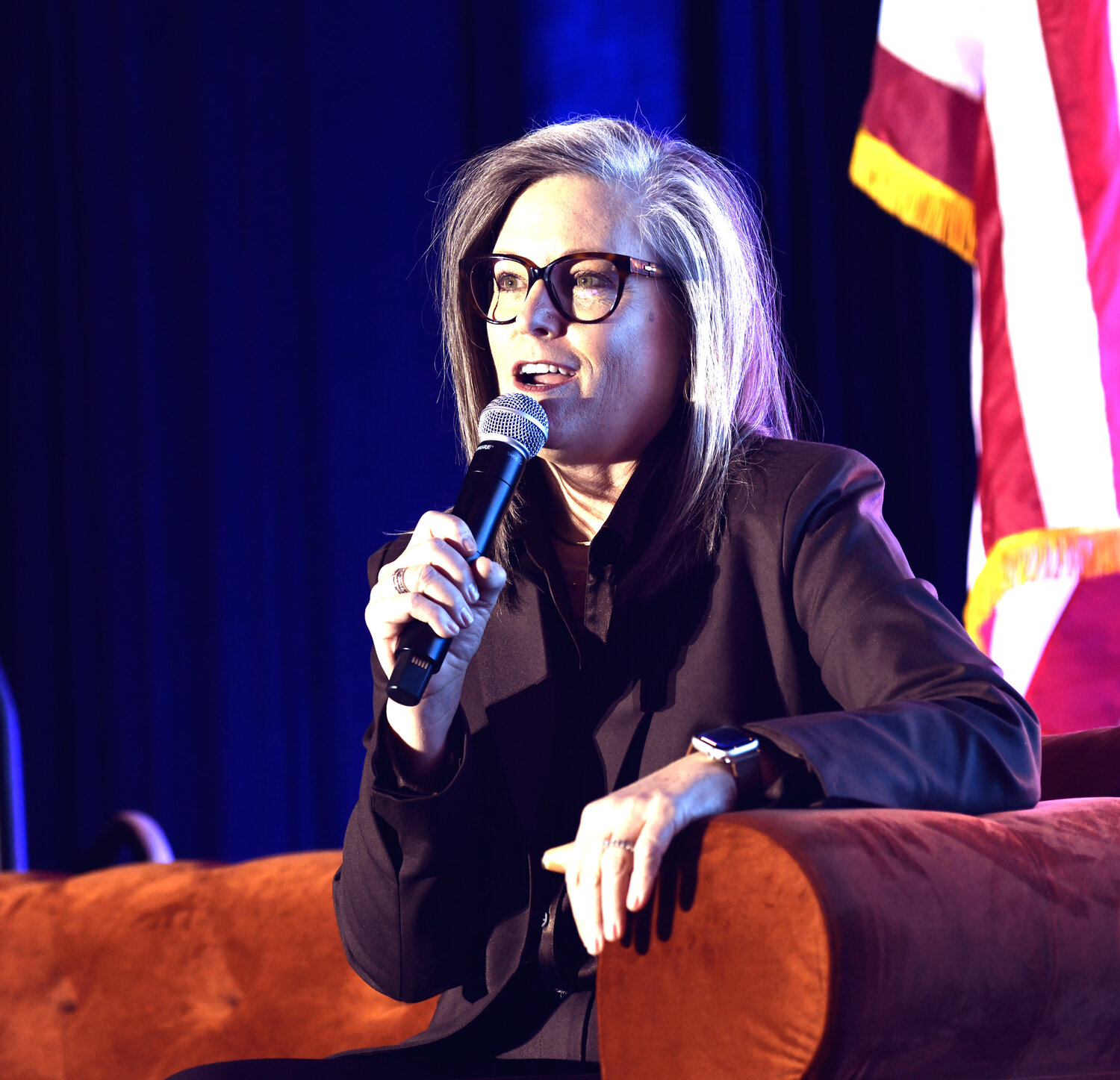
Arizona Gov. Katie Hobbs
(Capitol Media Services/File photo)
PHOENIX - With a hard deadline of just over a month before Arizona government shuts down if a new state budget isn't enacted, Republican lawmakers and Democratic Gov. Katie Hobbs - or at least her staff - are finally talking.
The delay in starting talks despite the GOP-controlled Legislature being in session for nearly five months and the July 1 deadline put pressure on both sides to hammer out a deal quickly.
Part of the issue holding up the start of negotiations has been talks about extending Proposition 123.
You must be a member to read this story.
Join our family of readers starting at $5 for your first month and support local, unbiased journalism.
Click here to see your options for becoming a subscriber.
Register to comment
Click here create a free account for posting comments.
Note that free accounts do not include access to premium content on this site.
I am anchor
HOBBS/LEGISLATURE
Arizona government faces July 1 shutdown without budget deal
(Capitol Media Services/File photo)
Arizona Gov. Katie Hobbs
Posted
BOB CHRISTIE | CAPITOL MEDIA SERVICE
PHOENIX - With a hard deadline of just over a month before Arizona government shuts down if a new state budget isn't enacted, Republican lawmakers and Democratic Gov. Katie Hobbs - or at least her staff - are finally talking.
The delay in starting talks despite the GOP-controlled Legislature being in session for nearly five months and the July 1 deadline put pressure on both sides to hammer out a deal quickly.
Part of the issue holding up the start of negotiations has been talks about extending Proposition 123.
The 2016 voter-approved ballot referral was designed to settle a lawsuit by schools over funding cuts by tapping about $300 million more a year from the state land trust created at statehood to mainly support public schools. It expires this year, but GOP lawmakers last week decided to wait until next year to send any Prop 123 extension to the voters.
Part of that decision was because Republicans hope to include a constitutional change protecting the state's universal school voucher program in any extension. The Legislature doesn't need Hobbs to OK the needed ballot referral, and she's opposed to vouchers in general.
But a bigger reason for slow-walking budget talks has been uncertainty about state tax revenue.
After starting the calendar year with an expected $612 million in new revenue, the Legislature's budget analysts and a group of outside economists lowered that figure to $277 million in mid-April.
The change was prompted by concern that new federal tariffs would affect consumer spending and related tax collections and probable federal spending cuts by the Trump administration. Fears of a potential recession also contributed to the lower revenue estimate.
Those changes resulted in a prediction for a surplus of just 2% in the expected $17.6 billion budget for the coming year. Since then, concerns about tariffs have moderated slightly.
Then April's tax collections numbers came in much higher than expected - $207 million higher, mainly due to a big increase in individual income tax payments.
That news, released last week, gives some unexpected breathing room, although the Legislature's budget analysts cautioned that budget negotiators should not count on that as ongoing revenue. That's because much of the higher income tax revenue was driven by a surge in capital gains as people locked in stock profits late last year before Donald Trump took office.
"I think everybody understands where the economy is, the fragile nature of the economy, and then also the potential impacts from federal administration decisions,'' House Speaker Steve Montenegro said Tuesday.
"So, I think we all understand that the numbers are flat here in Arizona,'' the Goodyear Republican said. "We all see that there isn't a lot of room here, there isn't room for spending."
Sen. John Kavanagh, R-Fountain Hills, said Friday that formal budget talks could begin this week, although as of Tuesday none have been scheduled.
Hobbs is looking at the looming deadline as well.
"We have started informal conversations this week,'' she said Thursday. "So, I'm hopeful we can meet the 40-day deadline that's in front of us.''
That hard deadline keeps ticking away: As of Tuesday, just 34 days remain before a government shutdown if a budget isn't passed by the Legislature and signed by the governor.



Comments
No comments on this item Please log in to comment by clicking here