Arizona AG says state not violating law in allowing immigrants in-state college tuition
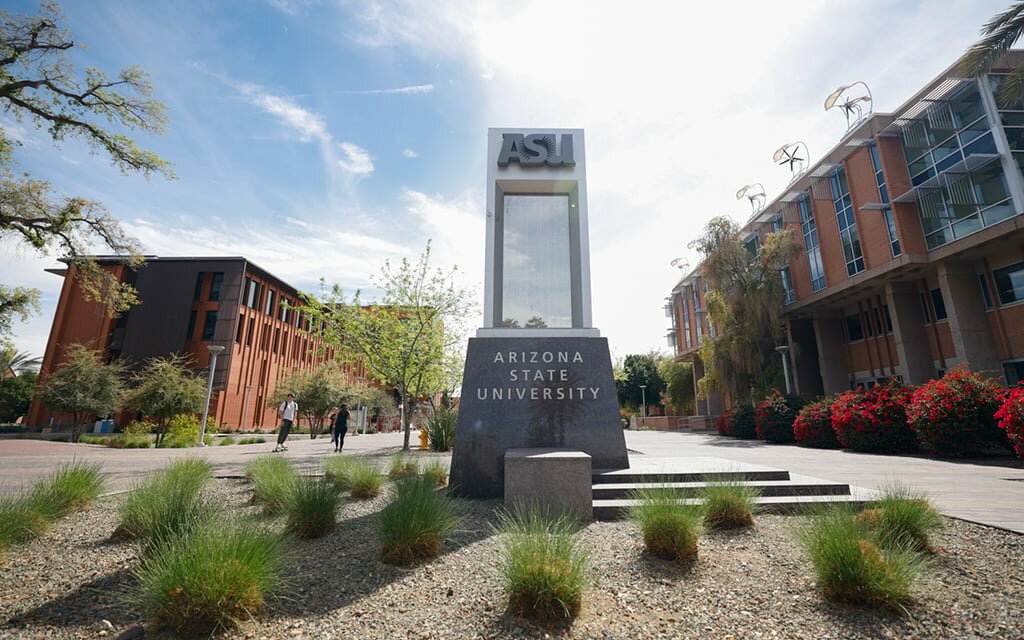
Arizona colleges and universities can offer in-state tuition to immigrants under DACA without running afoul of federal law, according to Attorney General Kris Mayes. Photo taken on ASU’s Tempe campus on Monday, March 17, 2024. (Photo by Sydney Lovan/Cronkite News)
PHOENIX — Attorney General Kris Mayes says Arizona is not violating federal law in offering in-state tuition at public colleges and universities to those not here legally despite an edict from President Trump.
In a new opinion, Mayes acknowledged the president issued a sweeping executive order in April on issues related to immigration.
One provision directs U.S. Attorney General Pam Bondi to take action against any state that has practices that give benefits to aliens that are not available to all American citizens. That, the order says, includes “state laws that provide in-state higher education tuition to aliens but not to out-of-state American citizens.”
You must be a member to read this story.
Join our family of readers starting at $5 for your first month and support local, unbiased journalism.
Click here to see your options for becoming a subscriber.
Register to comment
Click here create a free account for posting comments.
Note that free accounts do not include access to premium content on this site.
I am anchor
Legal
Arizona AG says state not violating law in allowing immigrants in-state college tuition
Arizona colleges and universities can offer in-state tuition to immigrants under DACA without running afoul of federal law, according to Attorney General Kris Mayes. Photo taken on ASU’s Tempe campus on Monday, March 17, 2024. (Photo by Sydney Lovan/Cronkite News)
PHOENIX — Attorney General Kris Mayes says Arizona is not violating federal law in offering in-state tuition at public colleges and universities to those not here legally despite an edict from President Trump.
In a new opinion, Mayes acknowledged the president issued a sweeping executive order in April on issues related to immigration.
One provision directs U.S. Attorney General Pam Bondi to take action against any state that has practices that give benefits to aliens that are not available to all American citizens. That, the order says, includes “state laws that provide in-state higher education tuition to aliens but not to out-of-state American citizens.”
Mayes does not dispute that Proposition 308 allows certain individuals who have graduated from a high school in Arizona to pay the same tuition available to state residents, regardless of immigration status. At the same time, U.S. citizens from another state can be required to pay the higher non-resident tuition.
But the attorney general contends the wording of the 2022 ballot measure is sufficiently different than what’s forbidden by federal law to allow it to withstand any challenge that might come from the Trump administration.
That, she said, means it is not subject to the same challenges as already have been mounted in Texas, Kentucky and Minnesota.
The issue of tuition for those who are not citizens traces its roots back to the Obama administration, which created the Deferred Action for Childhood Arrivals program in 2012. It allows people who arrived in this country illegally as children before 2007 to remain and even to work if they meet certain conditions.
Based on that, the Maricopa Community College system and, later, the Arizona Board of Regents agreed to let DACA recipients pay in-state tuition. But the Arizona Supreme Court ruled in 2018 that is precluded by Proposition 300, a 2006 ballot measure that denies various public benefits to those not in the country legally — including any form of subsidized tuition.
Proposition 308, approved by a margin of 51.2% to 48.8%, was crafted to create an exception.
What makes it legal despite the federal law, Mayes said, is that eligibility for in-state tuition is not based on being an Arizona resident. Instead, to qualify, someone needed to have attended an Arizona high school “while physically present in this state for at least two years” and having obtained a diploma in Arizona.
Mayes concluded it is not residency that triggers eligibility.
“Although many people who meet the eligibility requirements will also be residents, not all will be,” she said.
“For example, a student could meet the statute’s attendance and graduation requirement, move to another state, and then plan to return to Arizona for college,” Mayes wrote. “That student would not be a current Arizona resident, but would be eligible for in-state tuition.”
She also said the law allows in-state tuition for someone who crosses into Arizona every day from another state to attend school here despite being a legal resident of that other state.
Conversely, she said, some Arizona residents will not be eligible for in-state tuition. That, said Mayes, could be an Arizona resident who did not attend high school for the two years required by the law and did not graduate from high school here.
What’s crucial, said Mayes, is the 1998 federal law — the one Trump wants Bondi to use to deny in-state tuition to those not here legally — specifically says “an alien who is not lawfully present in the United States shall not be eligible on the basis of residence within a state for any postsecondary education benefit.”
She said Proposition 308, by contrast, does not establish eligibility for in-state tuition on the basis of residence but the other factors such as physical presence in attending and graduating from high school in Arizona.
When the ballot measure was being debated, the American Immigration Council, which favored Proposition 308, estimated that the lower tuition provision would mean that more than 3,600 dreamers would be able to enroll in college. The council also said the ability of college-educated people to qualify for better jobs would generate an additional $4.9 million annually in federal income taxes and state and local taxes.
The legal status of DACA recipients remains murky. In January, a federal appeals court declared that major parts of the program are unlawful. But the court has agreed not to allow enforcement of immigration laws against current recipients.
Tricia McLaughlin, assistant press secretary for the Department of Homeland Security, had her own take.
“Illegal aliens who claim to be recipients of Deferred Action for Childhood Arrivals are not automatically protected from deportations,” she told NPR. “DACA does not confer any form of legal status in this country.”
McLaughlin specifically said DACA recipients are subject to arrest and deportation in certain circumstances, like commission of a crime. She also urged them to self-deport.
“We encourage every person here illegally to take advantage of this offer and reserve a chance to come back to the U.S. the right legal way,” McLaughlin said.

 By
By 


Comments
No comments on this item Please log in to comment by clicking here