Another ‘fake elector’ case dismissed in exchange for email access
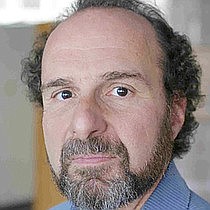
Then-Arizona Republican U.S. Senate candidate Jim Lamon poses for a photograph prior to the Arizona Republican Senate primary debate hosted by Newsmax at the Madison Center for The Arts on July 13, 2022. The case against Lamon regarding his participation in what is called the “fake electors” case has been dismissed in exchange for voluntarily surrendering emails he received to he attorney general’s office.
Associated Press/Ross D. Franklin
PHOENIX — Another of the 18 people indicted last year in the “fake electors” case is off the legal hook.
A deal struck by Jim Lamon to voluntarily surrender to the attorney general’s office some emails he received is resulting in all charges being dropped against him. Spokesman Richie Taylor declined to say what is in the emails and who they are from.
“They are important to the state’s case,” he said. “That’s all I can tell you.”
You must be a member to read this story.
Join our family of readers starting at $5 for your first month and support local, unbiased journalism.
Click here to see your options for becoming a subscriber.
Register to comment
Click here create a free account for posting comments.
Note that free accounts do not include access to premium content on this site.
I am anchor
Legal
Another ‘fake elector’ case dismissed in exchange for email access
Associated Press/Ross D. Franklin
Then-Arizona Republican U.S. Senate candidate Jim Lamon poses for a photograph prior to the Arizona Republican Senate primary debate hosted by Newsmax at the Madison Center for The Arts on July 13, 2022. The case against Lamon regarding his participation in what is called the “fake electors” case has been dismissed in exchange for voluntarily surrendering emails he received to he attorney general’s office.
PHOENIX — Another of the 18 people indicted last year in the “fake electors” case is off the legal hook.
A deal struck by Jim Lamon to voluntarily surrender to the attorney general’s office some emails he received is resulting in all charges being dropped against him. Spokesman Richie Taylor declined to say what is in the emails and who they are from.
“They are important to the state’s case,” he said. “That’s all I can tell you.”
As it turns out, the AG’s office had the documents, which had been produced under a subpoena. But Taylor said that really didn’t help.
“We couldn’t use that without Lamon’s approval,” he said.
Part of that, Taylor said, is there is no active case right now.
That’s because a trial judge tossed out the indictments against Lamon and the remaining defendants after he concluded grand jurors were not given all the information to which they were entitled. The AG’s office is seeking Supreme Court review.
“So what this agreement allows us to do is get those emails now and use them for the case,” Taylor said — assuming there is a case going forward.
But Taylor said there was the potential some of the emails could be considered protected by attorney-client privilege.
“They were not usable to the state given the way that they were received,” Taylor said.
With the deal — and the documents being voluntarily surrendered — those legal issues go away.
The emails, however, could prove of little use unless the case gets back on track.
It’s not just the ruling by Maricopa County Superior Court Judge Sam Myers tossing the indictment that either needs to be reversed or Attorney General Kris Mayes decides to convene a new grand jury.
There already is a separate preliminary ruling by Myers that the AGs office acted in violation of a state law that protects those who exercise their First Amendment rights from being pursued in criminal charges. If the case is resurrected in one way or another, that issue has to be resolved.
There also is yet another claim by Christina Bobb, another of the defendants, that Mayes should be disqualified from pursing the case based on an alleged financial link to a group that prepared a report for her on how to proceed with getting an indictment. There has been no hearing on that after Myers stayed the case.
All 18 original defendants were charged with conspiracy, forgery and fraud in connection with submission of the names of 11 Arizona Republicans to Congress following the 2020 election claiming Donald Trump had won the popular vote in Arizona — he had not — and that Trump was entitled to the state’s 11 electoral votes. Lamon was one of the signatories.
The others were all linked to Trump, including attorneys and his chief of staff, who were accused of coming up with the scheme, not just in Arizona but in other states, to deny Joe Biden the 270 electoral votes and potentially allow Congress to decide who won the election.
Dennis Wilenchik, who is Lamon’s attorney, said he was pleased with the deal. He pointed out his client is the first to get out of the case surrounding events around the 2020 presidential election without the same conditions that allowed others to escape
Jenna Ellis, who was one of the attorneys for Trump, had the charges dropped after she agreed to cooperate with prosecutors.
And Loraine Pellegrino, who also signed the document claiming to be a legally chosen elector, was placed on probation after pleading guilty to a misdemeanor charge of filing a false instrument.
Wilenchik said the decision to give the emails to the state is no big deal, disputing Taylor’s contention that the documents “are important to the state’s case.”
“We agreed to nothing,” he said. “Producing documents they already had, or waiving objections to them, who wouldn’t do that?”
Wilenchik also said there’s nothing in any of the documents that could hurt any of the remaining defendants.
“And Jim wouldn’t testify against anybody else here because he doesn’t believe the case had any legs in the beginning,” he said, calling his client “is a great patriot who did nothing wrong.”
“And we are now vindicated in that belief,” Wilenchik said.
While Wilenchik is no longer involved in the case, he said he believes the Supreme Court ultimately will toss the charges against the other defendants.
All that is based on the findings by Myers that the grand jurors were not read or given a full copy of the 1887 federal Electoral Count Act. That law details what Congress is supposed to do when confronted with multiple slates of electors from any state.
In this case, a key defense by the electors and those who are accused of helping them come up with the plan is they were not trying to defraud anyone. They contend there was some doubt about who had won the popular vote — there actually was a challenge pending in court — and they were simply preparing a GOP slate for Congress to count should it ultimately turn out that Trump outpolled Biden.
“It was an egregious violation,” Wilenchik said of the failure to share the law with the grand jurors.
What he also contends is the state has no case.
“This was all done for political reasons,” Wilenchik said.
That, in turn, goes to what happens if and when the case gets put back on track, whether through the Supreme Court overturning Myers’ decision to toss the case or Mayes deciding to resurrect it through a new indictment.
Even before tossing the indictment, Myers had issued a preliminary ruling that there appeared to be enough evidence to believe the indictment could be seen as an attack on what is “at least in part some arguably lawful speech.”
All that is based on the state’s Strategic Litigation Against Public Participation law. That statute allows trial judges to throw out a case — even before any actual evidence related to the crimes charged is produced — if they conclude that a public official has used the legal system to punish and prevent speech on political issues.
If the charges against the remaining defendants are restored, Myers needs to issue a final ruling on that before any evidence can be presented.


 By


Comments
No comments on this item Please log in to comment by clicking here