ADOT activates blowing dust warning system as monsoon begins
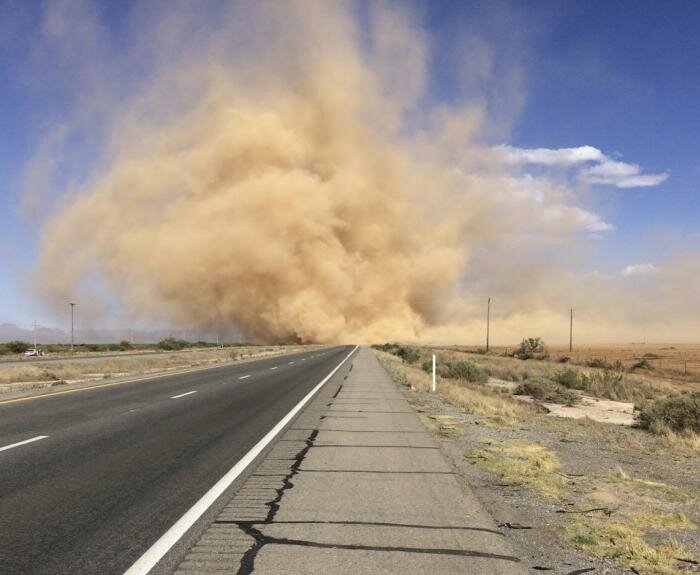
If caught in a dust storm, drivers should take the next exit if possible. When no exits are nearby, drivers should pull off the road, turn off lights and take their foot off the brake, according to ADOT.
(ADOT)
The official start of the monsoon began last weekend, and for the fifth season the Arizona Department of Transportation’s warning system is ready to help drivers negotiate dust storms.
A monitoring system along Interstate 10 between Phoenix and Tucson has activated during an estimate 50 blowing dust events since 2020, according to ADOT. And it is showing results, officials said.
Roadway sensors indicate motorists are slowing down in the dust detection zone when the system automatically reduces speed limits, according to an ADOT release.
You must be a member to read this story.
Join our family of readers starting at $5 for your first month and support local, unbiased journalism.
Click here to see your options for becoming a subscriber.
Register to comment
Click here create a free account for posting comments.
Note that free accounts do not include access to premium content on this site.
I am anchor
ARIZONA SUMMER
ADOT activates blowing dust warning system as monsoon begins
(ADOT)
If caught in a dust storm, drivers should take the next exit if possible. When no exits are nearby, drivers should pull off the road, turn off lights and take their foot off the brake, according to ADOT.
Posted
INDEPENDENT NEWSMEDIA
The official start of the monsoon began last weekend, and for the fifth season the Arizona Department of Transportation’s warning system is ready to help drivers negotiate dust storms.
A monitoring system along Interstate 10 between Phoenix and Tucson has activated during an estimate 50 blowing dust events since 2020, according to ADOT. And it is showing results, officials said.
Roadway sensors indicate motorists are slowing down in the dust detection zone when the system automatically reduces speed limits, according to an ADOT release.
Thirteen visibility sensors mounted on posts along the freeway use light beams to determine the density of dust particles in the air. Once visibility drops to certain levels, the system activates overhead message boards and the variable speed limit signs.
As drivers approach the area, they see signs: “Caution: Variable Speed Limit Corridor.” Then, a series of programmable speed limit signs every 1,000 feet can change the legal speed limit from 75 mph to as low as 35 mph. More electronic signs are posted in the corridor to remind drivers of the temporary speed limit.
“This technology cannot replace common sense when it comes to driving in dust storms,” ADOT officials stated in the release.
“While drivers will get almost instant warnings about hazardous driving conditions within the 10-mile corridor, the safest decision drivers can make is to delay travel if a severe storm is on the move.”
If caught in a dust storm, drivers should take the next exit if possible. When no exits are nearby, drivers should pull off the road, turn off lights and take their foot off the brake, according to ADOT.



Comments
No comments on this item Please log in to comment by clicking here