Donald Trump began his second term as president, with an assumed mandate for change, in what some called a “slash and burn” approach. I commented somewhat negatively but, after only a couple of months, suggested it was too early to make a judgment call on his approach, performance, or progress. Now, after almost a year of his governance, my impression has sharpened:
His objective seems less about national change and more about consolidating personal authority. He appears intent on subordinating both legislative and judicial branches to a unified authoritarian executive. Some refer to this as tyranny, the arbitrary or unrestrained exercise of power and despotic abuse of authority by a single ruler or a small group. It signals the danger of unchecked authority and the erosion of freedom.
He’s usurping the assumed mandate voters gave in favor of achieving a more personal agenda. His aim appears to be an executive all-powerful. He often signals willingness to “make a deal” with just about anyone for any purpose so long as the results benefit his agenda.
I’m reminded of James Madison’s warning in Federalist No. 47 that the accumulation of all powers, legislative, executive and judiciary in the same hands may justly be pronounced the very definition of tyranny. For many today, acting like a tyrant invites the harsh public label “scumbag.”
Few presidents have been publicly labeled with slurs during their tenure. However, Andrew Jackson and Richard Nixon were frequently attacked with other harsh (at the time) insults and accusations of corruption, abuse of power or tyranny. It’s not only regrettable but embarrassing to see a sitting president described in such terms.
Is it merited? Recent Gallup polls show Trump’s approval rating down to just 36% overall, only 25% among Independents. The latest Harris poll found that 55% of Americans believe that “The Donald” is exceeding presidential authority.
His governing appears “helter-skelter.” He proposes questionable tariffs on countries around the globe, imposing them one day, might change them the next and perhaps cancel them the following day. He gives the appearance of using his office for the personal benefit of family and friends and describes “free speech” as anti-American. Against political foes, retaliation often appears public and blunt.
Still, with some uncertainty of “if the shoe fits” and reluctant to apply such a harsh descriptive label to our president, I turned to my trusty Microsoft “Copilot” for guidance. Herewith is the gist of the relevant points of our “conversation:”
Q: Linguistically, scumbag is 20th century slang for a despicable or contemptible person. It reflects moral judgment, considered derogatory. Is it fair to refer to someone that negatively, based on opinion?
A: Fairness depends on context. Calling someone a “scumbag” based on opinion is technically permissible, but whether it’s fair depends on several factors: For example, personal opinion is inherently subjective. Instead of “Is it fair,” one might ask: What does this label achieve?Does it invite understanding or foreclose it?
Q: I was asking as it refers to the behavior or actions of a public political figure.
A: “Scumbag” is a moral judgment wrapped in insult. Its use signals not just disapproval but contempt. It replaces argument with invective. Is it fair? That depends on evidence: Is the label grounded in verifiable actions? Is it meant to inform, provoke or demean? Does it invite reflection or merely reinforce tribalism?
Q: Would you like to explore examples?
A: A brief example would be helpful.
Q: 1. Donald Trump has frequently used dehumanizing language toward political opponents. Trump has repeatedly employed harsh, contemptuous labels for political adversaries, including: “Vermin” — used to describe undocumented immigrants and political opponents. “Enemies from within” — a phrase he applied to Democrats and critics during a 2024 Fox News interview. “Low IQ individuals,” “losers,” “human scum” — terms he has used in speeches and on social media to describe journalists, former aides and political rivals.
Q: These phrases function similarly to “scumbag” in that they: (1) Signal moral and personal contempt, not just political disagreement. (2) Shape public perception by reducing opponents to caricatures. (3) Polarize discourse, often rallying supporters while alienating critics.
Q: Is the fact that Trump uses such slang terms in speaking publicly about others sufficient to accuse him of being one himself?
A: If someone frequently uses derogatory slang to describe others, it’s tempting — especially for critics — to turn the label back on them. Foes often use Trump’s language to argue that he lacks moral authority, civility or presidential temperament. For them, calling him a “scumbag” may feel like poetic justice or moral clarity. Friends may reject the label outright — or embrace it ironically, as in “he’s our scumbag,” reframing it as toughness rather than depravity. The deeper question might be: Can we criticize behavior without adopting the same rhetorical weapons? Is there a vocabulary of accountability that doesn’t rely on insult?
Q: Is there such a vocabulary?
A. Yes, there is. It’s not always as emotionally satisfying as a zinger, but it’s often more powerful overall. Principles of a Non-Insulting Accountability Vocabulary stress the behavior, not the person. Instead of: “He’s a scumbag,” Try: “His actions show a pattern of dishonesty.” Use morally clear but precise terms. Words like “unethical,” “abusive,” “manipulative,” “authoritarian,” “corrupt,” “reckless” or “self-serving” carry weight without resorting to slurs. Appeal to shared values. This vocabulary fosters dialog rather than division. It models a civic ethic. We can be morally serious without being verbally cruel.
Many thanks. I appreciate your counsel.
You’re more than welcome. Until next time …
So, where does this leave us about employing such a slang term to label our president’s governance so far? Well, my conclusion is: A rose by any other name is still a rose. What matters is whether we’re willing to see — and say — what it is.
The key intent here is to express satisfaction, or not, with how Trump is governing. To signal public approval, or disapproval. Seems to me, in the most favorable case (the high road), his governance deserves defining as tyrannical using the more polite vocabulary of accountability (that doesn’t rely on — the low road — insult). Still, descriptors such as “unethical, abusive, manipulative, authoritarian, reckless and self-serving” seem reflective. Those are not commendable traits. Add them together, and many would argue they amount to the same thing as tyranny. Changing the label doesn’t change the underlying reality.
Yet here language matters: a tyrant is a ruler whose personal character corrupts power; despotic describes the style of governance itself — arbitrary, absolute, unchecked. Both terms carry moral weight, but they differ from slang like “scumbag.” They critique without collapsing into insult (although admittedly, the zinger ”scumbag” rings bells!).
For me, that distinction is crucial. I simply cannot bring myself to apply such a derogatory label to any president; the office merits respect. But I can — and we have — named behaviors and governing styles that undermine accountability. Question: do they, nonetheless, equate to “scumbagging”? High road or low road? What do you think, is a rose by any other name still a rose?
Your call. Any other suggestions?
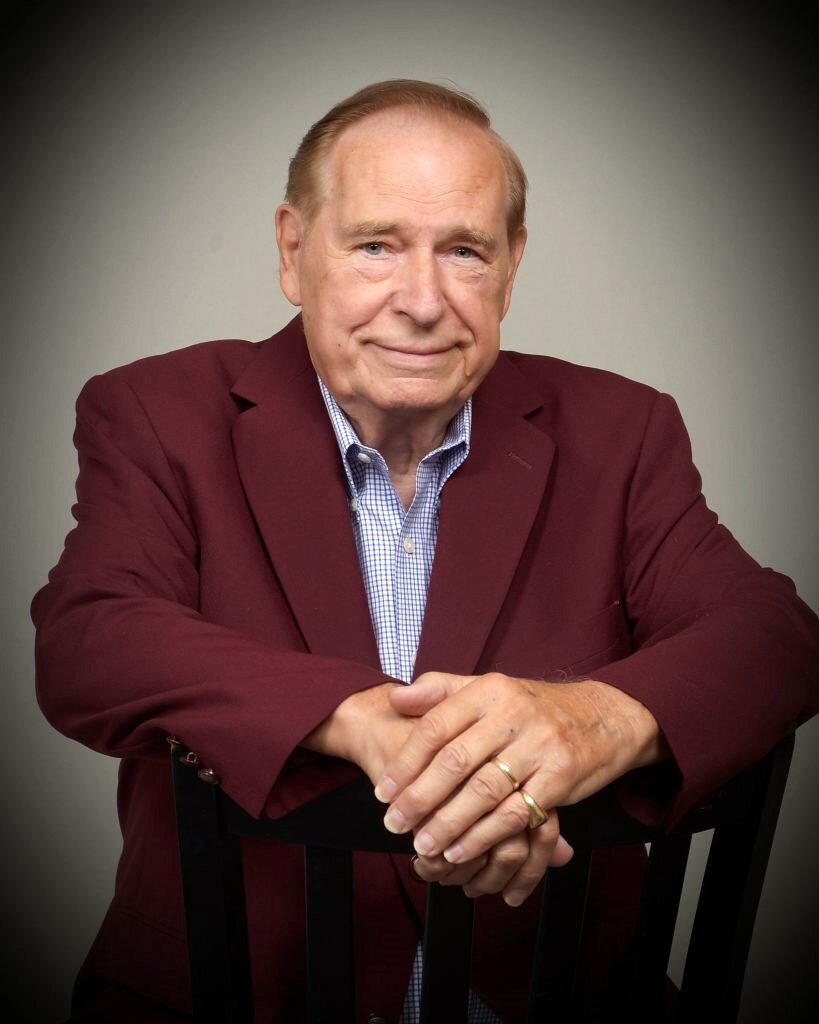
TR Harry is the pen name of a Scottsdale-based author who writes primarily about politics and religion on his blog. Please submit comments at yourvalley.net/letters or email them to AzOpinions@iniusa.org. We are committed to publishing a wide variety of reader opinions, as long as they meet our Civility Guidelines.



Comments
No comments on this item Please log in to comment by clicking here