2,000 seed balls slingshot into Diamond Fire burn scar for restoration
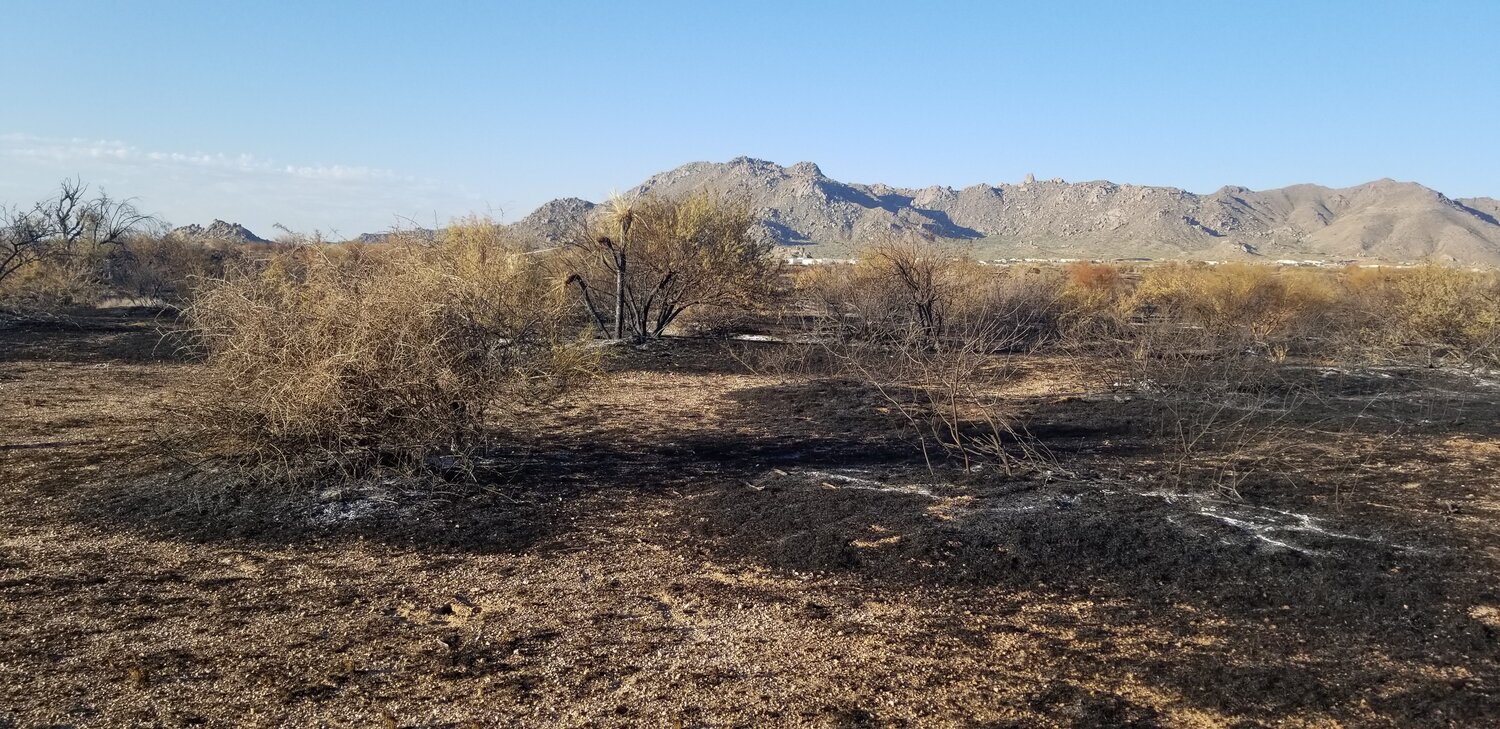
The Diamond Fire burned over 2,500 acres, the majority in the Scottsdale McDowell Sonoran Preserve and McDowell Mountain Regional Park.
Courtesy McDowell Sonoran Conservancy
The McDowell Sonoran Conservancy, Maricopa County Parks and Recreation Department and the city of Scottsdale Community Services Department came together Aug. 16 to begin restoration efforts after the recent Diamond Fire burned 1,960 acres and scorched desert landscape in Scottsdale McDowell Sonoran Preserve and McDowell Mountain Regional Park.
Teams utilized slingshots to hurl 2,000 seed balls and spread native seeds across the burned areas, promoting the regrowth of crucial native floral, according to a press release.
You must be a member to read this story.
Join our family of readers starting at $5 for your first month and support local, unbiased journalism.
Click here to see your options for becoming a subscriber.
Register to comment
Click here create a free account for posting comments.
Note that free accounts do not include access to premium content on this site.
I am anchor
Conservation
2,000 seed balls slingshot into Diamond Fire burn scar for restoration
Courtesy McDowell Sonoran Conservancy
The Diamond Fire burned over 2,500 acres, the majority in the Scottsdale McDowell Sonoran Preserve and McDowell Mountain Regional Park.
Posted
The McDowell Sonoran Conservancy, Maricopa County Parks and Recreation Department and the city of Scottsdale Community Services Department came together Aug. 16 to begin restoration efforts after the recent Diamond Fire burned 1,960 acres and scorched desert landscape in Scottsdale McDowell Sonoran Preserve and McDowell Mountain Regional Park.
Teams utilized slingshots to hurl 2,000 seed balls and spread native seeds across the burned areas, promoting the regrowth of crucial native floral, according to a press release.
The seed balls are comprised of native plant seeds, clay and nutrient-rich elements like compost, worm castings and more. The clay protects the seeds until the rainfall washes them away, creating the perfect opportunity to jump-start native plant growth.
Many important native species, like the iconic saguaro, are long-lived species, which means they take a long time to reestablish and grow after large disturbances such as a fire, the release stated. Invasive species, on the other hand, are quick to grow and spread. Without human intervention, invasives will out-compete native plants in the burned areas and throw the Sonoran Desert ecosystem off balance.



Comments
No comments on this item Please log in to comment by clicking here