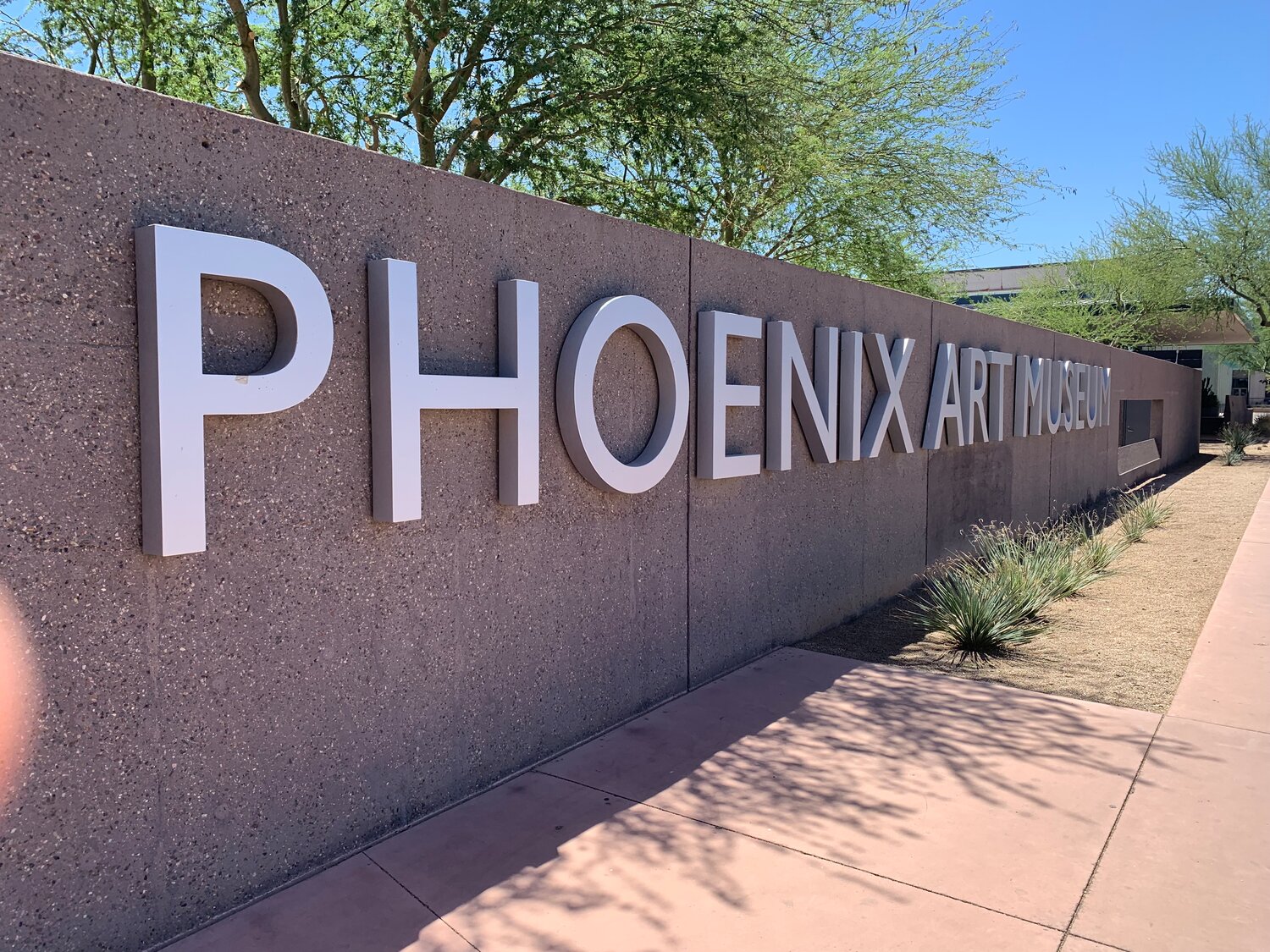
The sign for the Phoenix Art Museum, 1625 N. Central Ave.
(Independent Newsmedia/Mark Carlisle)
There are plenty of things to do in Arizona's most populous and capital city that far surpass this list. Here is a sampling of outings for visitors and long-time residents alike with something for everyone to enjoy.
The Arizona Science Center, 600 E. Washington St. in Phoenix.
(Independent Newsmedia/Mark Carlisle)
You must be a member to read this story.
Join our family of readers starting at $5 for your first month and support local, unbiased journalism.
Click here to see your options for becoming a subscriber.
Register to comment
Click here create a free account for posting comments.
Note that free accounts do not include access to premium content on this site.
I am anchor
Things to do
Top 20 places to visit in Phoenix
(Independent Newsmedia/Mark Carlisle)
The sign for the Phoenix Art Museum, 1625 N. Central Ave.
Posted
Independent Newsmedia
There are plenty of things to do in Arizona's most populous and capital city that far surpass this list. Here is a sampling of outings for visitors and long-time residents alike with something for everyone to enjoy.
The Arizona Science Center, 600 E. Washington St. in Phoenix.
(Independent Newsmedia/Mark Carlisle)
Arizona Science Center
Location: 600 E. Washington St.
Hours: 10: 30 a.m.- 4p.m. Tuesday-Sunday
Cost: General admission: $22.95 for adults, $20.95 for students, military and seniors (62+), $16.95 for children (3-17). An additional $13 buys the Discovery Pass, which adds an Evans Family SkyCycle ride, a screening in the Dorrance Planetarium, a film in the Irene P. Flinn Giant Screen Theater and admission to the seasonal traveling exhibition. Visit AZScience.org for information about annual passes.
The Arizona Science Center provides exploration, education and entertainment for all ages. Nestled in the picturesque setting of Heritage and Science Park, the Science Center is a unique landmark designed by renowned architect Antoine Predock. It was founded in 1984 as the Arizona Museum of Science & Technology.
The center contains four levels of “hands-on” exhibits, daily demonstrations throughout the 140,000-square-foot facility, the state-of-the-art Dorrance Planetarium with an 8K-resolution LED dome display and a five-story-high IMAX theater. Thrill-seekers can also ride a bicycle suspended 50 feet in the air on the Evans Family SkyCycle.
Rotating exhibits and nature documentaries on the IMAX screen keep trips to the Science Center unique on every visit. Visit AZScience.org.
The sign for the Phoenix Art Museum, 1625 N. Central Ave.
Cost: Adults: $25, Seniors (65+): $22, Students: $20, Youth (6-17): $15, Children 0-5: Free. Card holders at Phoenix Public Library or other libraries in the Valley can get two free tickets with a Culture Pass, when available.
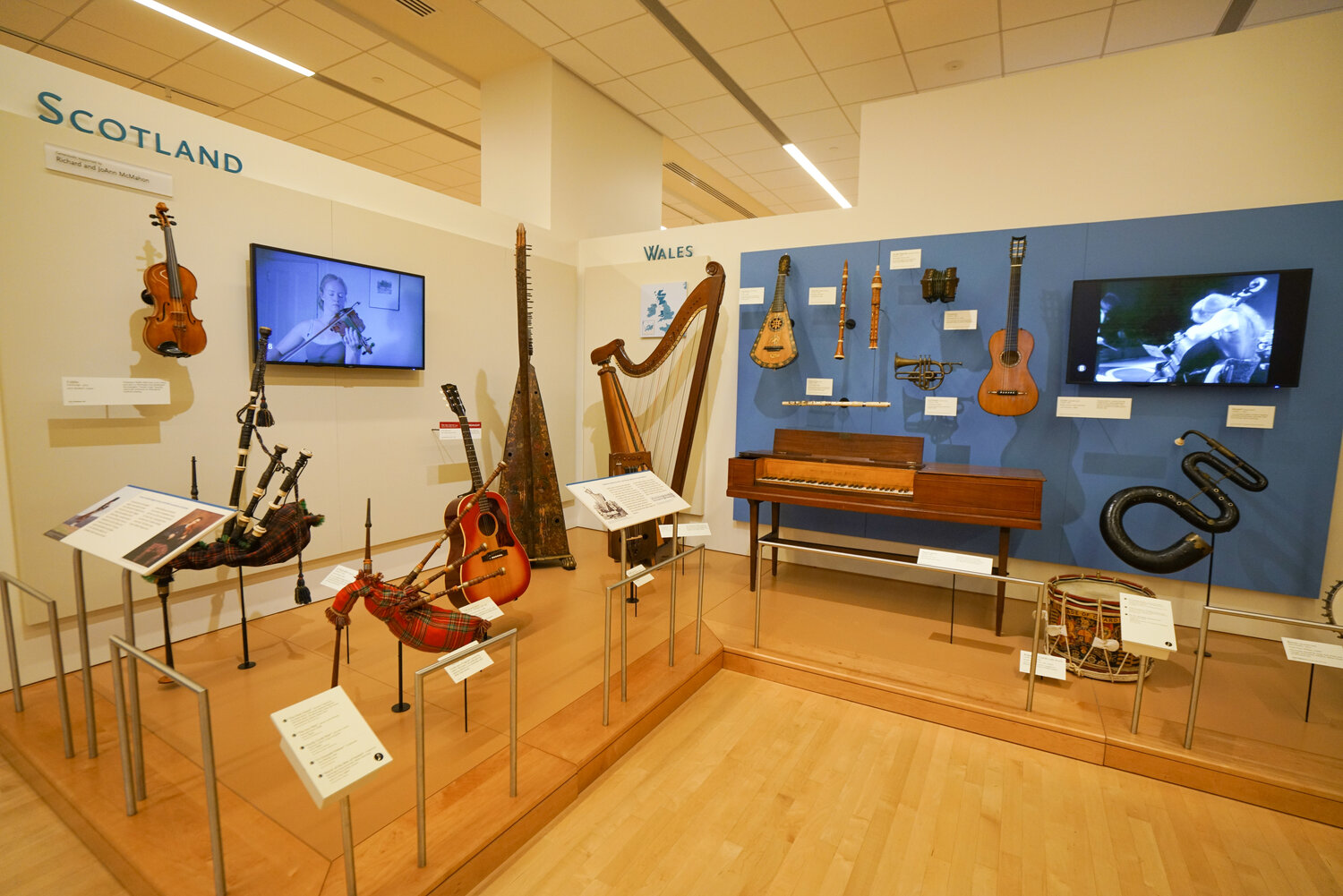
Since it opened in 1959, Phoenix Art Museum has become the largest art museum in the southwestern U.S., providing access to visual arts and educational programs in Arizona.
The museum’s collection has grown to more than 20,000 objects of American, Asian, European, Latin American, Western American, modern and contemporary art, photography and fashion design.
The museum hosts photography exhibitions through its partnership with The University of Arizona's Center for Creative Photography in Tucson. Visitors can also enjoy robust programming, films, lectures, the lush Dorrance Sculpture Garden and more.
The museum also includes the Gene and Cathie Lemon Art Research Library, featuring more than 40,000 books, periodicals, artist files and other resources. It is free and open to the public Wednesday-Friday, 10 a.m.-2 p.m., but visitors cannot take books home.
The entrance to the Heard Museum, 2301 N. Central Ave. in Phoenix.
(Independent Newsmedia/Mark Carlisle)
Heard Museum
Location: 2301 N. Central Ave.
Hours: 10 a.m.-4 p.m. Tuesday-Sunday
Cost: Adults: $26, Military and seniors (65+): $21, College student (with ID): $10, Youth (6-17): $10, Child (0-5): Free. Card holders at Phoenix Public Library or other libraries in the Valley can get two free tickets with a Culture Pass, when available.
The Heard Museum aims to connect Indigenous creativity to the world by presenting the voice and vision of American Indian artists.
Since its founding in 1929, the Heard Museum, a private nonprofit in Phoenix, has grown in size and stature to become recognized internationally for the quality of its collections, world class exhibitions, educational programming and festivals. It consists of 12 galleries featuring American Indian art and exhibitions, an outdoor sculpture gallery, a museum shop and an outdoor café.
Dedicated to the advancement of American Indian art, the Heard presents the stories of American Indian people from a first-person perspective as well as exhibitions that showcase the beauty and vitality of traditional and contemporary art.
The museum shop offers an array of authentic Indigenous art, while the Berlin Gallery features outstanding contemporary fine art for purchase.
Cost: Free to enter; single ride: $6.25, book of 10 rides: $51.75, book of 20 rides: $72.45, all-day ride pass: $28.50, all-day Splash Zone pass: $7.25 (open mid-April to beginning of October), annual pass: $62.09
Enchanted Island Amusement Park provides rides and fun for all ages in the middle of Phoenix’s scenic Encanto Park.
Attractions include small roller coasters and carnival rides, a train ride, a carousel, bumper boats, a climbing wall, pedal boats, carnival games, face paint, a snack bar and a splash pad during warm weather months. The amusement park is a popular birthday party spot and can also host company picnics, fundraisers or field trips. Party packages include things like reserved tables, signs, a T-shirt for the birthday child and a visit from the park’s mascot, Pete the Parrot. Some packages include unlimited rides for the day for guests.
The park is surrounded by the Encanto Lagoon – great for watching ducks – and nearby is the Encanto Park Playground. Visit EnchantedIsland.com.
Chase Field, home to the Arizona Diamondbacks, 401 E. Jefferson St. in Phoenix.
(Independent Newsmedia/Mark Carlisle)
Chase Field
Location: 401 E. Jefferson St.
The Diamondbacks play 81 home games here each year, as well as a few games at the end of spring training and any playoff home games.
The 48,633-seat stadium opened when the team debuted in 1998, called Bank One Ballpark at the time. It is the only Major League Baseball ballpark to feature a swimming pool. It also includes a retractable roof that closes when the Phoenix summer heat gets to be too much.
The stadium will also host a few large concerts and other events each year.
Mortgage Matchup Center, 201 E. Jefferson St. in Phoenix, home to the Phoenix Suns and Phoenix Mercury.
(Independent Newsmedia/Mark Carlisle)
Mortgage Matchup Center
Location: 201 E. Jefferson St.
The arena has been home to the Phoenix Suns since it opened in 1992 and the Phoenix Mercury since the WNBA began in 1997. It also hosts many concerts and other events each year.
Originally America West Arena, the building has cycled through several different names, most notably US Airways Center, Talking Stick Resort Arena and Footprint Center.
The arena offers several premium experiences like suites, clubs, lounges and bars/restaurants. On the outside of the arena and open to all is the Dos Equis Beer Garden. The arena formerly had a FanDuel Sportsbook attached, accessible from the outside, but it closed in 2025 after four years of operation and was converted to lounge space.
The Arizona Rattlers Indoor Football League team also played in the area 1992-2023 before they moved to Desert Diamond Arena in Glendale. Other former sports teams to call the building home are the NHL’s Phoenix Coyotes (1996-2003), the minor league hockey Phoenix Roadrunners (2005-2009) and the Arizona Sandsharks Continental Indoor Soccer League team (1993-1997).
The George Washington Carver Museum and Cultural Center, 415 E. Grant St. in Phoenix.
(Independent Newsmedia/Mark Carlisle)
George Washington Carver Museum and Cultural Center
Location: 415 E. Grant St.
Hours: The museum is open for guided tours on Wednesdays and Thursdays. They must be scheduled in advance and are based on availability.
Cost: Adults are $12, adult students (with valid ID) are $10, ages 5-17 are $10, Ages 4 and under are free. Annual memberships for $30 or $75 for a family include free admission.
The George Washington Carver Museum and Cultural Center began as the segregated Phoenix Union Colored High School in 1926 to exclusively school Black students. The school was renamed for George Washington Carver in 1943 and became the George Washington Carver Museum and Cultural Center in 1996.
Today, the building now known as “The Carver” is a national historic landmark dedicated to the collection, documentation, preservation, study and dissemination of the history and culture of African Americans in Arizona and the American West. The museum features historical exhibits, including a room about the life and legacy of George Washington Carver, an African American library, classes, special programs and seminars.
With deep connections in the community, the nonprofit museum and cultural center brings history, art, artists and community together to support creativity, Black knowledge systems and socioeconomic advancement at every level.
Visit thecarveraz.org for information or to explore virtual exhibits.
The front of the former Monroe School building in Phoenix, which is now home to the Children's Museum of Phoenix, 215 N. 7th St.
(Independent Newsmedia/Mark Carlisle)
Children’s Museum of Phoenix
Location: 215 N. Seventh St.
Hours: 9 a.m.-4 p.m. Tuesday-Sunday
Cost: $19, seniors 62 and older are $18, children under age 1 are free. Annual memberships, which start at $149 (one child and one adult), include free admission.
There are more than 300 play experiences across 48,000 square feet of space in three floors of the historic Monroe School Building.
The hands-on exhibits and experiences provide fun and learning opportunities to entertain a wide range of ages, including parents. They include a giant jungle gym and building blocks, tracks for miniature cars, an area where children can pretend to shop and cook, and dozens of other gizmos and gadgets to keep the young ones entertained and rotating exhibits to see something new each time.
The museum also offers a range of classes and programs, from music and yoga, to math and science as well as an Art Studio. Visit ChildrensMuseumofPhoenix.org.
The Arizona Capitol Museum, 1700 W. Washington St. in Phoenix.
The Arizona Capitol Museum brings the state’s history to life. More than 20 exhibits tell Arizona’s story from territorial days to the present.
The building was built to be the capitol of the Arizona Territory in 1901, 11 years before Arizona gained statehood. The state Legislature moved to adjacent buildings in 1960 and the governor’s office followed suit in 1974. The original capitol building, which still sits as the centerpiece of the Arizona state government complex, transitioned to the Arizona Capitol Museum in 1979.
Walk-in tours are available with no registration needed on Mondays, Wednesdays and Fridays at 2 p.m. Pre-booked tours are available on weekdays for groups of 10 or more.
The Japanese Friendship Garden, also named Rohoen (鷺鳳園), is a joint project between the city of Phoenix and its sister city Himeji, Japan. Himeji Mayor Matsuji Totani proposed the garden in 1987 to cement the bonds of friendship between Japan and the United States and particularly between the peoples of Himeji and Phoenix.
The 3.5-acre garden is connected to Margaret T. Hance Park. The project features a stroll garden, tea garden and a dry garden. It is designed in the Japanese Miegakure style, or hide-and-reveal design, which is prevalent in Japanese stroll gardens. In Miegakure, the entirety of the garden is never visible at once. Instead, the viewer is led to uncover intentionally hidden sights and sounds of the landscape while strolling along its curved paths.
The name Rohoen combines the Japanese words for Heron, which is a symbol of Himeji, the mythical Phoenix bird and garden.
The S'dev Va'aki Museum will be moving from the Parks and Recreation Department to the Arts and Culture Department after a vote to transfer five cultural facilities to the Arts and Culture Department Monday. (Courtesy of the City of Phoenix)
Admission: Adults (18-64): $13.00; Seniors (65 & over): $10.00; Students (with ID): $6.00; Children (6-17): $6.00; Children (under 6): Free; Museum Members: Free; Discounted Admission on Thursday evening (4-8 p.m.)
Discover the people who built one of the largest and most sophisticated canal systems in the New World prior to the coming of Europeans. This National Historic Landmark and museum highlights how these engineers and farmers thrived in the Sonoran Desert for millennia. S’ed̲av Va’aki has long been a special place.
The museum and park is an archaeological site where visitors can see a platform mound, a ballcourt, and centuries-old irrigation canals that are among the rare, remaining examples of the Ancestral Sonoran Desert People’s architecture and engineering skills. The museum and site anchor’s Phoenix to its prehistoric roots and is the only publicly accessible ancestral village site in the city.
The galleries contain a variety of exhibits, including fire apparatus, artwork, uniforms and equipment, firemarks, alarm room equipment, and a large fire safety exhibit which includes a two room safety house, a mini-theater, and many hands-on exhibits for children.
In 1998, the museum opened the National Firefighting Hall of Heroes. In this gallery it honors American firefighters who have received a national award for heroism, as well as recognizes American firefighters who have died in the line of duty.
Attendees at the Phoenix Zoo walk past a sign advertising 602 Day, which returns on Tuesday, June 2 for the third annual celebration of the city celebration.
The Phoenix Zoo is one of the largest nonprofit zoos in the U.S., caring for more than 3,000 animals, with nearly 400 species represented, including many threatened/endangered species.
The Phoenix Zoo is the only zoo in the Valley accredited by Association of Zoos and Aquariums and is a nonprofit zoological park, serving nearly 1.4 million guests annually.
Home to more than 3,000 animals, many of which are endangered or threatened species, the zoo is committed to supporting wildlife and habitat conservation in the region and across the globe. The wildlife recovery and research programs based at the zoo are focused on boosting wild populations of 10 imperiled Arizona native species.
The zoo engages in field research, working with universities, other conservation organizations and private land managers to better understand wildlife in Arizona, Mexico, Costa Rica, Colombia and beyond.
The solemn beauty of Las Noches de las Luminarias can be found at the Desert Botanical Garden.
(Desert Botanical Garden/Adam Rodriguez)
Desert Botanical Garden
Location: 1201 N. Galvin Parkway.
Hours: 6 a.m.-10 p.m. daily through Sept. 30. Trails closed from 1-5 p.m. in July and August due to peak heat conditions.
Admission: Through May 31: Adults: $24.95 online, $29.95 in person, Children 3-17: $14.95 online, $16.95 in person, Children 2 and under and garden members: Free; June 1-Sept. 7: Adults: $18.95 online, $21.95 in person, Children 3-17: $14.95 online, $16.95 in person, Children 2 and under and garden members: Free; Sept 8-30: Adults: $19.95 online, $24.95 in person, Children 3-17: $14.95 online, $16.95 in person, Children 2 and under and garden members: Free.
Discover 50,000 desert plants amid the red rocks of the Papago Buttes at Desert Botanical Garden. Visitors can stroll through five thematic trails to explore plants, including towering cactus, alluring succulents and brilliant desert wildflowers. Delve deeper to experience world-class art exhibitions, festive events and so much more.
Through permanent trailside exhibits, temporary art installations and seasonal experiences, the garden ignites discovery about the desert and the plants that have adapted to this fascinating ecosystem.
Saguaros surround Tovrea Castle, Dec. 6, 2000, in Phoenix. Completed in 1929, the castle was occupied until 1969. Phoenix city officials are trying to purchase the remaining 43 acres of property surrounding the castle in an effort to restore the dilapidated building and its surroundings.
(Associated Press/Matt York)
Tovrea Castle at Carraro Heights
Location: 5025 E. Van Buren Street.
Hours: Tour times: 8:30 and 10 a.m. January-March and October-December, 7:30 and 9:30 a.m. April-May and September; June, Special Twilight Evening Tours Only; closed July-August
Admission: $22 for ages 3 and over, $25 for last-minute online tickets. ages 2 and under free. A lottery system is used to obtain tickets.
Tovrea Castle at Carraro Heights has intrigued people in the Valley or 90 years and is a Phoenix Point of Pride, an Arizona Centennial Legacy Project and on the National Register of Historic Places.
Owned by the city of Phoenix and operated by Tovrea Carraro Society, the primary attraction is the Castle; a four-story, 5,000-square-foot architectural wonder perched atop the highest point of the granite-rich property. Groomed cactus gardens and undisturbed natural Sonoran Desert flora cascade from the castle, providing scenic backdrops and viewing opportunities throughout the established trail system.
All tours are docent-led, with guests exploring the cactus gardens and outbuildings by tram before arriving at the castle to tour the main floor and basement. The site is not available to explore without being on a tour. All tours are a ‘go’ whether rain or shine, heat or cold.
From the double loop roller coaster Desert Storm, getting a little wet on Splashdown, or dropping from great heights on Sky Diver, the park offers plenty of adventures. Included are four 18-hole miniature golf courses, three levels of arcade games with more than 150 to choose from, a three-level ropes obstacle course and a zipline that takes you over a part of the miniature golf course.
Hurricane Harbor Phoenix is about to open and the water park will be available to guests through Sept. 27.
(Courtesy Six Flags)
Hurricane Harbor Phoenix
Location: 4243 W Pinnacle Peak Road
Hours: 10:30 a.m.-6 p.m. Monday-Thursday through July 26: 10:30-7 p.m, Friday and Sunday; 10:30 a.m.-8 p.m. Saturday. 11-a.m.-5 p.m. July 27-31. 11 a.m.-5 p.m. Saturdays and Sundays Aug. 1-Sept. 27; closed Monday-Friday, except for Labor Day, open 11 a.m.-5 p.m.
Admission prices: Ages 3 and up, Monday-Friday through July 2, $35, Saturday and Sunday, $40; Fridays July 10-31, $40 (except July 3, $45), Saturdays from July 4-August 15, $45, September 5-27, $35. Season passes and all-day food and beverages passes also available.
Hurricane Harbor has 14 water attractions as well the wave pool and the lazy river. The park also has a kid-friendly play area and wading pool. Food and beverage also available on-site.
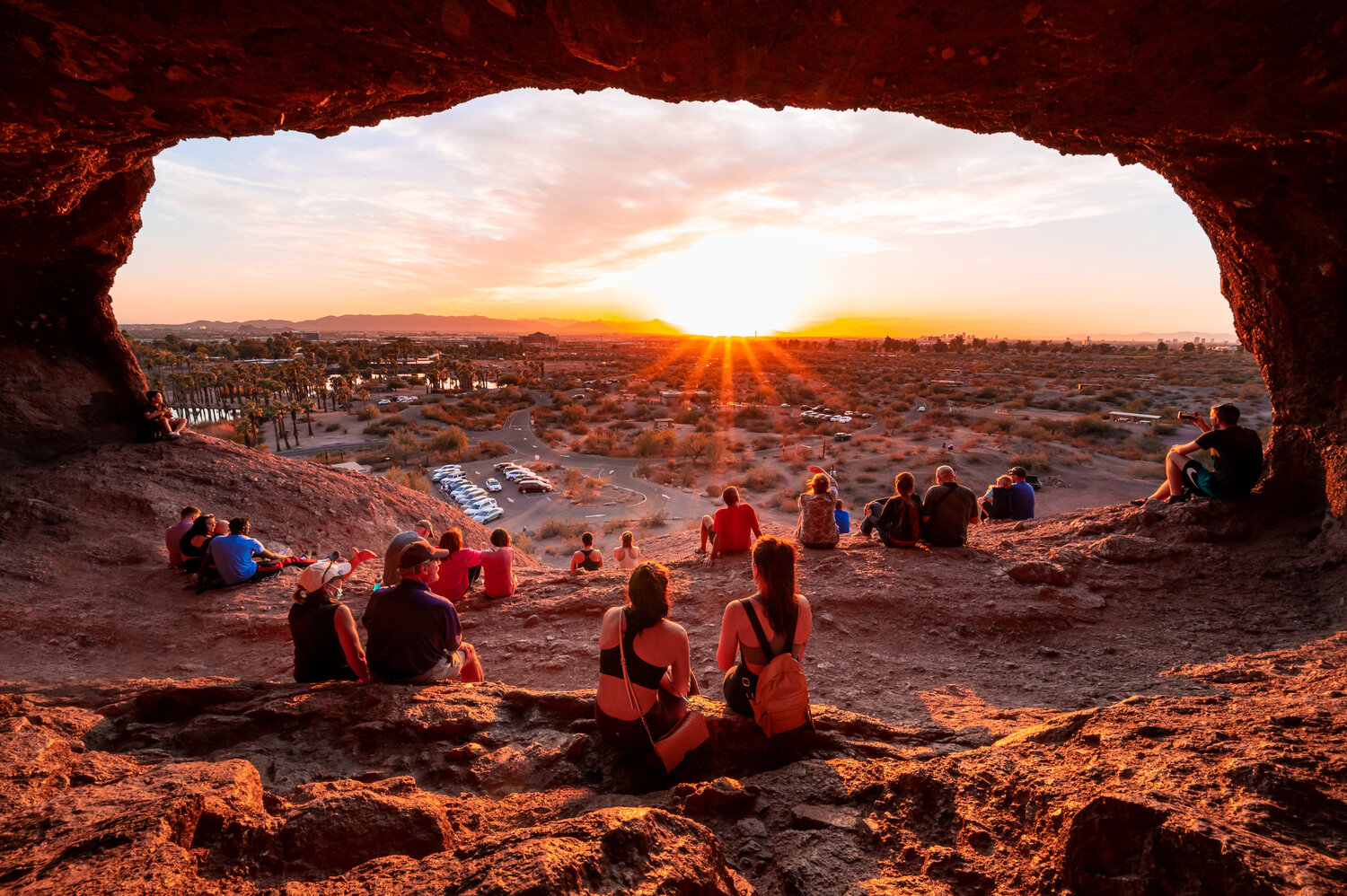
Enjoy breathtaking views from the top of Hole in the Rock, an unusual rock formation in Phoenix’s Papago Park after an easy 10-minute hike from the parking lot. Drop by right before sunset for milder temperatures and an even more stunning vista, or picnic in the shade. Near the Phoenix Zoo and the Desert Botanical Garden.
(Photo by An Pham, provided by Arizona Office of Tourism)
Papago Park/Hole-in-the-Rock
Location: 625 N. Galvin Parkway.
Hours: 5 a.m.-7 p.m. for parking lots, 5 a.m.-11 p.m. for trails.
Admission: Free
Papago Park offers exceptional hiking and an array of recreational facilities and hiking. Comprised primarily of sandstone, the range is known for its buttes that rise and fall throughout the park. The trails that interlace the area are generally easy treks. The smooth footing and low elevation gain make it a popular place for running and mountain biking.
The park boasts an archery range, orienteering course, Papago Ponds fishing lagoon, the Papago Sports Complex, and the Papago Golf Course, home of the Arizona State Sun Devils’ golf team.
The Hole-in-the-Rock Trail is a short natural dirt and step path that wraps around Hole-in-the-Rock Butte to a large viewing hole in the butte. This short trail wraps around Hole-in-the-Rock Butte to a large wind eroded hole. This popular trail guides users to a large hole in the butte where visitors can look over the Phoenix metropolitan area. The portion of trail along the backside of the butte incorporates a series of steps.
Camelback Mountain is one of Phoenix’s best hikes and most popular attractions for thousands of visiting hikers each year. Two difficult trails ascend 1,420 feet to a summit resembling the hump of a camel’s back, affording 360-degree views of the surrounding city.
Part of the Phoenix Mountains Preserve, Camelback gets its name from its two rock formations that resemble the head and back of a kneeling camel. It became a city park in 1968, and sits next to Phoenix’s Arcadia neighborhood and the town of Paradise Valley.
Camelback Mountain is considered one of the nation’s top hiking destinations and attracts visitors from around the world. However, the two main trails that comprise the vast majority of hiking opportunities are rated extremely difficult; subjecting hikers to steep elevation gains, uneven terrain, and a path that is unprotected from the elements.
Please submit comments at yourvalley.net/letters or email them to AzOpinions@iniusa.org. We are committed to publishing a wide variety of reader opinions, as long as they meet our Civility Guidelines.







Comments
No comments on this item Please log in to comment by clicking here