The Hope Effect is bringing foster care to developing countries
Posted
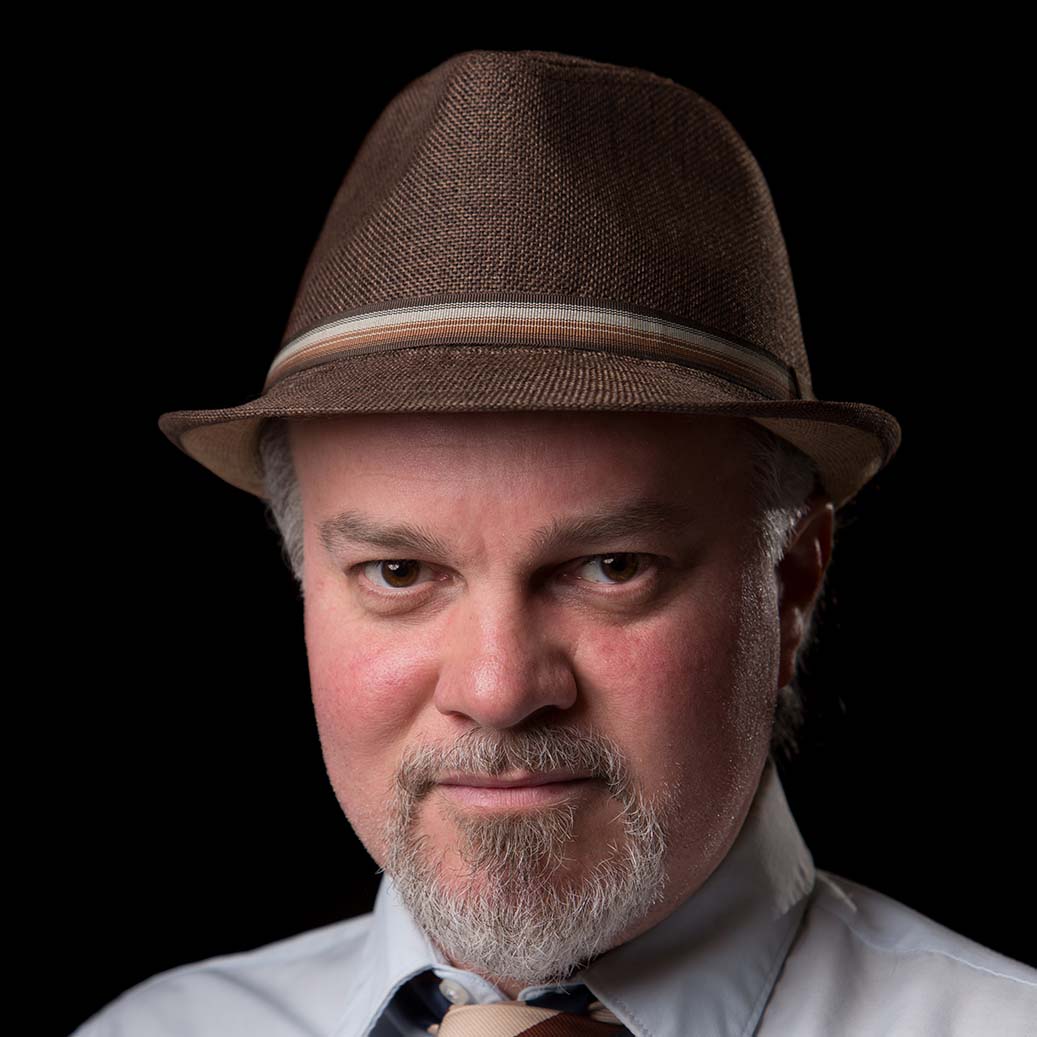
The Hope Effect - Joe Darago, Executive Director
Joe Darago is founder and executive director of The Hope Effect. His journey into the orphan care world began more than 20 years ago when he and his wife adopted their daughter Sydney from Korea. Seven years ago, they adopted again — this time an older child from Thailand who spent the early part of her life in an institution. Darago has seen firsthand that children develop best when they are in a family environment, and he is passionate about seeing orphans cared for – not in institutions, but in families.
The Hope Effect - Joshua Becker, Founder
Joshua Becker is an author, speaker and philanthropist. He has written several best-selling books on minimalism, and his website “Becoming Minimalist” has more than 1 million readers each month. Inspired by his wife’s experience being adopted, Becker founded The Hope Effect in 2015.
Moises Natera and Hansel Martz, a married couple from Hermosillo in the Mexican state of Sonora, had always talked about the possibility of adopting a child, and learned that fostering had become a new option in their country only recently.
So when they were given the opportunity, they decided to foster, preparing their home for its newest, yet temporary, addition — a young boy named JJ who was abandoned at a hospital immediately after birth and placed in an orphanage at just a few days old.
The couple knew about the damaging effects of traditional institutional orphan care and that children do best when they are raised in families. So they were excited to share the love of their family with JJ.
But they were also really nervous.
“We didn’t know how was he going to react, but we were also really happy and excited,” Martz said. “Previously, we saw some pictures of his little face and we were thinking, will he love us or how will he feel? It was like waiting for something very thrilling.”
After JJ moved in, the family said the change in him was immediate, moving from a shy, quiet and timid newborn to a happy toddler open to giving and receiving love.
They said the power of taking a child from an orphanage into a welcoming home was evident.
Unfortunately, many developing countries do not offer a foster care option.
However, from home offices in Northwest Peoria and a few international locations amounting to nine staffers, a nonprofit known as The Hope Effect is working to change that by essentially making foster care available in countries where it does not exist, as it did in Mexico for the family who cared for JJ.
This includes facilitating the reintegration of children living in orphanages back into their families.
Joe Darago, executive director and co-founder of The Hope Effect, said the goal of the nonprofit is to change the way the world cares for orphans by providing family-based solutions.
“The Hope Effect works with governments to change laws so that family-style care is legal and institutional orphanages are not the only option for orphan care,” he said. “We advocate for orphaned and vulnerable children and help governments understand the negative impact of institutional orphan care and the benefits of family-style care.”
Damage of Institutional Care
In the United States, traditional orphanages began closing after World War II, partially because of decades of support that the best place for the raising of children is in a family setting.
By the 1950s, more children lived in foster homes than orphanages, and by the 1960s, foster care had become a government-funded program.
Foster care today is the most common form of support in the U.S. for children waiting for adoption or reunification with their families.
However, in most developing countries, orphanages are still the primary way orphaned and vulnerable children are cared for. Some orphanages are government-run, but there are also many private or unregistered orphanages.
The Hope Effect Communications Director Hilary Peele said because of the prevalence of unregistered orphanages, it is extremely difficult to get exact statistics regarding the number of children living in orphanages across the globe.
“We have seen numbers as low as 2 million children living in orphanages around the world and as high as 12 million,” Peele said.
In the U.S. and other developed countries, vulnerable children are temporarily cared for through the foster care system, where there are currently more than 400,000 children, according to the most recent federal data.
Darago said there is clear and compelling research on the damaging long-term physical and psychological effects of traditional institutional orphan care. Children who grow up in orphanages experience physical and emotional developmental delays and have difficulty forming relationships in adulthood.
A study by the Norwegian Institute for Urban and Regional Research found children in Russia raised in institutional orphanages were:
• 10 times more likely to fall into sex work than their peers;
• 40 times more likely to have a criminal record;
• 500 times more likely to take their own lives.
Darago said from a developmental standpoint, orphanages are bad — a child in an orphanage has a rotating staff every eight hours and stares at a ceiling, not at his mother’s eyes.
“When a child goes from an orphanage to a loving home, you can see the changes. Their behavior changes. They become physically healthy. They move from the bottom of the class to the top,” he said. “Kids thrive out of orphanages. You can’t argue it, and it is incredible to watch.”
The Hope Effect Process
The Hope Effect works with governments to change laws so family-style care is legal and institutional orphanages are not the only option for care.
With an annual 2022 budget of $465,350, the nonprofit advocates for orphaned and vulnerable children, like JJ in Mexico, and helps governments understand the negative impact of institutional orphan care and the benefits of family-style care.
Peele said The Hope Effect is involved in all stages of the family-style care process:
• Recruiting – Works with community leaders to advocate for family-style care and recruit families at various events, such as community gatherings, church meetings, etc.
• Evaluation – A Hope Effect psychologist evaluates each interested family to ensure they are a good fit for the program, and partners with governments to ensure families meet their criteria for providing family-style care.
• Training and Certification – “We provide intensive training to interested families, ensuring they are prepared for the responsibility of welcoming a child into their home,” Peele said. “We then partner with the government to certify that families are ready to provide family-style care.
The organization then assists with the placement of children to ensure the family is the right fit.
Finally, The Hope Effect provides follow-up and support — once a child is placed, the organization’s director and psychologist regularly check in with families, like the one who cared for JJ, to provide support and answer questions.
Global Success
Last year, The Hope Effect expanded its program into the Mexican state of Michoacán where family-style care has moved into the capital city of Morelia, and Chiang Mai, Thailand, with a focus of reintegration. This involves getting children out of orphanages and into families as well as strengthening families to prevent them from surrendering their children to an orphanage.
The Hope Effect also is working to expand family-style care in Chihuahua, Mexico, and Santa Rosa de Copán, Honduras.
In December, the nonprofit signed a contract with the new government of Sonora, Mexico, to continue pioneering family-style orphan care in the capital city of Hermosillo.
It marked the continuation of a partnership formed in 2020, when The Hope Effect became the first nonprofit to receive government approval from Sonora to provide family-style care for orphaned and vulnerable children.
With the new administration came a new contract that expires in six years, the term length of Alfonso Durazo, the newly sworn-in governor of Sonora.
The Hope Effect will continue to work with Mexico’s government branch Desarrollo Integral de la Familia, or DIF, the country’s closest equivalent to Child Protective Services to facilitate family-style care in Sonora.
“We are so grateful for the privilege of working alongside the DIF for the good of orphaned and vulnerable children in Sonora,” Darago said. “Every child deserves the hope and love only a family can provide.”
‘Great Need’ for The Hope Effect
At four days old, JJ was placed in an orphanage in Sonora.
Like many children in the facility where JJ lived, life was difficult, but more so because he was born only a few months before the pandemic. Masks became the norm and he could not see staff’s facial expressions or their mouths.
His new foster family of Moises Natera and Hansel Martz, including a new brother and sister, said this caused initial challenges when JJ moved in with the family.
“As a boy born during the pandemic, who never before had the opportunity to see his caregivers’ facial expressions, when we took off our masks, it was shocking for him,” Martz said. “I think he was like, ‘Wow! These are mouths, these are smiles!’”
In addition, caregivers at the orphanage were women, complicating matters when Moises tried to be close to the young child.
“JJ had never been very close to a man before in the orphanage since the staff were all women. So when he met Moises, it was a little bit complicated for him to be so close to him,” Martz said. “JJ first felt confident with me, then with the other kids. It took a little while for him to feel comfortable with Moises.”
But as the days and weeks progressed, the family saw a pronounced difference in JJ. In fact, it only took three days in the family setting to see a huge change — JJ began walking.
“It sounds like a joke, but within a week at home, he was almost running! He began smiling and laughing,” Natera said. “Previously, smiling and laughing was very hard for him to do. Even when we would tickle him, he would not laugh. You could do somersaults in front of him, and he just didn’t have that feeling. He was missing that ability. But we saw a huge change in his heart, and he became a very kind child.”
After six months, JJ was placed in a permanent home.
“We are so thankful to God for all the changes we have seen in him,” Martz said. “Fostering JJ has placed in our hearts more significance and sensitivity towards this specific topic. It has let us see the great need in orphaned and vulnerable children.”
Philip Haldiman can be reached at phaldiman@iniusa.org, or on Twitter @philiphaldiman.
Meet Philip Haldiman is an award-winning journalist who most recently took first place for investigative reporting in 2023 from Arizona Newspapers Association. He joined Independent Newsmedia, Inc., USA, in 2015, covering Sun City West his first year. Since 2016, he has covered the city of Peoria. Prior to coming to INI, he was a reporter with The Arizona Republic for seven years, covering numerous cities throughout the Valley. Before that, he was a freelance writer.
Community: Haldiman spearheads the Peoria Independent Hometown Heroes Awards program, honoring local individuals and businesses that give back to the community. He has hosted local candidate forums over the years and is a member of the Society of Professional Journalists. Haldiman also served as a member of the Journalism Program Community Advisory Board at Glendale Community College. Outside journalism, Haldiman served as a member of the city of Peoria Complete Count Committee for the Census, 2019-2020. Lastly, he has served as a member of his HOA governing board since 2021.
Education: Arizona State University with a BA in Journalism and Mass Communications and a BA in Theater.
Random Fact: Haldiman is a fourth-generation Arizonan as well as wrote and produced an autobiographical comic book about his time spent in Hollywood and his life as a cult film star.
Hobbies: He enjoys hiking Arizona’s mountainous landscapes and is currently working on a play for the stage.

 By
By 


Comments
No comments on this item Please log in to comment by clicking here